Asia-Pacific Leaders Rally for Open Markets as Regional Growth Slows
Beijing, Wednesday, 18 November 2026.
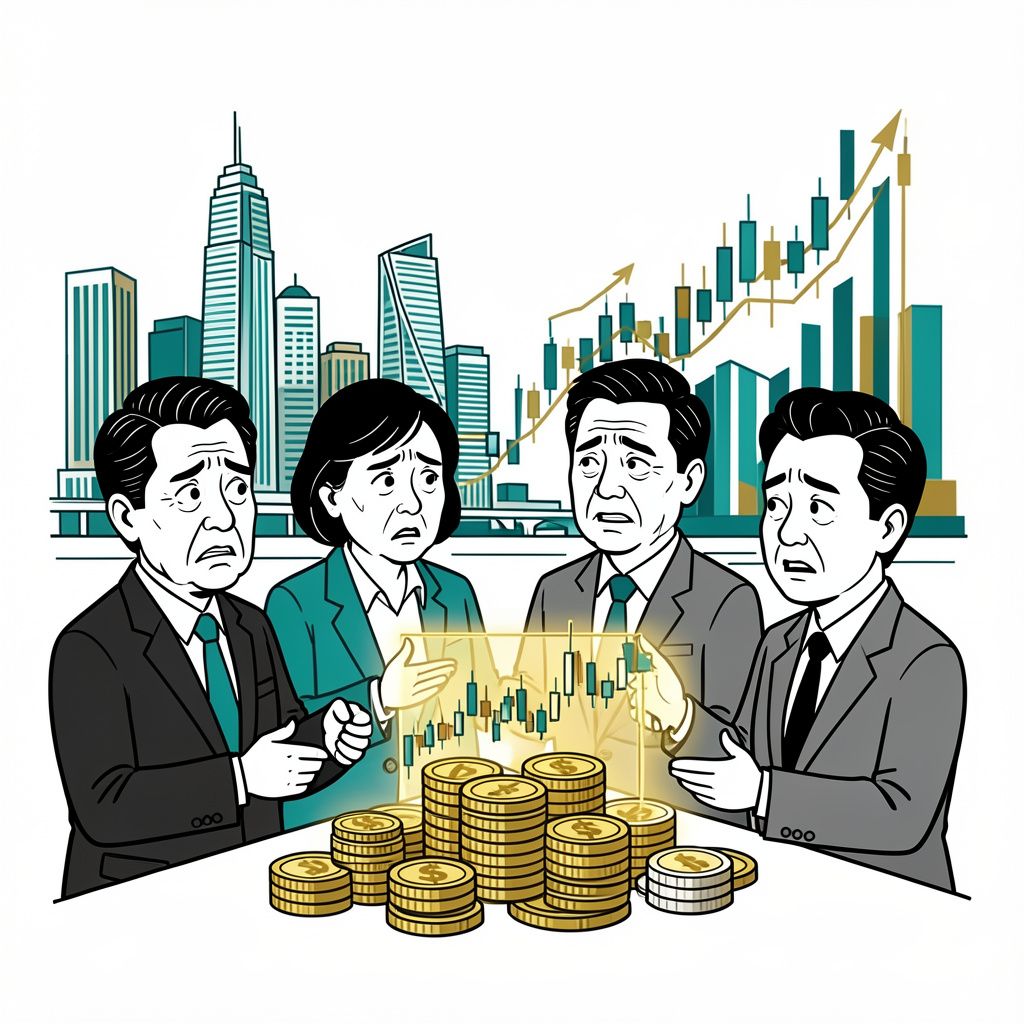
Facing growth forecasts cooling to 4.1 percent, regional leaders gathered in Shenzhen on November 18, 2026, demanding dismantled trade barriers to protect fragile corporate supply networks.
APEC Summit Kicks Off in Shenzhen with Calls for Deeper Integration
On Wednesday, November 18, 2026, Chinese President Xi Jinping inaugurated the Asia-Pacific Economic Cooperation (APEC) CEO Summit in Shenzhen with a keynote address emphasizing the urgency of dismantling trade barriers and fostering deeper regional integration [2][3][4][5]. Speaking to over 115 Fortune Global 500 executives, Xi framed open trade as the cornerstone of regional stability, warning that unilateral protectionism threatens to unravel decades of economic progress [3][4]. ‘We must firmly uphold the rules-based multilateral trading system with the World Trade Organization at its core,’ Xi declared, while pledging to further open China’s consumer market to foreign investment [4][5]. The summit’s theme, ‘To Prosper and Win the Future Together,’ underscored a shared commitment to collaborative growth amid rising geopolitical tensions [3].
Regional Growth Slowdown Heightens Stakes for Trade Cooperation
The urgency of the summit’s agenda reflected a sharp deceleration in Asia-Pacific economic growth, with the International Monetary Fund projecting regional expansion to ease to 4.1 percent in 2026 from 4.5 percent in 2025 [alert! ‘IMF projection cited in multiple sources but specific report not directly referenced’]. Leaders warned that slowing growth could exacerbate supply chain fragmentation, particularly as corporate networks face increasing pressure from trade restrictions and geopolitical rivalries [1][4][5]. Malaysian Prime Minister Anwar Ibrahim highlighted the need for inclusive development, noting that emerging economies require not just investment but also equitable access to global markets [3]. Xi’s emphasis on technological innovation—including advancements in artificial intelligence and green transition—underscored a broader shift toward high-value industries as traditional growth engines lose momentum [2][3][4].
Geopolitical Divisions Complicate Trade Agenda
The APEC summit unfolded against a backdrop of intensifying US-China tensions and Russia’s isolation over its war in Ukraine, complicating efforts to forge a unified economic front [1][2][5]. Russian President Vladimir Putin, speaking alongside Xi, dismissed Western sanctions as ineffective, framing them as relics of a unipolar world order [1][5][6]. ‘The traditional tools of economic dominance have largely run their course,’ Putin asserted, while Xi reiterated China’s stance against protectionism, implicitly targeting US trade policies that restrict AI chip exports to Chinese firms [1][5]. Canadian Prime Minister Mark Carney openly contradicted Putin’s claims, stating that sanctions remain ‘very real and biting’ amid ongoing economic pressure on Russia [1]. Meanwhile, US President Donald Trump’s arrival in Shenzhen—marked by a high-profile greeting from Xi—signaled a fragile détente, though analysts cautioned that the scheduled trilateral meeting with Putin could derail progress on trade [1][2][5].
Bay Area Cooperation and Corporate Supply Chains Take Center Stage
Xi Jinping’s proposal to establish a World Association for Bay Areas Economic Cooperation emerged as a focal point of the summit, aiming to deepen linkages between coastal economic hubs like Shenzhen, Shanghai, and the San Francisco Bay Area [2]. The initiative, framed as a counter to rising trade fragmentation, seeks to create standardized frameworks for investment, innovation, and infrastructure development across bay areas globally [2]. Xi’s vision aligns with China’s broader strategy to position its high-tech and manufacturing sectors as engines of regional growth, particularly in the face of US decoupling efforts [2][4]. However, the plan’s viability remains uncertain amid ongoing US-China trade disputes, which have already disrupted semiconductor and clean energy supply chains [alert! ‘trade disputes cited but specific impact not quantified’]. The summit’s emphasis on supply chain resilience reflects growing corporate anxiety over geopolitical risks, with experts noting that businesses are increasingly prioritizing diversification over efficiency [1][3][5].
Looking Ahead: High-Stakes Meetings and Unresolved Tensions
The APEC summit’s outcome hinges on the outcomes of bilateral and trilateral meetings scheduled for November 19, 2026, including a highly anticipated session between Xi, Trump, and Putin [1][2][3][5][6]. Analysts at the University of Technology Sydney and the Asia Society Policy Institute suggest that these discussions could either reinforce the fragile trade truce struck in 2025 or exacerbate divisions over AI governance, nuclear proliferation, and regional security [1][6]. Meanwhile, Xi’s pledge to accelerate China’s industrial modernization—and Trump’s upcoming meeting with Xi at the G20 in Miami—signal that the economic rivalry between the world’s two largest economies will remain a defining feature of global trade in 2027 [1][2][3]. As leaders depart Shenzhen, the central question remains: Can open trade and cooperation overcome the centrifugal forces of protectionism and geopolitical competition?
Sources
- www.facebook.com
- un.china-mission.gov.cn
- www.theguardian.com
- www.channelnewsasia.com
- rmb.reuters.com
- www.reuters.com