US Beef Prices Surge to Record Highs While Meat Processors Suffer Massive Losses
Chicago, Tuesday, 11 August 2026.
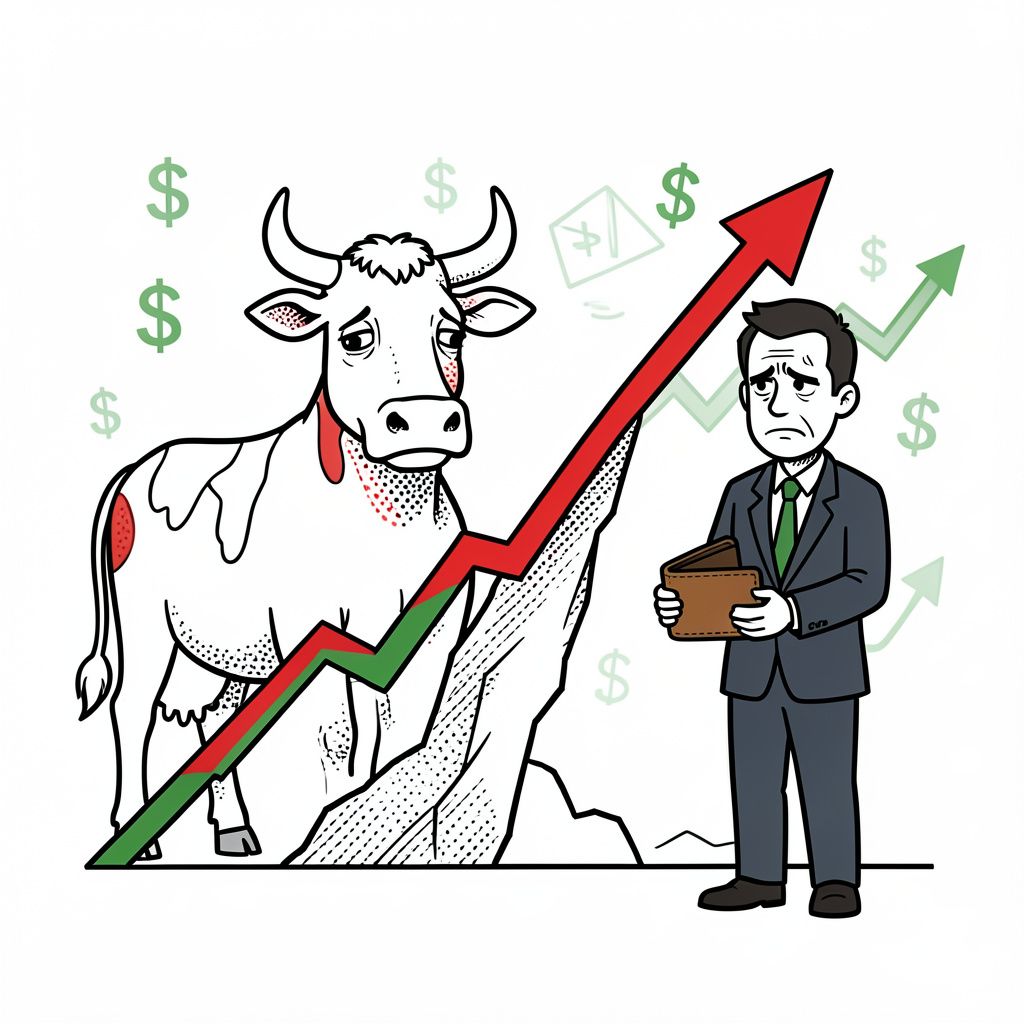
America’s cattle herds are at their smallest size since 1951, driving feeder calf prices to historic highs while squeezing midstream processors like Tyson Foods into $138 million quarterly operating losses.
Consumer Prices and Inflationary Impact
The Bureau of Labor Statistics reports beef prices rose 11.8% year-over-year, with a 1.2% monthly increase recorded in June 2026 [1]. Specific cuts have seen even sharper increases, with ground beef prices rising 12.4% and beef roast prices increasing 13.8% over the same period [1]. This inflationary pressure highlights the direct impact of supply constraints on household expenditures during the third quarter of 2026 [1].
Supply Chain Disruptions
Cattle herd sizes are at their smallest levels since 1951, driven by severe droughts and the spread of flesh-eating screwworms impacting imports from Mexico [1]. The US beef industry is experiencing a prolonged cattle shortage exacerbated by drought, which has delayed the typical herd inventory rebuilding process [1]. This structural shift highlights growing margin volatility across the domestic food supply chain [1].
Processor Margins Under Pressure
While ranchers capitalize on high prices, midstream processors face severe margin compression due to high input costs and supply shortages [1]. Tyson Foods reported a $138 million operating loss in its beef segment for the fiscal quarter ending on or around August 3, 2026 [1]. Tyson Foods CEO Donnie King reported that the company’s beef segment is underperforming expectations, stating, “Beef hasn’t performed the way we expected, and we’re not pretending otherwise” [1].
Feedlot Operational Challenges
Feedlot farmers are facing significant margin pressure due to high input costs including fertilizers, chemicals, and equipment, alongside rising cattle purchase prices [1]. Feedlot operators have faced a six-month lag between purchasing calves and selling processed beef, allowing them to maintain turnover and profitability temporarily, though this margin is now under pressure due to supply shortages [1]. Derrell Peel, a professor of agribusiness at Oklahoma State University, noted that feedlots are having trouble maintaining volume and keeping feedlots full in the coming months [1].
Market Data and Auction Prices
The USDA Agricultural Marketing Service released its August 10, 2026 beef market data, showing a comprehensive boxed beef cutout value of $364.68 per hundredweight [4]. Weekly cattle slaughter was reported at 509,000 head, down from 536,811 head in the same period of 2025 [4]. Market transactions from August 10 and 11, 2026, demonstrate significant price variance based on weight and location, ranging from $220.00 per hundredweight for heavy steers to $440.00 per hundredweight for lighter steers [3].
Regional Price Variations
USDA livestock reports from August 11, 2026, list feeder steers in Joplin, Missouri, trading between $405.00 and $460.00 for weights of 500-600 lbs [2]. Multiple sales recorded on 2026-08-11 at Beaver County Stockyards include 180 steers at $348.00 and 135 heifers at $348.50 [3]. These variations reflect the localized nature of supply constraints and transportation costs affecting regional markets [3].
Future Outlook and Projections
David Anderson, a professor of agricultural economics at Texas A&M, projects feeder calf prices to rise from $437.44 per hundredweight as of August 10, 2026, to approximately $467 per hundredweight by Q2 2027 [1]. This projected increase represents a potential gain of 6.757 percent over the coming months [1]. Derrell Peel warned that the squeeze on cattle numbers is getting tighter, prolonging the period of tight supplies and the current margin structure [1].