India Rejects Favoritism Claims as Elon Musk Criticizes Market Delays
New Delhi, Friday, 9 October 2026.
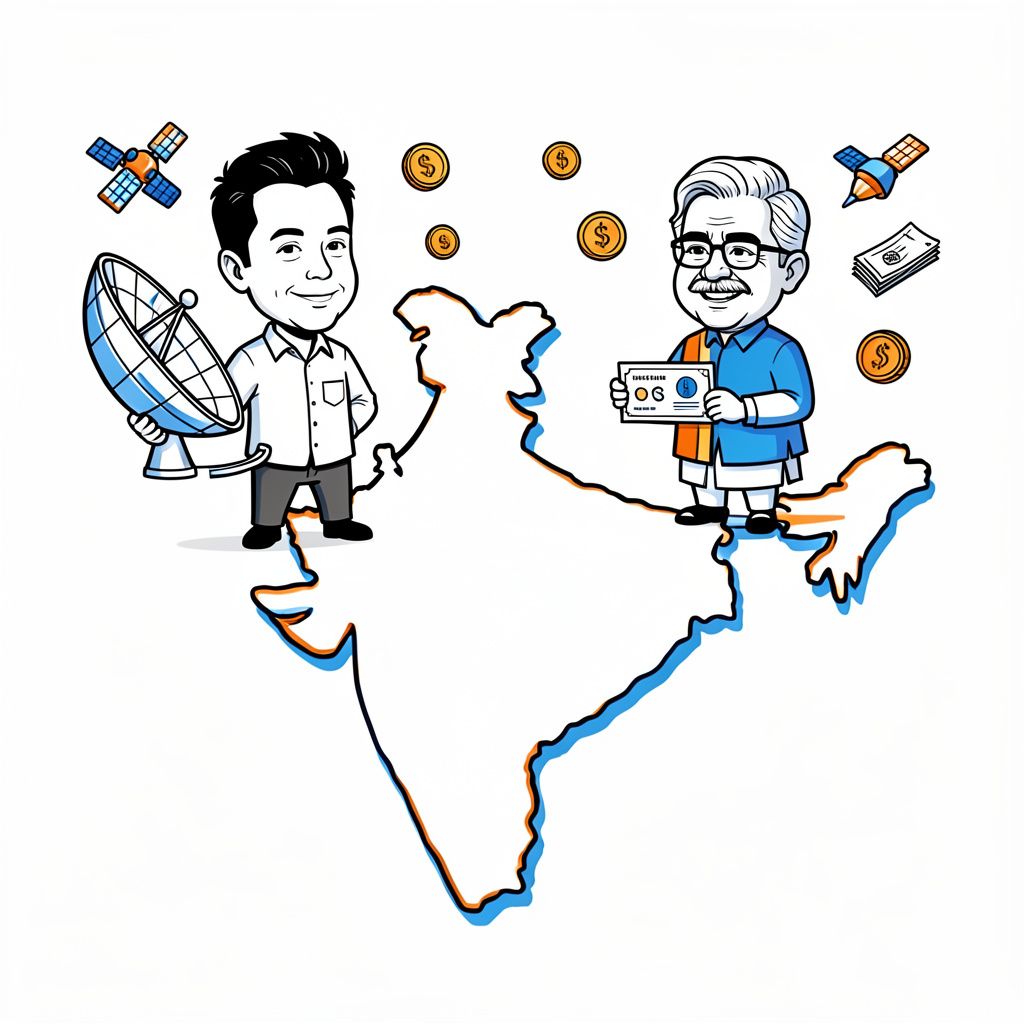
India denied favoring domestic telecoms after Elon Musk accused billionaire Mukesh Ambani of blocking Starlink, despite Reliance Jio planning its own competing 1,600-satellite network.
Escalating Tensions Over Market Entry
Public allegations from SpaceX Chief Executive Elon Musk have intensified scrutiny on India’s telecommunications regulatory framework. On 2026-10-07, Musk accused unnamed oligarchs of maintaining a monopolistic chokehold on Indian consumers [1][4]. By 2026-10-08, the SpaceX CEO directly questioned Reliance Industries Chairman Mukesh Ambani’s influence, asking if he was the real boss of India [2][3]. The Indian government has dismissed claims of market monopolization following these public statements [1]. Starlink has attempted to enter the Indian market since 2021, holding key licenses but lacking final security clearances [4].
Regulatory Stance and Security Clearances
India’s Ministry of Communications publicly rejected Musk’s allegations of unfairness on 2026-10-08 [1]. The Ministry stated that Starlink, Eutelsat OneWeb, and Jio Satellite Communications are all currently awaiting the same required security clearances and spectrum allocation [1][4]. Union communications minister Jyotiraditya Scindia confirmed that three satellite communication operators had received licences, including Reliance Jio Satcom and Bharti Airtel-backed Eutelsat OneWeb [2]. The government is finalising the satellite spectrum pricing framework while security assessments are under way [2]. Starlink claims to have spent five years complying with every single law and requirement of the government of India [3][4].
Competing Satellite Ambitions
Reliance Jio is developing its own satellite communications technology and pursuing regulatory approvals [1]. Jio Platforms proposed a satellite network comprising 1,600 Low Earth Orbit (LEO) satellites and 23 ground stations to expand Indian connectivity [3]. This contrasts with Starlink’s existing 11,000 satellites providing service in over 170 countries and territories [3]. The difference in satellite count is 9400 units [3]. Reliance Jio and Airtel currently control approximately 80% of the Indian telecom and internet market [3]. Akash Ambani stated that Reliance Group prioritizes an indigenous stack of technologies for India [3].