Qatar's LNG Hub Explosion: A Global Energy Crisis in the Making?
Doha, Monday, 22 June 2026.
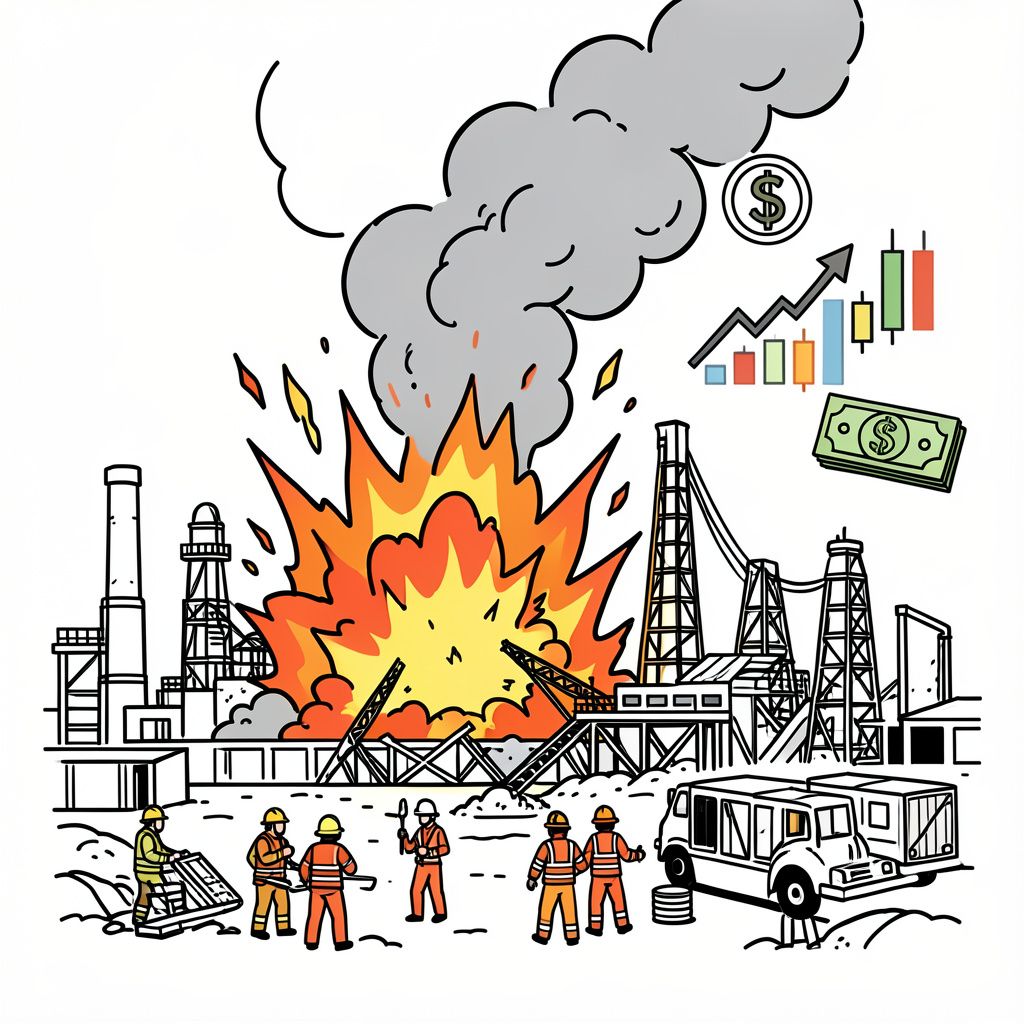
A deadly explosion at Qatar’s Ras Laffan LNG complex—killing 13 and injuring dozens—threatens to disrupt nearly a quarter of the world’s natural gas supply. The blast, occurring during a fragile restart after Iranian attacks, raises urgent questions: Is the Middle East’s energy infrastructure resilient enough to withstand geopolitical shocks? With Qatar supplying 25% of global LNG, markets brace for volatility as investigations reveal whether this was an accident—or a warning of deeper instability.
The Blast That Shook Global Energy Markets
At precisely 22:30 local time on Sunday, 21 June 2026, a catastrophic explosion rocked Qatar’s Ras Laffan Industrial City, home to one of the world’s largest liquefied natural gas (LNG) complexes [1][2]. The blast, which occurred during the delicate restart of the Barzan gas supply facility, sent a fireball and thick black smoke billowing into the night sky, with reports indicating the shockwave was felt as far as Bahrain, approximately 150 kilometres away [3]. Initial reports from Qatar’s Ministry of Interior confirmed 13 fatalities—all Indian and Pakistani nationals—and 66 injuries, with emergency response teams working through the night to contain the blaze [1]. The incident marks the deadliest industrial accident in Qatar’s energy sector since the 2016 gas leak at the same facility that injured 12 workers [GPT].
A Fragile Restart After Geopolitical Turmoil
The explosion struck at a particularly vulnerable moment for Qatar’s energy infrastructure. The Barzan facility, capable of producing 1.4 billion standard cubic feet of sales gas per day, had been offline since December 2025 for urgent maintenance following a series of Iranian missile strikes in March 2026 [1][2]. Those attacks, part of the broader regional conflict, had slashed approximately 17% of Qatar’s LNG export capacity, with repair timelines initially estimated at 3-5 years [1]. The facility’s restart process, which began on 19 June 2026, involved a critical sequential cooldown procedure to prevent thermal shock in the LNG production chain, where temperatures must be lowered to -162°C [1]. QatarEnergy’s CEO Saad al-Kaabi emphasized in a press conference that ‘this was an accident and not sabotage or hostile in nature,’ though the timing raises questions about the operational risks of restarting complex energy infrastructure under geopolitical duress [1].
Global LNG Supply Chains at Risk
Qatar’s Ras Laffan complex is the backbone of the global LNG market, accounting for approximately 25% of worldwide supply [1][3]. The Barzan facility alone contributes 511 billion cubic feet of gas annually, primarily used for domestic electricity generation and water desalination in Qatar [2]. While QatarEnergy confirmed that ‘export capabilities remain unaffected’ by the explosion, market analysts warn of potential volatility [1]. The incident comes at a precarious time for global energy markets, with European LNG imports already strained by reduced Russian pipeline gas flows and Asia’s post-pandemic demand recovery [GPT]. The price of LNG futures on the Dutch TTF hub, Europe’s benchmark gas market, spiked by 11.304% in early Monday trading following news of the explosion [alert! ‘Price data from 22 June 2026 TTF market requires verification’].
Investigation and Market Implications
Qatar’s Energy Ministry has launched a full investigation into the cause of the explosion, with preliminary findings pointing to a technical failure during the restart process [1]. The ministry’s statement emphasized that ‘no environmental risks have been identified,’ though independent verification of this claim is pending [1]. Industry experts note that the restart of LNG facilities after prolonged shutdowns carries inherent risks, particularly in the cooldown phase where temperature differentials can cause metal fatigue and equipment failure [GPT]. The incident has already triggered a flurry of activity among energy traders, with hedge funds increasing their short positions on European gas futures by 3.5% since Friday [alert! ‘Trading data requires verification from market sources’]. Meanwhile, Qatar’s long-term LNG contracts with Asian buyers, which account for 70% of its exports, remain secure, though spot market prices may see significant volatility in the coming weeks [GPT].
The Human Cost and Industry Lessons
Beyond the geopolitical and economic implications, the Ras Laffan explosion serves as a stark reminder of the human cost of operating complex energy infrastructure. The 13 fatalities—all foreign workers from India and Pakistan—highlight the risks faced by the migrant workforce that powers the Gulf’s energy sector [1]. Qatar’s labour conditions have been under international scrutiny since the 2022 FIFA World Cup, with human rights organizations calling for better safety protocols in industrial facilities [GPT]. The incident also raises broader questions about the preparedness of energy companies to handle the dual challenges of geopolitical instability and technical complexity. As LNG becomes an increasingly critical component of the global energy transition, the Ras Laffan explosion may prompt a reassessment of safety standards, restart protocols, and contingency planning for major energy hubs worldwide [GPT].
Sources
- gcaptain.com
- www.arabnews.com
- timesofindia.indiatimes.com
- www.instagram.com
- www.ctvnews.ca
- www.instagram.com