Melania Trump Chairs UN Security Council in Historic First Amidst Iran Conflict
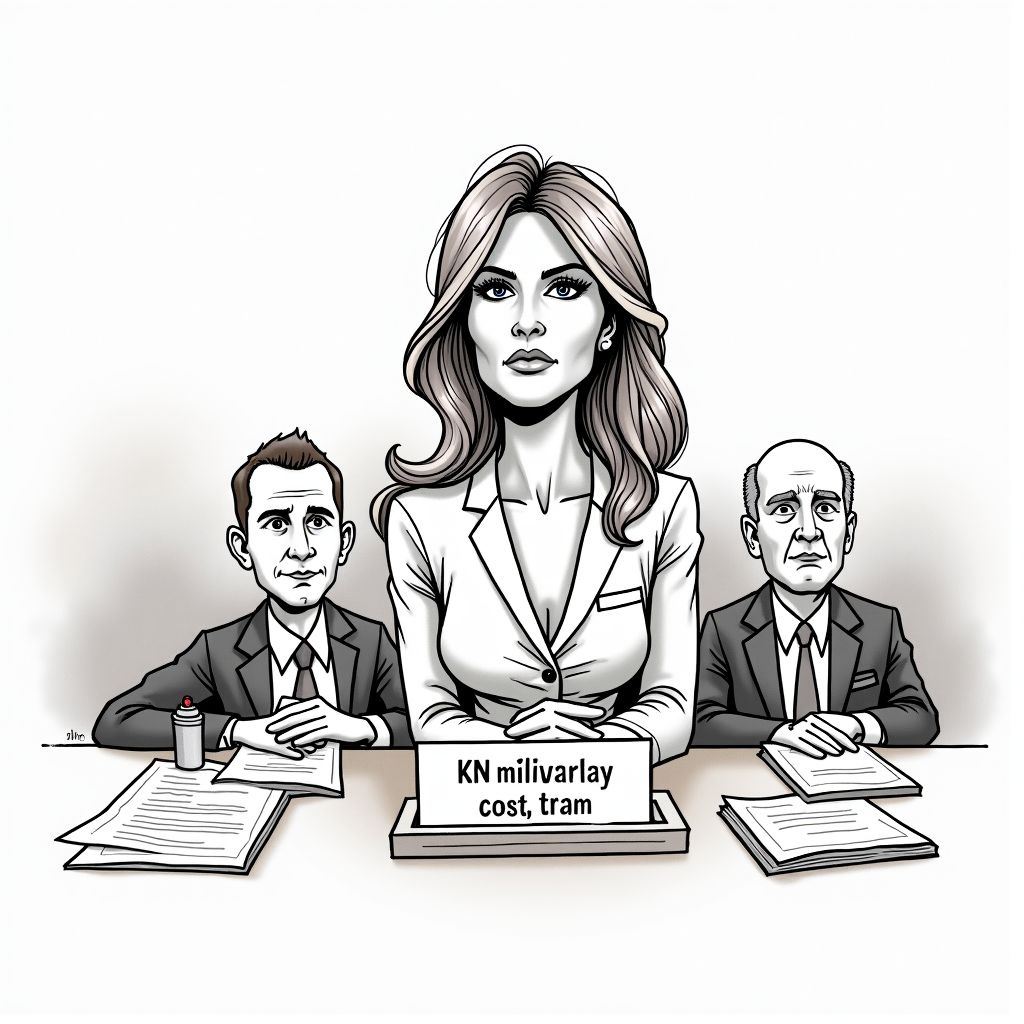
New York, Monday, 2 March 2026.
Melania Trump makes history as the first sitting First Lady to chair the Security Council, projecting soft power regarding education while US-Israeli military operations escalate in Iran.
A Diplomatic Milestone Amidst Kinetic Action
The session, titled “Children, Technology, and Education in Conflict,” convened at 3:00 p.m. ET on Monday, with the First Lady taking the gavel alongside U.S. Ambassador to the United Nations Mike Waltz [3][4]. This event marks a significant departure from tradition, as it is the first time a sitting First Lady has presided over the Security Council [2][3]. The White House framed the meeting as a platform to emphasize the role of education in “advancing tolerance and world peace,” a message delivered as the United States assumed the Security Council’s rotating presidency for March 2026 [1][2]. However, the diplomatic optics were sharply contrasted by the operational reality on the ground, where a joint U.S.-Israeli military mission launched over the preceding weekend fundamentally altered the region’s power dynamics [1].
Escalation in the Gulf
While the First Lady spoke of peace in New York, the Pentagon confirmed that the weekend offensive, which began on February 28, resulted in the death of Iranian Supreme Leader Ayatollah Ali Khamenei in Tehran [1][2]. The operation has drawn immediate and lethal retaliation; the Pentagon reported that an Iranian strike in Kuwait killed four U.S. service members [1]. The conflict’s reach has immediately impacted the very demographic the First Lady’s session aimed to protect. U.N. Under-Secretary-General Rosemary DiCarlo noted on Monday that schools across Israel, the United Arab Emirates, Qatar, Bahrain, and Oman have been forced to shift to remote learning due to the expanding military operations [1].
The Minab Incident and Humanitarian Concerns
The intersection of military force and civilian safety became a focal point of the day’s discourse following reports from Iran alleging that dozens of children were killed in a strike on an elementary school in the town of Minab [1]. Secretary of State Marco Rubio addressed these allegations on Monday, stating that the United States is actively investigating the reports while asserting that the U.S. “would not deliberately target a school” [1]. DiCarlo emphasized the grim reality of the escalation, stating, “when conflicts erupt, children are among those most severely affected,” a sentiment that underscored the tension between the Security Council’s thematic focus and the unfolding casualties [1].
Shifting US-UN Dynamics
This high-level engagement at the U.N. comes against a backdrop of complex financial and political maneuvering by the current administration. While the First Lady’s appearance signals a high regard for the venue, President Trump has simultaneously sought to bypass the Security Council through the creation of a “Board of Peace,” which held its inaugural session in Washington in February 2026 [2]. Financially, the relationship remains strained but active; Washington recently transferred $160 million to the U.N.’s regular budget in late February after contributing nothing in 2025 [2]. This payment arrives as the United Nations grapples with a debt exceeding $4 billion for its budget and peacekeeping operations, highlighting the precarious nature of international governance funding during crises [2].