Trump Schedules Prime-Time Address as Economic Questions Mount
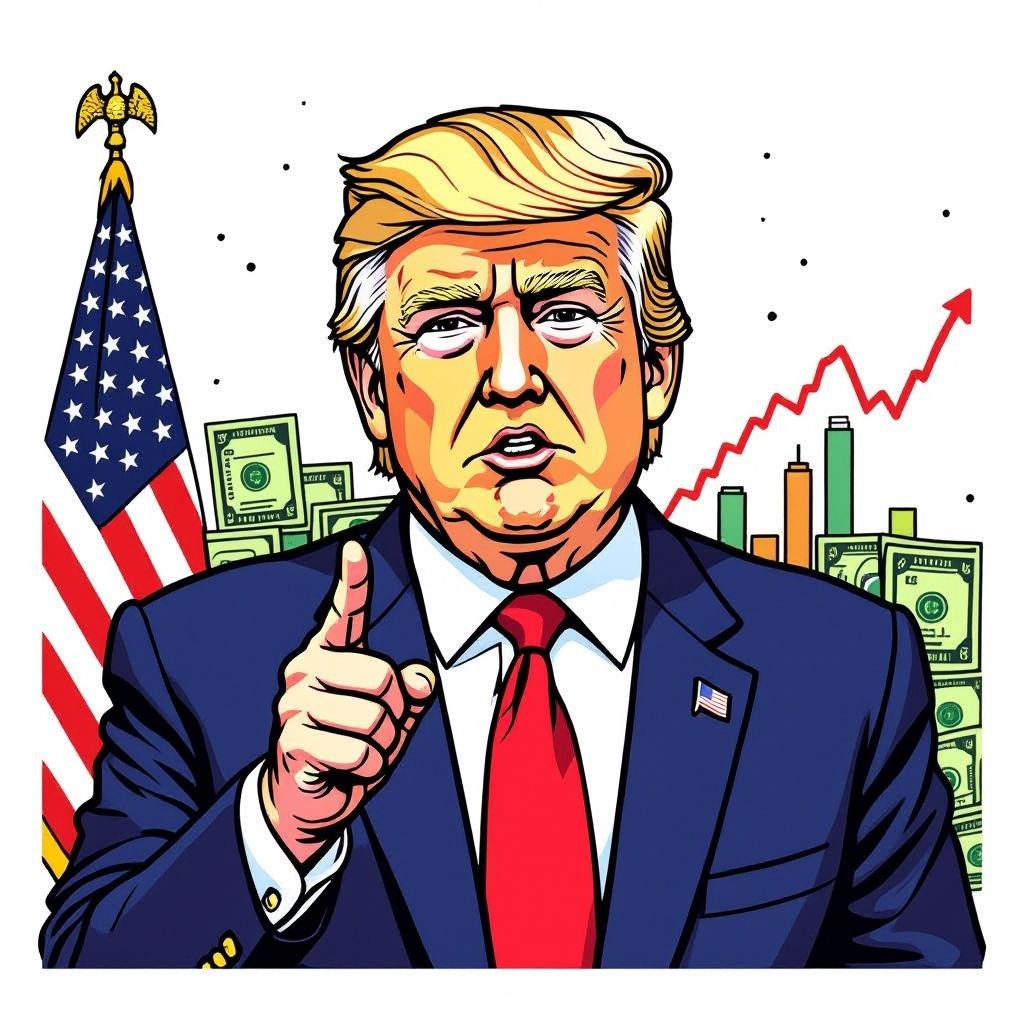
Washington D.C., Tuesday, 16 December 2025.
President Trump addresses the nation Wednesday at 9:00 p.m. EST, aiming to pivot the narrative toward future economic prosperity despite recent labor market cooling. With unemployment rising to 4.6% and holiday spending projected to dip, the stakes are high for the administration to clarify its 2026 agenda. Markets are particularly attentive to potential updates on the controversial tariff-funded dividend program, as fiscal 2025 duty revenues surged to over $215 billion. This speech marks a strategic effort to stabilize sentiment ahead of a pivotal midterm election year.
Framing the Narrative: Accomplishments vs. Reality
The upcoming address, scheduled for 9:00 p.m. EST on Wednesday, represents a critical juncture for the administration as it seeks to define the economic landscape ahead of the 2026 midterms [1][6]. While President Trump has taken to Truth Social to declare that “it has been a great year for our Country,” referencing his administration’s “historic accomplishments” over the past 11 months, the timing coincides with a complex mix of domestic challenges [1][2]. White House Press Secretary Karoline Leavitt noted that the President intends to tease new policies expected in the coming year, specifically focusing on border security and the economy [2]. However, this optimistic framing contrasts sharply with recent indicators suggesting economic fatigue among the electorate. A new poll reveals that 55% of U.S. adults intend to reduce their holiday spending this year, a sentiment likely driven by persistent inflation and the erosion of purchasing power referenced by Vice President JD Vance [5].
Labor Market Softening and Consumer Sentiment
Beneath the headline figures, the labor market has shown significant volatility that complicates the administration’s growth narrative. Data from the Bureau of Labor Statistics indicates a net contraction in the workforce over the last two reporting periods; the U.S. economy shed 105,000 jobs in October before adding back 64,000 in November [5]. This results in a net loss of -41000 jobs over the two-month span. Furthermore, wage growth has remained sluggish, with average hourly earnings rising by just 0.1% in November, contributing to an annual increase of 3.5% [5]. These tepid wage gains, combined with an unemployment rate that has ticked up to 4.6%, suggest that the “economic jitters” impacting holiday spending plans are rooted in fundamental labor market weakness rather than mere sentiment [5]. The administration’s ability to address these anxieties without acknowledging the data’s downward trend will be a key test of Wednesday’s broadcast.
Tariff Revenues and Fiscal Strategy
A central pillar of the President’s economic argument remains his aggressive trade policy, specifically the “Liberation Day” tariffs introduced in April 2025 [4]. The administration is likely to highlight the substantial revenue generated by these measures; total duty revenue reached $215.2 billion for the fiscal year ending 30 September 2025 [4]. Monthly receipts have shown a steady upward trajectory, climbing from $23.9 billion in May to $29 billion by July 2025 [4]. Financial analysts are closely watching for details regarding the proposed dividend payments to low- and middle-income Americans, which Trump has suggested could be funded by these tariff inflows by mid-2026 [4]. However, this fiscal experiment faces scrutiny against the backdrop of a national debt that currently sits just above $38 trillion [4]. The feasibility of distributing tariff proceeds while servicing this debt load remains a point of contention for fiscal conservatives and market observers alike.
Political Stakes and Administration Dynamics
The strategic timing of this address cannot be overstated, as the White House looks to consolidate support heading into a difficult midterm election cycle [1]. Despite the economic headwinds, recent polling offers a glimmer of hope for the President; his approval rating has risen to 44.8%, an increase of 3.5 percentage points over the past month [3]. To capitalize on this momentum, the administration is deploying key figures like Vice President Vance to battleground states such as Pennsylvania to promote their agenda [1]. Meanwhile, internal dynamics continue to draw attention, with Chief of Staff Susie Wiles recently emphasizing the President’s willingness to pursue “retribution” when opportunities arise, signaling that the administration’s political strategy may remain as aggressive as its economic one [5]. Wednesday’s speech will ultimately serve as the opening salvo for the 2026 political season, attempting to bridge the gap between the White House’s “great year” rhetoric and the mixed economic reality facing American households.