HP USA Targets Pacific Northwest for 2026 Regional Network Expansion
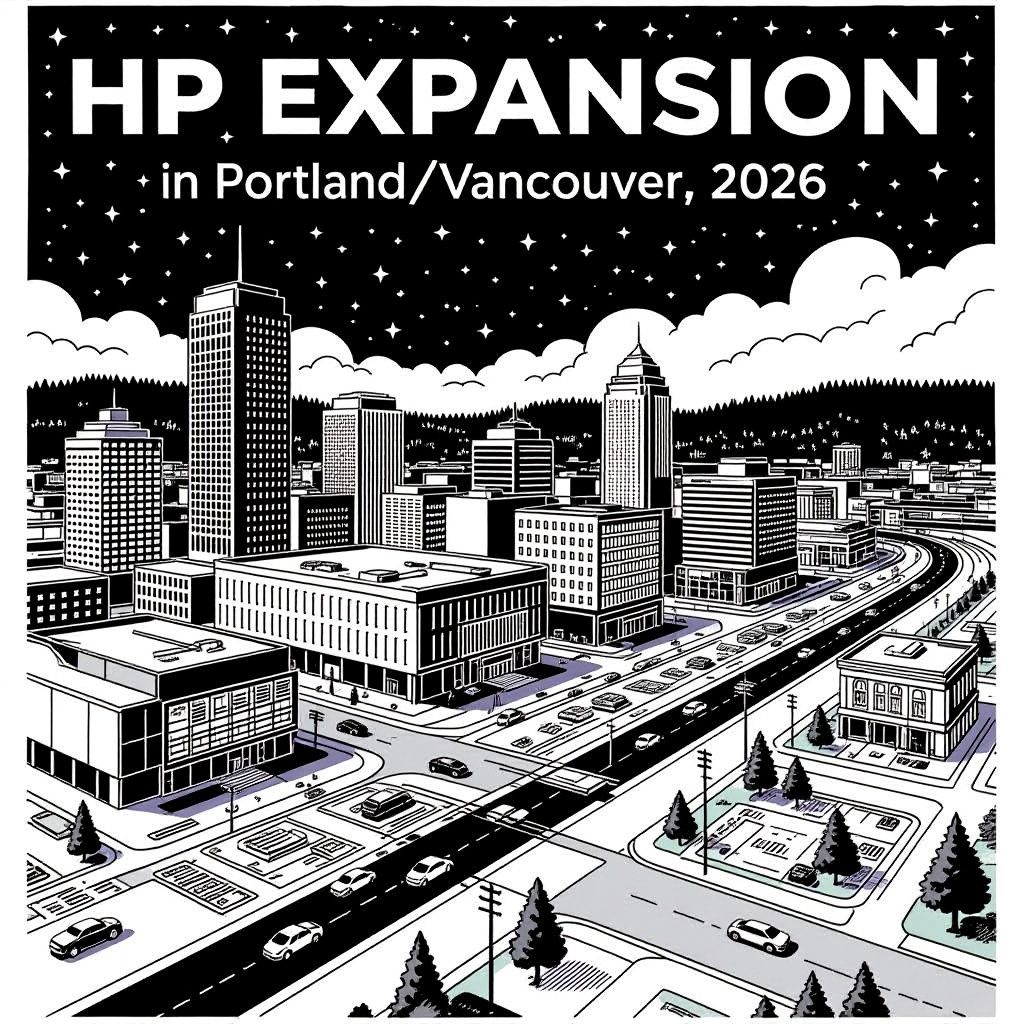
Portland, Saturday, 25 April 2026.
Highlighting a trend in specialized corporate investments, HP USA’s 2026 expansion integrates localized data to boost regional service accessibility across the Portland and Vancouver corridors.
Localized Infrastructure and Residential Expansion
On April 25, 2026, High Performance Homes, operating regionally as HP USA, officially announced the strategic expansion of its service infrastructure [1]. Targeting the Pacific Northwest hubs, the initiative focuses on the Vancouver, Washington, and Portland, Oregon, residential corridors [1]. The company, located at 4200 SE Columbia Way Suite C in Vancouver, specializes in roofing, siding, and window replacement services [1]. By integrating localized infrastructure data, the 2026 program prioritizes high-growth sectors, specifically aligning its Vancouver operations with community engagement in Salmon Creek (zip code 98685) and Orchards (zip code 98662) [1].
Broader Market Context and Corporate IT Investments
While regional entities like High Performance Homes focus on localized physical infrastructure, multinational technology corporations with similar acronyms, such as HP Inc. (NYSE: HPQ), are simultaneously driving massive investments in digital infrastructure [2]. Founded in 1939 and headquartered in Palo Alto, California, HP Inc. operates through three primary segments: Personal Systems, Printing, and Corporate Investments [2]. The broader technological landscape that supports modern business operations is expanding rapidly; the global personal computer market, estimated at $235.85 billion in 2025, is projected to reach $317.69 billion by 2030, representing a substantial growth trajectory of 34.7 percent [2].
Transforming Customer Engineering and Support
As physical and digital infrastructures expand globally and regionally, the operational models supporting these networks are undergoing necessary transformations [GPT]. A prime example of this operational shift recently occurred at Conviva, where over a two-year period culminating in early 2026, the company’s Customer Support function was fundamentally restructured into a Customer Engineering & Support (CES) organization [3]. This transition moved the team from a reactive, execution-focused model to acting as a genuine engineering partner that owns outcomes and builds technical depth [3].