World Cup Ticket Notifications Begin Amid Record Demand and Soaring Ancillary Costs
Los Angeles, Friday, 6 February 2026.
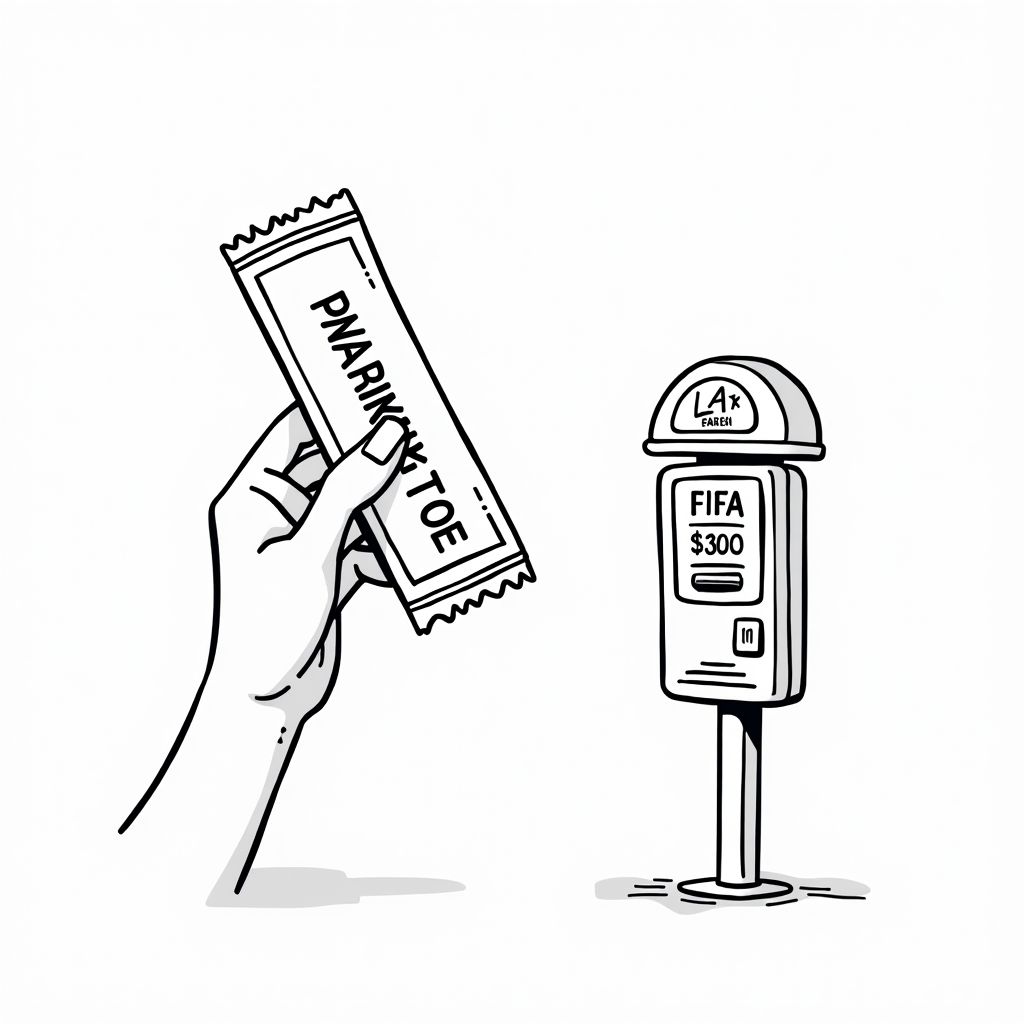
As FIFA notifies winners from 500 million requests, the “experience economy” intensifies; Los Angeles parking fees have reportedly reached $300, in some cases exceeding the cost of match entry.
Supply Constraints and Financial Commitments
The notification phase for the 2026 World Cup ticket lottery, which officially commenced on February 6 following a scheduled embargo, represents a massive liquidity event in the sports entertainment sector [4]. With the expanded tournament field of 48 teams necessitating 104 matches, FIFA received an unprecedented 500 million ticket requests by the January 13 deadline, creating a supply-demand imbalance that virtually guaranteed a low success rate for the average applicant [1][2]. For the lucky minority selected, the financial commitment is immediate; FIFA has stated that credit cards for successful and “partially successful” applicants—those awarded some but not all requested fixtures—will be automatically charged starting February 9 [4][8]. This automated capitalization ensures revenue lock-in well before the tournament’s June 11 kickoff [2].
The Premium on High-Demand Fixtures
Market analysis of the application data reveals distinct valuation clusters based on geography and team legacy. While host nations (the United States, Mexico, and Canada) naturally drove volume, significant demand originated from Germany, England, Brazil, Spain, Portugal, Argentina, and Colombia [1][8]. This demographic pressure has elevated specific group stage matches above typical valuations. The most requested fixture during the lottery phase was not a host opener, but the Colombia vs. Portugal match scheduled for June 27 in Miami [4][8]. Other high-demand inventory includes the Mexico vs. South Korea match in Guadalajara and the Final in New York/New Jersey, reflecting a global willingness to pay premiums for marquee matchups [1][4].
Secondary Market Volatility
For those bypassing the lottery, the secondary market presents a stark illustration of the experience economy’s inflationary pressure. As of February 4, tickets had already populated resale platforms like StubHub, despite warnings that these listings are not authenticated by FIFA [5][7]. The price disparity is extreme: while diligent buyers can find tickets for the South Africa vs. South Korea group match starting at $188 [6], the cost for the Final has surged to $8,000 [5]. This represents a market multiplier where the premier event trades at approximately 42.553 times the value of the lowest-priced group stage inventory. Furthermore, tickets for the tournament opener featuring Mexico vs. South Africa are currently listing for $3,600, signaling that scarcity is driving pricing far beyond face value [5].
Future Transaction Windows
The economic landscape for tournament access remains fluid as FIFA attempts to control the resale ecosystem. The official Resale/Exchange Marketplace is scheduled to close on February 22, only to reopen on April 2, coinciding with a “Last-Minute Sales” phase [1]. This planned hiatus creates a distinct period of illiquidity, potentially driving impatient buyers toward third-party vendors where prices are fluctuating rapidly [1][5]. With the tournament spanning from June 11 to July 19, the management of this inventory will likely see continued volatility as fans from 211 member associations compete for the remaining access to the event [5][8].
Sources
- www.usatoday.com
- www.espn.com
- www.houstonpublicmedia.org
- www.sportingnews.com
- www.elpasotimes.com
- nesn.com
- www.kansascity.com
- www.reddit.com