High Tariffs Keep Affordable Chinese Electric Vehicles Out of the American Market
Baltimore, Monday, 23 March 2026.
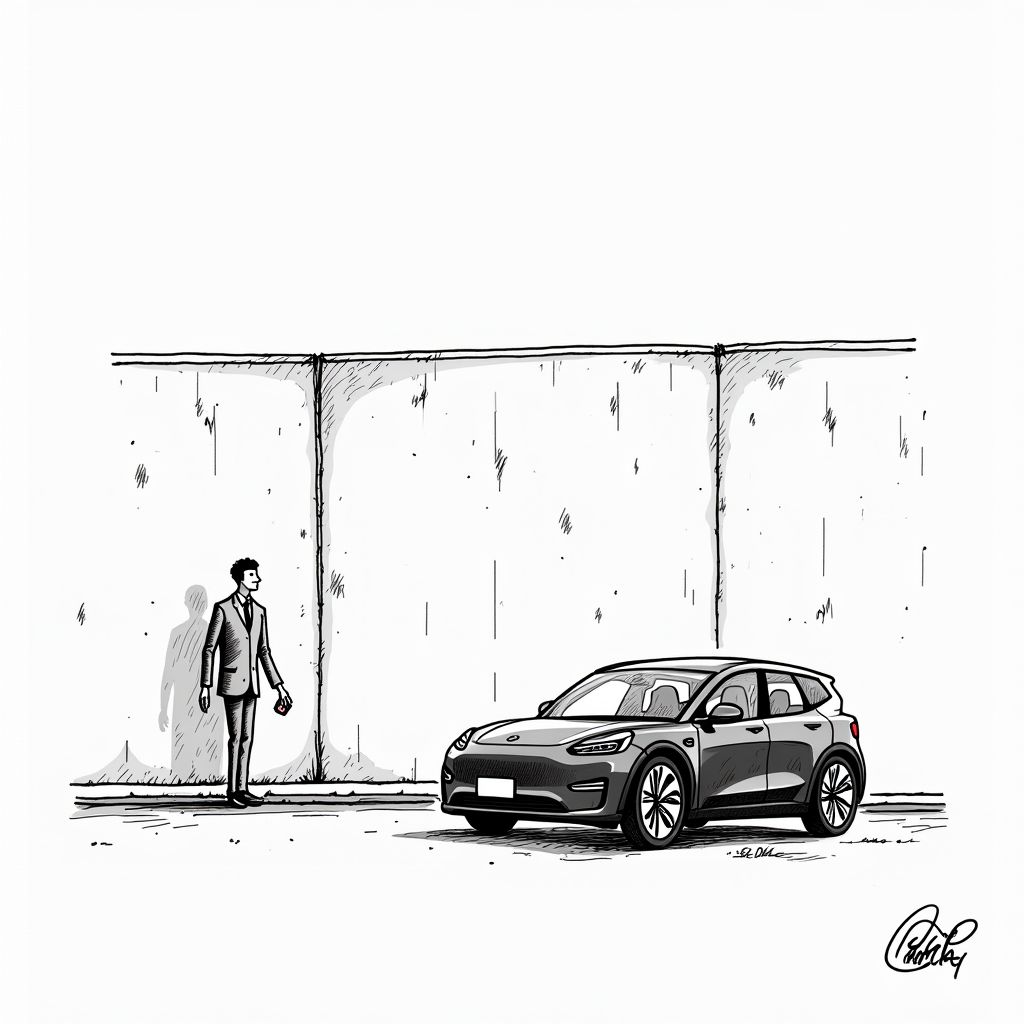
While average US car prices approach $50,000, consumers remain frustrated as steep tariffs block advanced Chinese electric vehicles priced under $30,000 from entering the domestic market.
The Price Gap and Protectionist Walls
American consumers face a stark reality when shopping for a new vehicle in early 2026. The average price of a new car in the United States currently hovers near $50,000 [1][5]. In sharp contrast, European buyers have access to Chinese electric vehicles (EVs) equipped with advanced driver assistance systems for under $30,000 [1][5]. This price discrepancy represents a 66.667 percent premium for American buyers comparing the average domestic car to affordable overseas EV options. Despite clear consumer interest, the United States government has effectively banned these vehicles by enforcing tariffs that exceed 100 percent [1][5]. Officials cite potential data security risks and the imperative to protect domestic manufacturing jobs as the primary drivers behind these steep trade barriers [1][5].
Technological Agility and Supply Chain Dominance
While the U.S. market remains walled off, Chinese automakers have aggressively expanded their global footprint, officially surpassing Japan to become the world’s top vehicle exporter [1][5]. In 2025, Chinese automotive brands sold approximately 27 million vehicles globally, edging out Japanese brands, which sold 25 million units [4]. This represents a volume advantage of 2 million vehicles. A major factor in this structural shift is China’s comprehensive domestic ecosystem, which spans raw material processing, battery manufacturing, and recycling [4]. By utilizing locally manufactured lithium iron phosphate (LFP) batteries, Chinese automakers can slash vehicle production costs by up to 30 percent [7].
Surging Profits and Global Export Growth
The financial results from 2025 illustrate the massive momentum propelling China’s auto sector. Chery Automobile reported 2025 revenues of 300.3 billion yuan, equivalent to roughly $41.5 billion, marking an 11.3 percent increase from the previous year [3]. The company’s net profit surged by 36.1 percent to reach 19.5 billion yuan, heavily driven by overseas markets, which accounted for over half of its total revenue [3]. Chery’s new energy vehicle sales alone skyrocketed by 72.5 percent to 826,500 units [3]. Similarly, Geely saw its 2025 revenue climb 25 percent to 345.2 billion yuan, with total vehicle sales hitting 3.03 million units—a 39 percent year-over-year increase [3].
Economic Crossroads for the U.S. Auto Industry
The continued exclusion of affordable Chinese EVs places the U.S. economy at a unique crossroads. By shielding domestic automakers from direct price competition, the U.S. preserves manufacturing jobs but simultaneously forces American consumers to absorb higher transition costs for electric vehicles [1][GPT]. Looking ahead, global market dynamics may force a strategic pivot. In January 2026, former U.S. President Donald Trump indicated a willingness to allow Chinese automakers to build factories on U.S. soil, provided they employ American workers [1]. Such a move could potentially bypass tariff barriers while stimulating local job creation, offering a compromise between protectionism and consumer demand [GPT].
Sources
- www.reuters.com
- www.bloomberg.com
- www.chinadaily.com.cn
- www.chinadailyhk.com
- stratnewsglobal.com
- www.investors.com
- www.technavio.com