Defense Tech Upgrade Bolsters NATO Air Combat Training in Europe
Lakenheath, Thursday, 12 March 2026.
Driven by rising defense demand, new portable radar simulators that deploy in just ten minutes are now equipping US forces in the UK to train against modern combat threats.
Upgrading NATO’s Electronic Warfare Capabilities
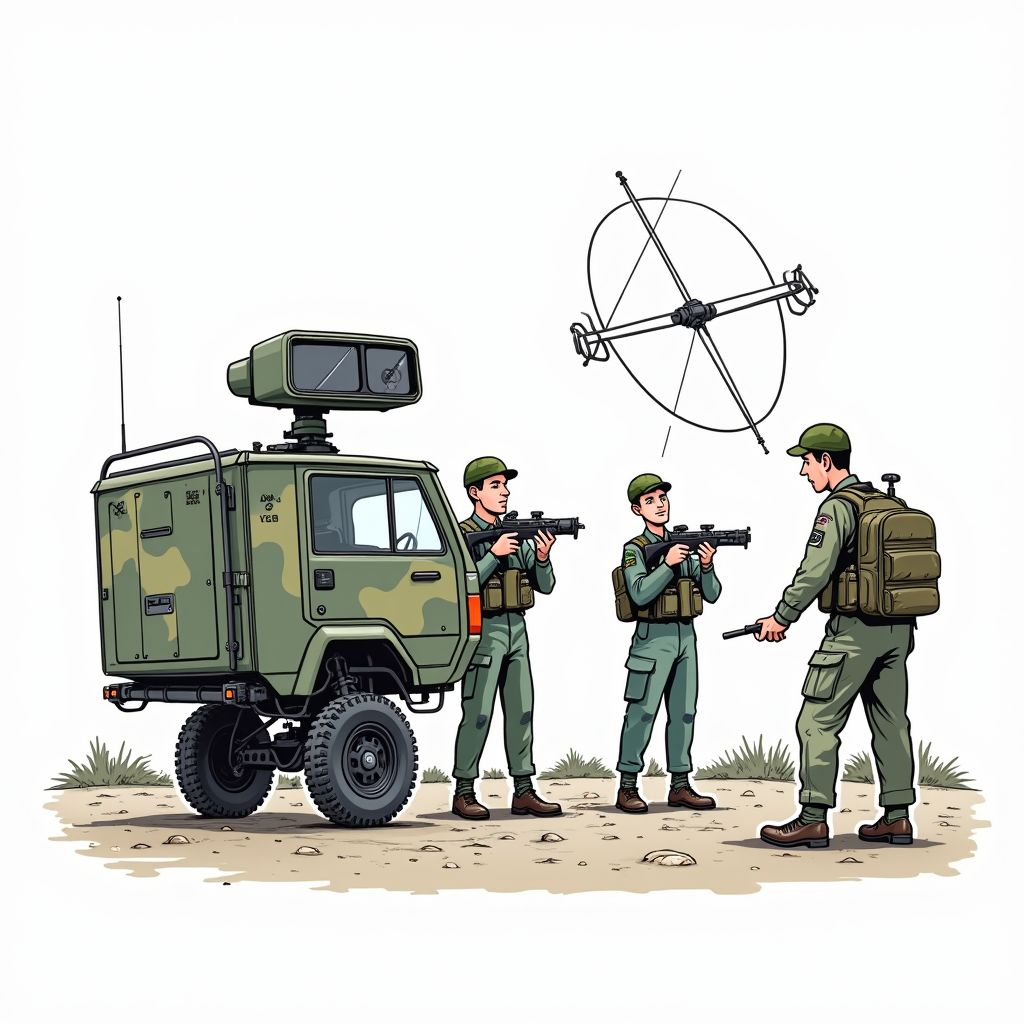
Today, March 12, 2026, the defense technology firm Disruptive Electronic Warfare Machines (DEWM) officially delivered its Attritable Radar Target (DART) systems to Royal Air Force (RAF) Lakenheath in the United Kingdom [1]. The delivery provides the United States Air Force’s 48th Fighter Wing with advanced tools to simulate Integrated Air Defense System (IADS) threats [1]. By replicating the radio frequency signatures of surface-to-air threats across multiple spectrum bands, the DART system allows U.S. and NATO forces to train against realistic, modern combat scenarios [1].
Strategic Deployment and Proven Track Record
This deployment to the European theater aligns with broader defense strategies emphasizing enhanced simulation and readiness [GPT]. Earlier this month, on March 3, 2026, defense analysts highlighted NATO’s accelerating push for Distributed Synthetic Training [2]. DEWM’s CEO, David “TESLA” Coyle, emphasized this strategic alignment, noting that RAF Lakenheath’s position makes realistic electronic warfare training critical [1]. “This is about training like you fight—against threats that mirror real-world adversaries,” Coyle stated, underscoring the necessity of preparing for sophisticated air defense networks [1].
Technological Expansion and Future Readiness
The technological viability of the DART system was rigorously validated prior to its deployment to the UK [GPT]. During 2025, the system demonstrated robust performance across C-Band frequencies and secured JF-12 approval, a critical certification for military spectrum use [1]. Furthermore, the threat emitter was successfully tested and detected by a wide array of advanced tactical aircraft, including the F-16, F-15EX, EA-18G, and multiple variants of the F-35 (A, B, and C models) [1][2].