Federal Reserve Policy Shifts Spark Wall Street Volatility Concerns
Washington, Tuesday, 11 August 2026.
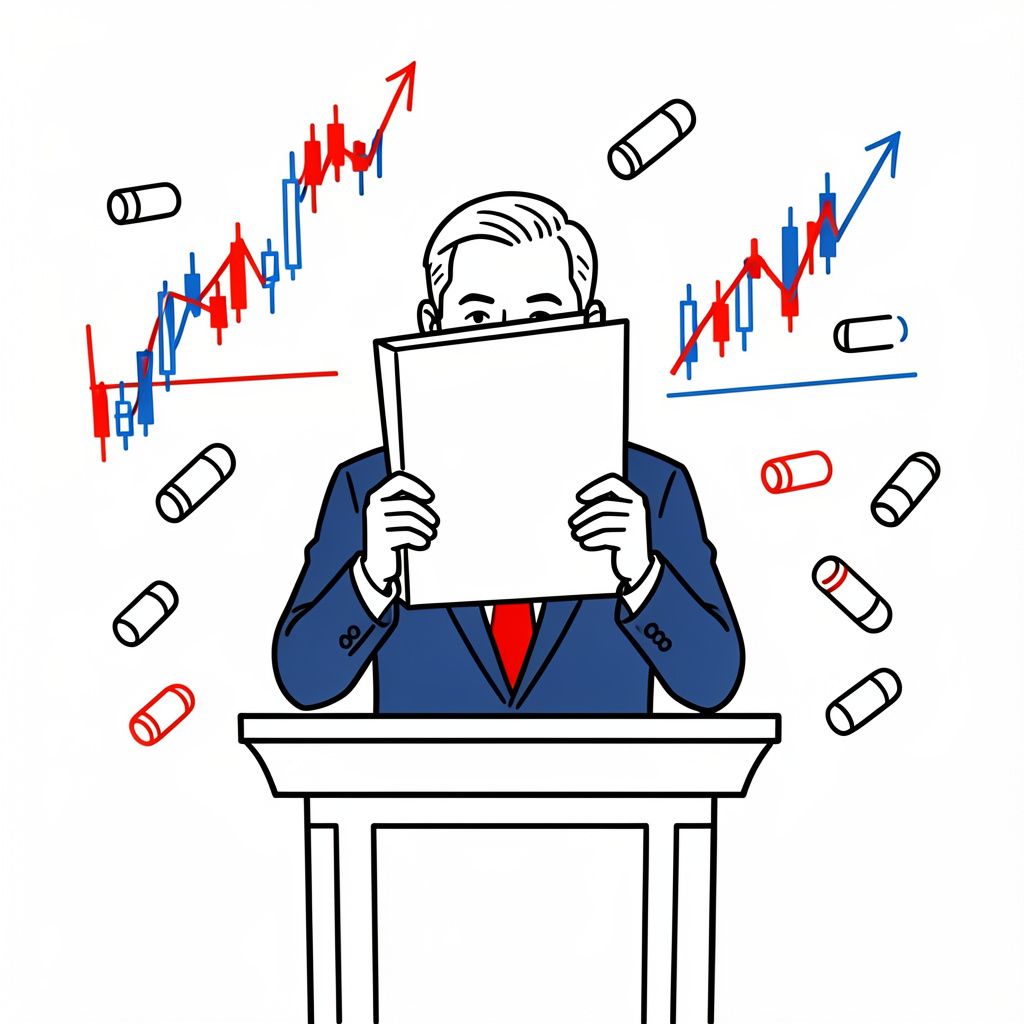
Federal Reserve Chair Kevin Warsh’s strategy to reduce forward guidance has alarmed Wall Street, with critics warning that decreased transparency could fuel market volatility and economic uncertainty.
Federal Reserve Policy Shifts Spark Wall Street Volatility Concerns
Federal Reserve Chair Kevin Warsh’s strategy to reduce forward guidance has alarmed Wall Street, with critics warning that decreased transparency could fuel market volatility and economic uncertainty [1][3]. Signals from Federal Reserve leadership regarding a reduction in public forward guidance have triggered concern across major financial institutions, creating an information void that analysts fear may increase policy uncertainty for executive decision-makers [1]. Analysts from firms such as Goldman Sachs and prominent economists warn that limiting explicit communication about monetary policy frameworks creates risks for market stability [1].
Market Reaction and Institutional Warnings
Following Federal Reserve Chair Kevin Warsh’s statements during the FOMC press conference on 2026-07-29, market reactions were immediate and pronounced [1]. Long-dated bonds spiked and remained elevated, while two-year Treasuries slumped, reflecting investor anxiety over the lack of clear direction [1]. On 2026-08-10, Goldman Sachs chief U.S. economist Jan Hatzius released a note warning that reduced Fed transparency may lead to market volatility, policy lags, and inaccurate pricing [1]. Hatzius noted that participants in short-term interest rate markets price what they think the Fed will do, not necessarily what they should do, implying unnecessary volatility in both financial conditions and the impulse from financial conditions to the real economy [1].
Warsh’s Rationale for Reduced Guidance
Chairman Warsh has argued that reducing forward guidance allows market prices to respond to economic data without Fed interference [1]. During the press conference, Warsh stated, “The central bank need not always and everywhere be the center of attention … For our part, we need to observe market reaction to developments, direct and unfiltered” [1]. However, this stance has drawn criticism regarding the balance between flexibility and transparency. Financial commentator Shashwat A. posited on 2026-08-10 that reducing Fed transparency does not necessarily enhance response speed, but instead potentially advantages institutional investors with superior data capabilities [7].
Inflation Metrics and Strategic Shifts
A significant portion of the uncertainty stems from potential changes to how the Federal Reserve measures inflation. The FOMC currently uses the Personal Consumption Expenditures Price Index (PCE) as the standard measure for the 2% inflation target [1]. A Fed task force led by Warsh is currently reviewing methods for understanding and responding to inflation drivers, with a potential shift in Federal Reserve strategy regarding inflation measurement possibly announced after January [1]. At his late July press conference, Warsh implied that the personal consumption expenditures index (PCE) could be jettisoned as the Fed’s primary inflation metric as soon as January, stating, “Who knows, come after next January, what we might say about strategy” [3].
Credibility Concerns and Economic Indicators
Critics argue that Warsh has undermined credibility by how he has talked about the Fed’s inflation objective [3]. If the central bank is looking to the markets for guidance and the markets are looking to the central bank for guidance, policy expectations become indeterminate, leading to greater uncertainty, confusion, higher risk premia, and a loss of Fed credibility [3]. Economic data shows a shift since the previous administration; as of 2026-08-10, core CPI inflation is 2.6% and the unemployment rate is 4.1% [8]. This compares to July 2025 figures, where core CPI inflation was 3.1% and the unemployment rate was 4.3%, representing a core CPI change of -16.129 percent over the period [8].
Investor Perspectives and Market Mechanics
The shift toward less forward guidance is viewed differently across the investment landscape. Robin Brooks, an author and analyst, noted that markets need to re-learn how to trade without the Fed leading them by the nose [8]. Brooks suggested that rolling back forward guidance is the right thing to do, though unpopular in markets accustomed to being spoon-fed by the Fed [8]. Conversely, concerns remain that if the Fed does not distill individual views of participants into a coherent message, the loudest voices on the committee will likely have the biggest impact, whether or not they are representative of the median FOMC voter [1].
Future Outlook and Risks
The coming months will be critical as the Federal Reserve navigates this transition. A potential shift in Federal Reserve strategy regarding inflation measurement may be announced after January, leaving markets in a state of anticipation [1]. While some argue that markets already incorporate decent policy uncertainty through the term premium, adding opacity may not improve conditions for the broader economy [7]. As Professor Jeremy Siegel noted, even without providing explicit forward guidance, central bankers still have an obligation to explain the economic framework behind their decisions, a score on which recent press conferences have fallen well short [1].
Sources
- fortune.com
- www.facebook.com
- www.bloomberg.com
- www.facebook.com
- global.morningstar.com
- www.ft.com
- www.linkedin.com
- robinjbrooks.substack.com