Major Offshore Wind Projects Restart Construction Following Legal Victories Over Federal Bans
Washington D.C., Monday, 2 February 2026.
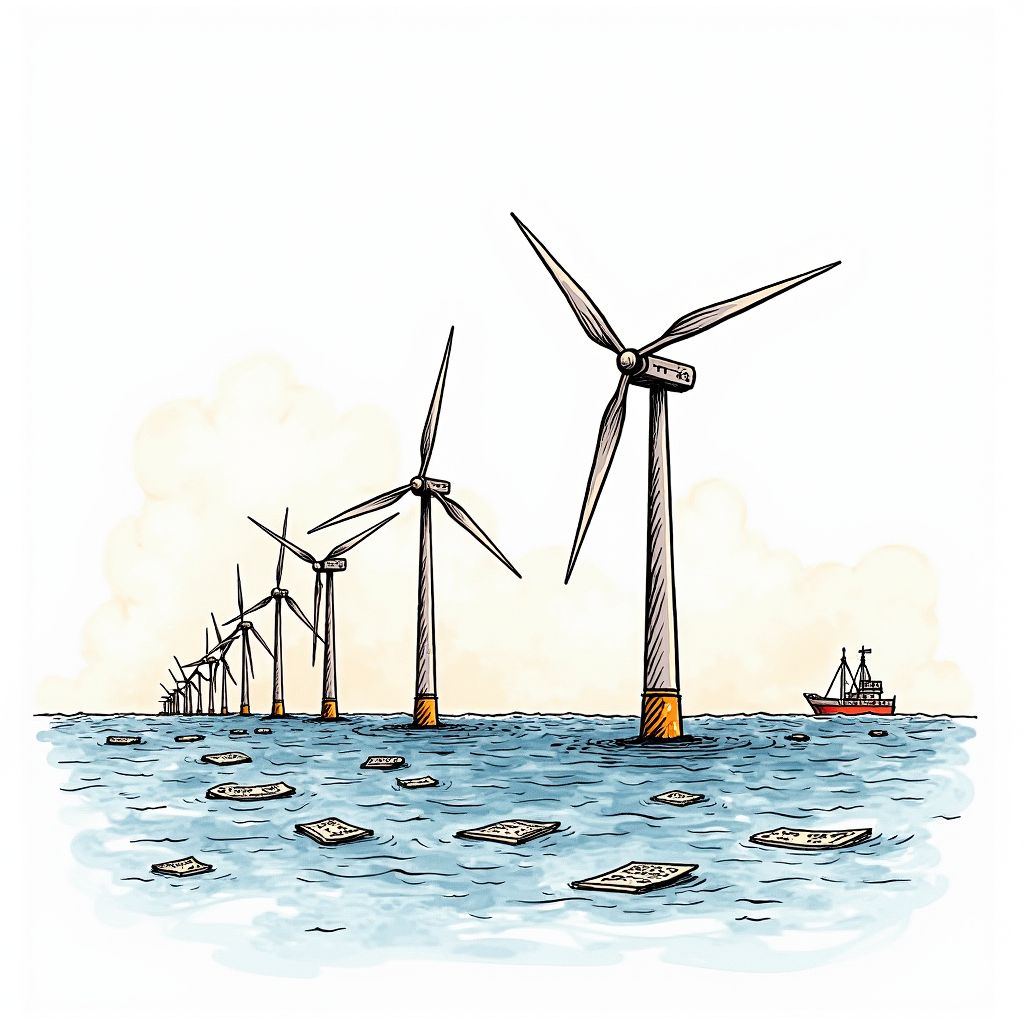
Federal judges have cleared four major wind projects to resume construction, safeguarding 5 gigawatts of capacity despite executive stop-work orders that cost developers like Dominion $5 million daily.
Judicial Intervention and Financial Consequences
The legal reprieve comes after a tumultuous month for the industry, initiated when the Trump administration halted construction on five east coast projects in late December 2025, citing national security concerns related to radar interference [1][2]. While federal judges rejected these claims in mid-January 2026, allowing work to proceed on Vineyard Wind, Coastal Virginia Offshore Wind, Empire Wind 1, and Revolution Wind, the temporary pause inflicted measurable financial damage [1]. For instance, Dominion Energy reported losses of $5 million per day during the 25-day stoppage imposed on its Coastal Virginia Offshore Wind (CVOW) project [3]. Consequently, the total estimated cost for the CVOW project has climbed from $11.2 billion to $11.5 billion, a roughly 2.679 percent increase attributed to the stop-work order and tariff hikes on imported components [3].
The Sunrise Wind Ultimatum
While four projects have navigated the legal blockade, the fate of the fifth, Orsted’s Sunrise Wind, hangs in the balance as a U.S. judge considers the case today, February 2, 2026 [1][2]. The stakes are particularly high for Orsted, which has already committed over $7 billion to the development situated 48 kilometers east of Long Island [2]. The project faces a critical logistical deadline; if the stop-work order is not lifted by February 6, 2026, Sunrise Wind risks losing access to a specialized construction vessel [2]. According to court filings, such a disruption would jeopardize the project’s financial viability and create a substantial risk of cancellation, threatening a renewable energy source intended to power nearly 600,000 homes [2].
Long-Term Projections and Policy Friction
Despite the immediate judicial victories for specific projects, the broader outlook for the U.S. offshore wind sector has darkened under the current administration’s policy framework. President Trump, who stated on January 9 that his goal is “to not let any windmill be built,” has successfully altered long-term industry expectations [1]. Following legislative shifts such as the One Big Beautiful Bill Act, market analysts at BloombergNEF have drastically revised their forecasts [1]. Prior to the election, projections estimated 39 gigawatts of offshore wind capacity by 2035; that figure has now plummeted to just 6.1 gigawatts [1]. This represents a precipitous drop of 84.359 percent in projected capacity, signaling that while existing contracts may survive through litigation, the pipeline for future development is severely constricted.