U.S. States Consider Eliminating Property Taxes to Ease Housing Costs
Washington, Tuesday, 17 March 2026.
Amid soaring ownership costs, several U.S. states are exploring the complete elimination of property taxes, a significant shift that could fundamentally transform municipal funding and real estate markets nationwide.
The Nationwide Push for Relief
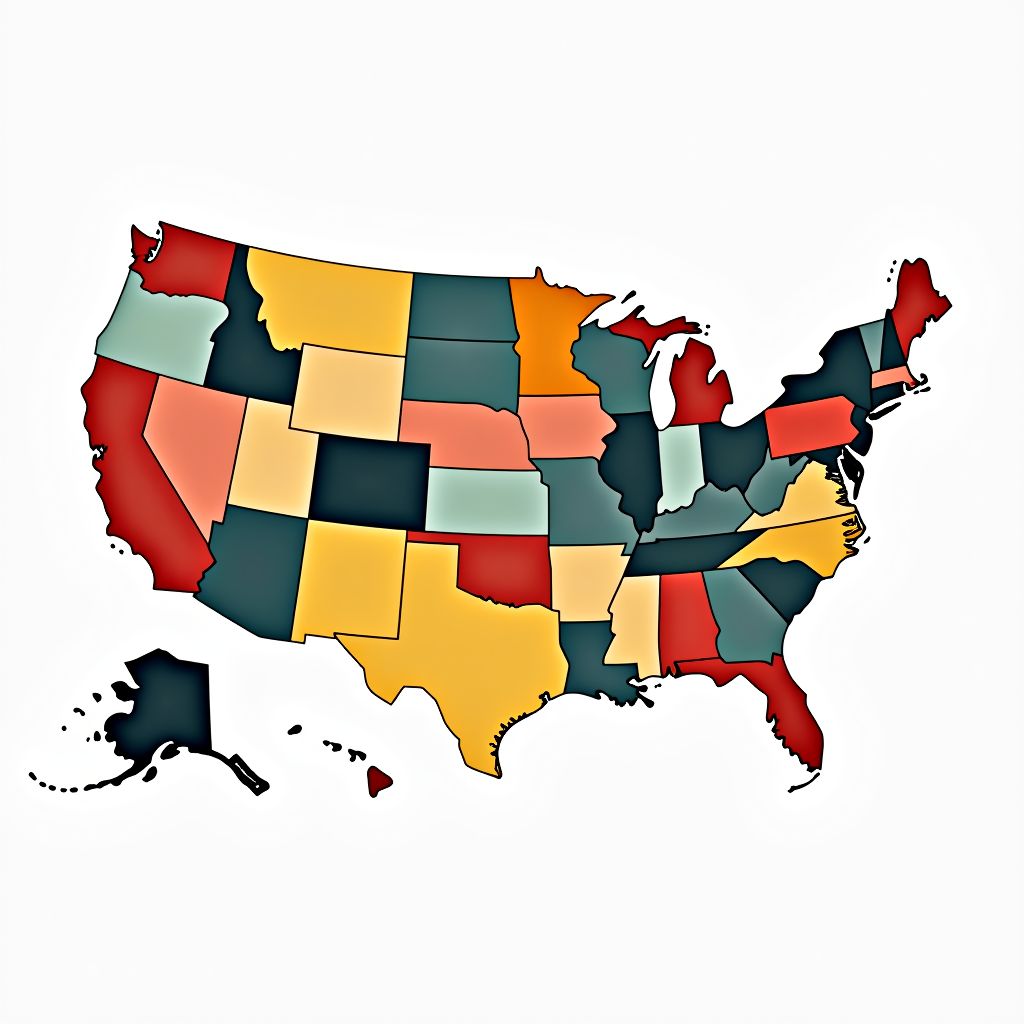
As of mid-March 2026, a growing coalition of states—including Florida, Texas, Georgia, Indiana, Ohio, and Wyoming—are actively exploring policies to either substantially reduce or entirely replace residential property taxes [1]. This legislative momentum is driven by sustained housing affordability pressures and elevated property valuations [1]. In California, officials are also investigating alternative strategies to alleviate the property tax burden on homeowners [1]. The urgency surrounding these tax reforms coincides with a shifting housing market. Following the expiration of pandemic-era mortgage relief programs, foreclosure activity across the United States is experiencing a modest upward trajectory after years of historic lows [1]. Currently, tens of thousands of properties are entering foreclosure on a monthly basis [1]. Although these figures remain well below the distress levels seen during the 2008 financial crisis, the influx of distressed properties—which frequently sell for 20 to 40 percent below market value—adds complexity to the broader real estate and municipal revenue landscapes [1].
Florida and the Debate Over Caps
In Florida, lawmakers have already taken decisive, intent-driven steps. Legislation has advanced that, pending voter approval, could eliminate the majority of homestead property taxes by 2027 [1]. While the regular 2026 legislative session concluded on March 13, legislators are scheduled to return to Tallahassee in April 2026 to finalize the state budget and debate a comprehensive tax package [2]. This upcoming April session will deeply examine commercial real estate impacts alongside residential relief. Under current Florida law, commercial property tax valuations are restricted to a maximum annual increase of 10 percent [2]. A new proposal currently under consideration would alter this framework, limiting commercial valuation increases to 15 percent over a three-year period [2]. This represents an annualized average cap of 5 percent, significantly tightening the growth of commercial property tax liabilities [alert! ‘Assuming linear average for contextual clarity, though compounding rules may apply in actual statutory implementation’].
Midwestern Fiscal Strategies in Iowa and South Dakota
In the Midwest, the focus remains heavily on restraining local government expenditures, which policymakers identify as the primary driver of rising property tax burdens [3]. During a March 9, 2026 forum in Bettendorf, Iowa, policy advocates highlighted proposals to implement a strict two percent cap on local property tax growth [3]. This builds on a broader fiscal agenda championed by Governor Kim Reynolds, which has already seen Iowa transition to a 3.8 percent flat income tax and accumulate a nearly $4 billion Taxpayer Relief Fund [3]. Conversely, South Dakota has already transitioned from intent to implemented policy during its legislative session that concluded on March 8, 2026 [4]. Governor Larry Rhoden successfully secured the passage of Senate Bill 96, a measure that permits counties to enact a half-cent increase in sales taxes in direct exchange for lowering property taxes [4]. Additionally, the legislature approved Senate Bill 245, creating a dedicated property tax relief fund financed by a scheduled 0.3 percent statewide sales tax increase set to take effect on July 1, 2026 [4]. Lawmakers will reconvene in Pierre for a veto session on March 30, 2026 [4].
Minnesota’s Targeted Refund Approach
Meanwhile, Minnesota faces acute pressures following a statewide property tax increase of 6.4 percent in 2026—the steepest hike the state has recorded since 2008 [5]. Compounding the issue, residential homestead values in the state surged by 19 percent in 2023, outpacing commercial value growth in eight of the last nine years [5]. Rather than outright elimination, Minnesota lawmakers are currently evaluating targeted relief mechanisms. On March 16, 2026, the House Taxes Committee reviewed several bills, including HF 3657 introduced by Representative Matt Norris, which proposes the creation of a specialized property tax task force [5]. Other legislative proposals, championed by Representatives Brad Tabke, Kari Rehrauer, and John Huot, aim to expand the state’s Homestead Credit Refund programs [5]. However, as of mid-March, legislators acknowledge that securing adequate funding for major expansions of these refund programs may prove difficult [5].