Toxic Oversight: Oklahoma Regulators Ignored Hundreds of Illegal Oil Wells
Oklahoma City, Tuesday, 17 March 2026.
Despite internal data revealing over 600 oil wells illegally injecting toxic wastewater, Oklahoma regulators took no action, risking severe drinking water contamination and massive liability for the energy sector.
The “Source of Truth” Uncovered
In a bid to modernize oversight, Oklahoma regulators initiated a database project dubbed the “Source of Truth” to track over 11,000 oil wells responsible for injecting toxic drilling byproducts underground [1]. However, when the project concluded in 2021, it unearthed systemic compliance failures: nearly 600 wells were operating illegally by exceeding permitted injection pressures and volumes [1]. Furthermore, the review identified more than 1,300 data errors within the agency’s existing wastewater injection records [1].
Systemic Inaction by Regulators
Rather than utilizing this extensive data to enforce environmental standards, state regulators chose to ignore the findings [1][4]. The Oklahoma Corporation Commission (OCC) reportedly opted against using the database, with agency spokesperson Jack Money stating they “elected not to use this form of data collection” [1]. By August 2022, an environmental supervisor noted that the database was inaccessible, despite its potential to evaluate problematic wells located near toxic leaks [1].
Environmental and Economic Fallout
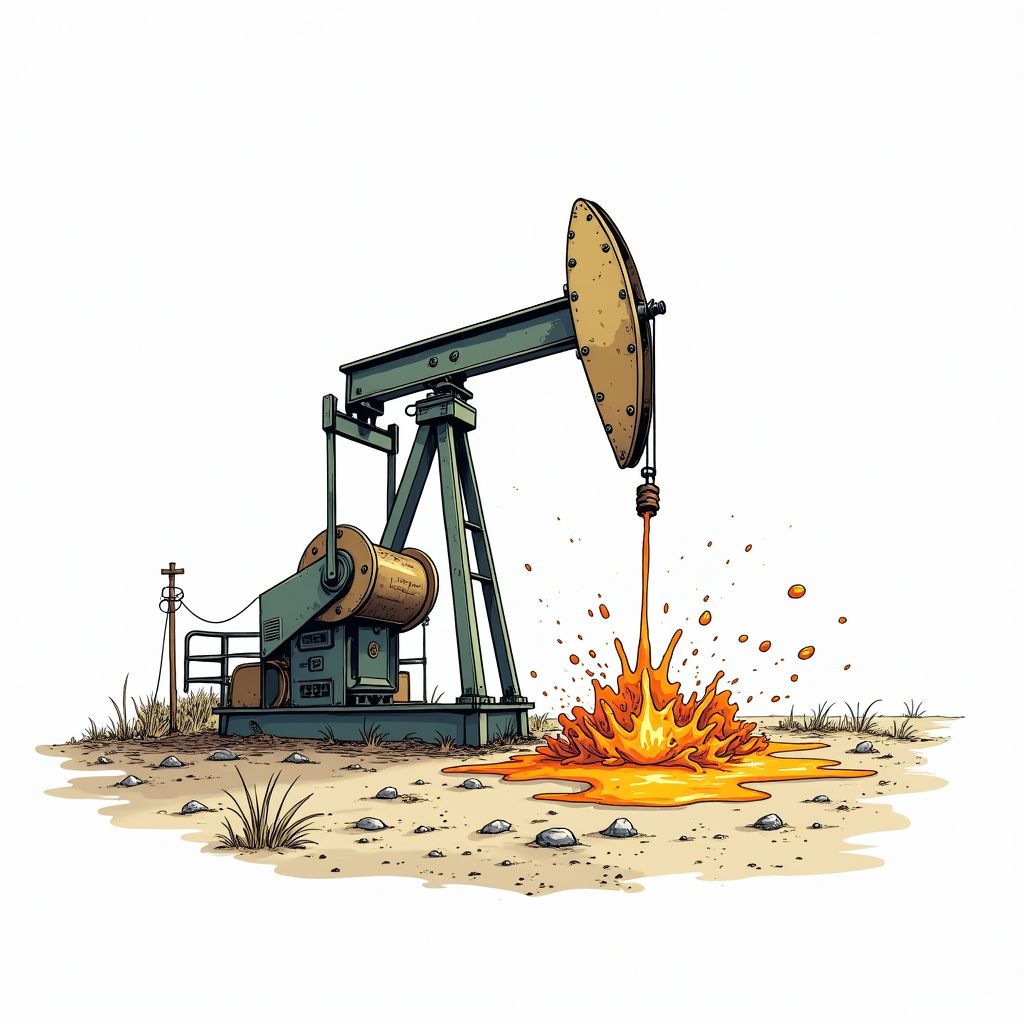
The consequences of this regulatory inaction have manifested in severe environmental degradation across the state. Oilfield “purges”—incidents where toxic wastewater erupts to the surface—have spiked dramatically, increasing from approximately 12 in 2020 to over 150 over a five-year period [1][2]. This represents a staggering increase of 1150 percent in purge incidents [1][2]. At least 30 of the problematic wells flagged by the “Source of Truth” database were located in close proximity to these eruptions [1].
Agricultural Devastation and Emergency Declarations
The agricultural sector has borne a significant portion of the economic damage. In September 2024, a purge near Fort Cobb Lake resulted in the deaths of two dozen cattle [2]. The situation escalated further in late 2025 when the Pearcy #1 disposal well in Caddo County, operated by Nject Disposal LLC, overpressurized and leaked saltwater into Five Mile Creek [2]. The contamination killed approximately 28 cows and severely impacted local wildlife, prompting Oklahoma Governor Kevin Stitt, a Republican [GPT], to officially declare an environmental emergency [2].
Regulatory Complacency and Outdated Standards
The root of the crisis traces back to 1981, when Oklahoma sought environmental oversight authority from the Environmental Protection Agency (EPA) [1]. While new regulations required individual well approvals with strict pressure and volume limits, the state failed to apply these standards retroactively [1]. Consequently, regulators have allowed over 1,400 older injection wells to continue operating without any caps on injection pressure or volume [1]. Data reveals that 88 percent of these grandfathered wells remain active, pumping over 378 million liters of toxic wastewater underground in 2025 alone [1].
A Culture of Lax Enforcement
Despite the escalating frequency of toxic purges, the OCC has faced heavy criticism for its lax enforcement mechanisms. Over the past five years, the agency has issued zero fines for leaks [2]. Adam Peltz, an attorney with the Environmental Defense Fund, emphasized that pressure and volume limits are essential “to ensure that injection wells aren’t, first and foremost, endangering groundwater, but also to prevent bad outcomes like earthquakes and purges” [1]. Marven Goodman, an investigative journalist and former Logan County Commissioner who warned of these dangers following a 5.6 magnitude earthquake in 2016, noted that “bloated bureaucracy and regulatory complacency have only compounded the problem” [2].
Legislative Push and Future Liability
The regulatory landscape in Oklahoma is showing signs of shifting, introducing new compliance vulnerabilities for the energy sector. In 2025, the state introduced new rules for injection wells, but these regulations only apply to future projects, leaving over 10,400 existing wells entirely unchecked [2]. Simultaneously, lawmakers have targeted the agricultural use of wastewater sludge; Senate Bill 268 was introduced in 2025 to prohibit the use of biosolids as fertilizer, while Senate Bill 3 proposed a complete phase-out by 2027 [alert! ‘The current legislative status of these bills remains unclear based on available reports’] [2].
Pivoting Toward Local Empowerment
As of 2026, the political discourse is pivoting toward local empowerment and stricter financial accountability. Current reform proposals under House Bill 3403 advocate for transferring oversight authority to county governments, mandating liability bonds for well operators, and creating a public dashboard to track environmental incidents [2]. For energy executives and investors, these proposed measures signal a transition from a historically permissive regulatory environment to one fraught with potential legal and financial liabilities as communities demand greater protection for their soil and aquifers [2].