NBA Finals Chaos: Why 15 Arrests After Knicks Fans Target Wembanyama Could Change Sports Forever
New York, Sunday, 14 June 2026.
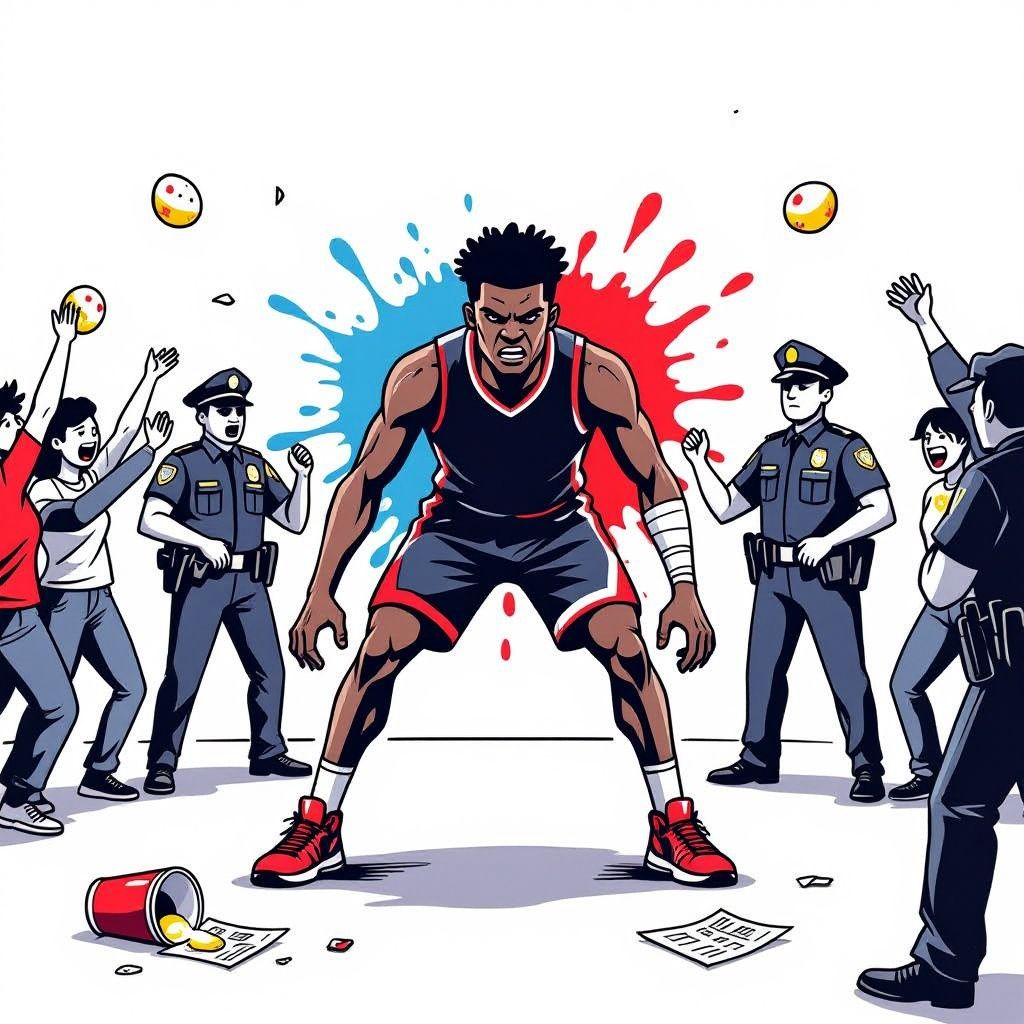
A historic NBA Finals moment turned ugly when Knicks fans hurled eggs and debris at Spurs star Victor Wembanyama, sparking 15 arrests and a security crisis. The unprecedented fan violence—captured in viral videos—has forced the NBA to confront a critical question: Can leagues protect players without stifling fan passion? With 10 officers injured and global stars condemning the chaos, this incident may redefine safety protocols at major sporting events.
The Night the NBA Finals Turned Violent
The 2026 NBA Finals took a dark turn on June 10 when a historic 29-point comeback by the New York Knicks in Game 4 devolved into chaos outside Madison Square Garden [2][5]. As San Antonio Spurs center Victor Wembanyama exited the arena, a mob of Knicks fans targeted him with projectiles, including eggs and debris, captured in viral videos that spread rapidly across social media [1][3]. The New York Police Department (NYPD) responded with 15 arrests and 41 summonses, marking one of the most severe incidents of fan violence in recent NBA history [2][5]. The altercation left 10 officers injured, including one struck by a glass bottle, and resulted in four damaged NYPD vehicles [2][5]. The violence extended beyond the arena, with reports of fans climbing on moving trucks, flipping taxis, and even breaking into a tractor-trailer [2].
A Pattern of Escalating Fan Violence
The June 10 incident was not an isolated event. Over the course of the 2026 NBA Finals, New York City witnessed a troubling pattern of fan misconduct. Following Game 3 on June 4, Spurs fans were attacked in the streets, and a watch party at Bryant Park spiraled into chaos, resulting in 21 additional arrests [3]. The NYPD reported that crowds repeatedly refused commands to disperse, engaging in reckless behavior that included street takeovers, fireworks, and assaults on officers [2][5]. A spokesperson for the NYPD emphasized the department’s dual responsibility: “This is an exciting time for the Knicks and for fans across New York City. The NYPD wants New Yorkers to be able to enjoy these celebrations, but our primary responsibility is to ensure that everyone can do so safely” [2][5]. The escalation prompted condemnations from high-profile figures, including actors Ben Stiller and Jerry O’Connell—both self-proclaimed Knicks die-hards—as well as the mayors of San Antonio and New York City [3].
Security Overhaul: What’s Next for the NBA?
In response to the chaos, the San Antonio Spurs announced heightened security measures for Game 5, scheduled for June 13 at the Frost Bank Center in San Antonio [3]. The team is implementing stricter crowd control protocols, including increased police presence, bag checks, and designated fan zones to prevent similar incidents [3]. The NBA has yet to issue a formal statement, but the league’s response could set a precedent for handling fan misconduct moving forward. Historically, the NBA has taken a hands-off approach to fan behavior, but the severity of the June 10 incident may force a reevaluation of this stance [GPT]. The financial implications are significant: Madison Square Garden (MSG) and the Knicks could face fines or legal action if the NBA determines that security measures were inadequate [GPT]. Additionally, the incident risks damaging the NBA’s brand reputation, particularly among international fans and sponsors who may view the violence as a deterrent to attending games [GPT].
The Broader Implications for Sports and Society
The Knicks-Spurs altercation is part of a larger trend of escalating tensions between fans and athletes, exacerbated by social media and the high stakes of modern sports. In 2024, the NFL and MLB both reported increases in fan-related incidents, including verbal abuse and physical altercations [GPT]. The NBA, however, has largely avoided such controversies until now. The June 10 incident raises critical questions about the limits of fan passion and the responsibility of leagues to protect players. For the Knicks, the timing could not be worse: the team is on the verge of its first NBA championship since 1973, and the violence threatens to overshadow their historic run [2][3]. Mayor Zohran Mamdani and Knicks owner James Dolan have been at odds over security measures, with Dolan initially canceling an official watch party for Game 4 due to safety concerns [5]. The dispute highlights the challenges cities face in balancing celebration with security, particularly in an era where large crowds can quickly turn unruly [5].
A Turning Point for Fan Behavior?
The NBA’s handling of the June 10 incident could redefine fan behavior policies across major sports leagues. Potential measures under consideration include stricter penalties for misconduct, such as lifetime bans for offenders, and increased use of facial recognition technology to identify troublemakers [GPT]. The league may also explore partnerships with social media platforms to curb the spread of violent or harassing content targeting players [GPT]. For Wembanyama, the incident serves as a stark reminder of the pressures faced by global sports stars, who must navigate both on-court performance and off-court safety. As the Spurs prepare for Game 5, the focus has shifted from basketball to security, with fans and players alike hoping for a return to normalcy. The outcome of this series—and the NBA’s response—could shape the future of fan engagement for years to come [3].