Montana Farm Insolvencies Triple as U.S. Agricultural Debt Nears Record $620 Billion
Helena, Friday, 5 June 2026.
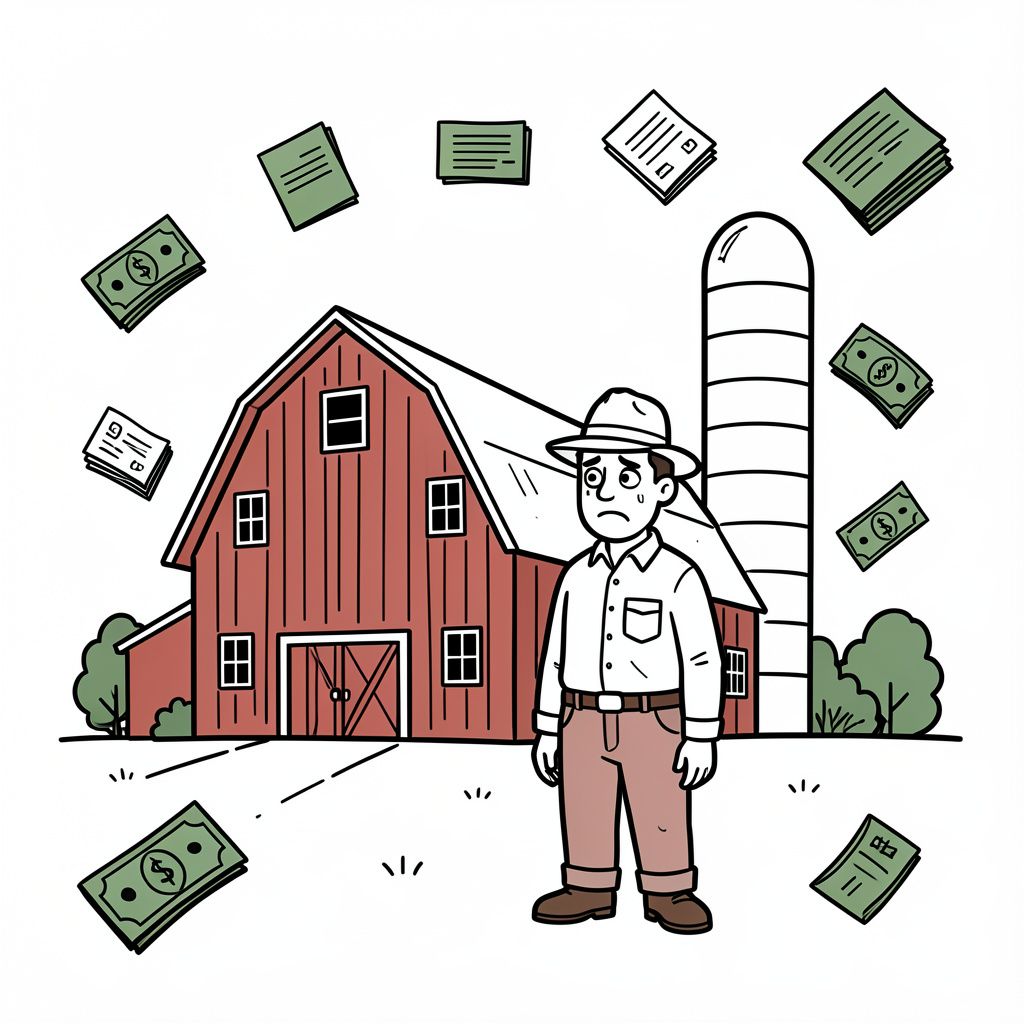
Montana farm bankruptcies tripled in 2025 due to escalating tariffs, signaling a severe broader crisis as U.S. agricultural debt projects to hit a record $620 billion in 2026.
The Localized Crisis in Montana
In 2025, the agricultural sector in Montana experienced a severe economic contraction, marked by a sharp increase in farm insolvencies driven by escalating trade tariffs [1][3]. According to agricultural economists, the state recorded six Chapter 12 farm bankruptcies last year, which is triple the total seen in 2024 [1][2]. Chapter 12 bankruptcy is a specific legal mechanism that allows family farmers to restructure their financial obligations, a process that frequently necessitates liquidating farm assets or selling off parcels of land to satisfy creditors [1]. This localized spike represents a 200 percent increase in insolvency filings year-over-year, underscoring the acute distress within domestic agricultural supply chains [1].
Surging National Agricultural Debt
While Montana’s localized crisis provides a stark microeconomic snapshot, the macroeconomic landscape for American agriculture is equally precarious [1]. Data from the U.S. Department of Agriculture (USDA) projects that total national farm debt will soar to an unprecedented $620 billion in 2026 [1]. This continuous accumulation of leverage has been building since the mid-1990s, but only recently have debt levels eclipsed the historic highs observed during the devastating 1980s farm crisis [1]. Rising debt loads, coupled with escalating trade tariffs that depress export revenues, are placing immense pressure on agricultural balance sheets across the country [1][3].
Policy Misalignments and Future Outlook
Representative Jim Costa of California’s 21st congressional district has been a vocal critic of the USDA’s restructuring strategy since late 2024 [3]. Despite California’s status as the nation’s leading agricultural producer, none of the five newly proposed regional hubs are slated to be located within the state [3]. Costa argues that this exclusion creates an unnecessary geographic and administrative distance between federal support services and some of the country’s most vital growers, fundamentally contradicting the reorganization plan’s primary goal [3]. The ultimate rollout and operational status of this reorganization plan remains uncertain as of June 2026 [alert! ‘The source explicitly notes the deadline and current status of the USDA reorganization plan is unknown’].