Iranian Parliament Challenges Central Bank Plan to Injection Billions Into Currency Market
Tehran, Thursday, 8 October 2026.
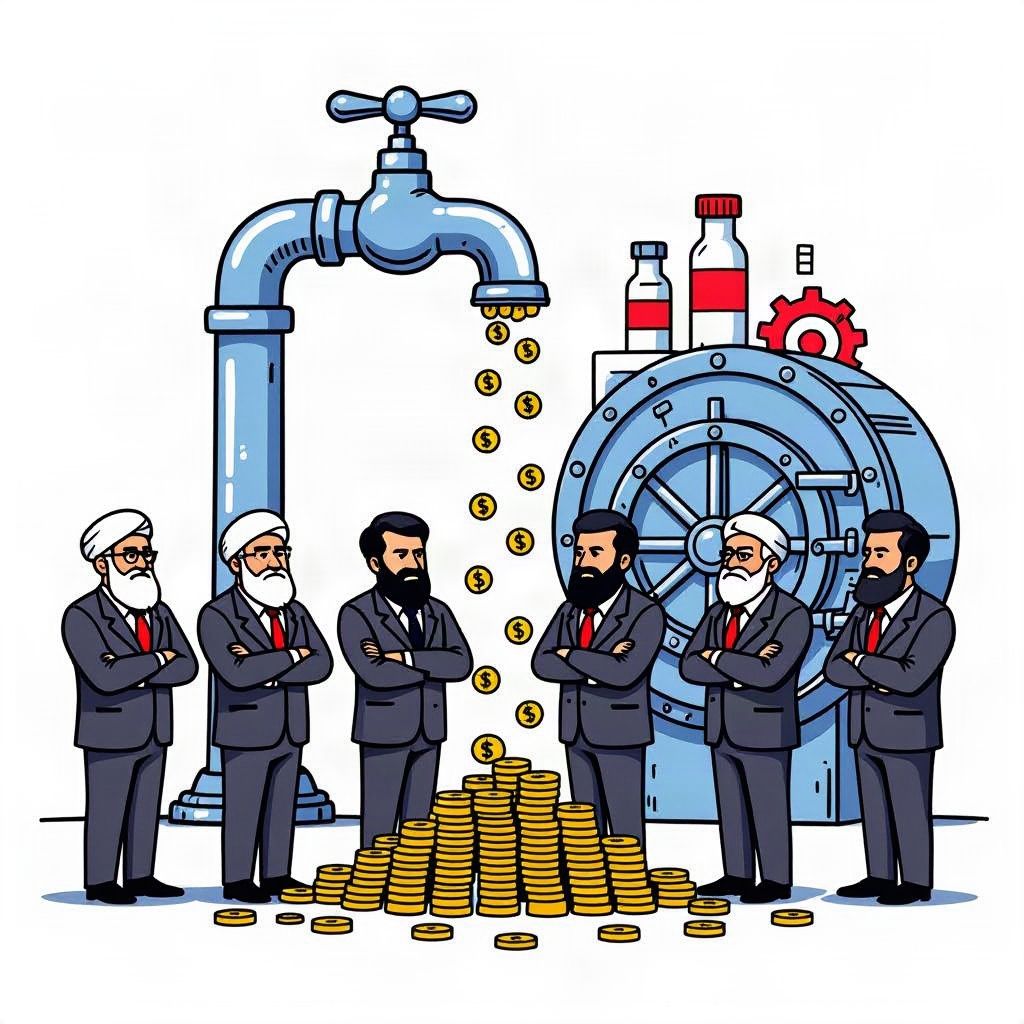
Iranian lawmakers strongly oppose the Central Bank’s $2 billion foreign exchange sale. Critics argue scarce reserves should fund essential medicine and production rather than private currency purchases.
Legislative Pushback Against Currency Intervention
Iranian parliamentarians have mounted a significant political challenge against the Central Bank of Iran’s strategy to sell up to $2 billion in foreign currency to stabilize domestic exchange markets [1]. Under the proposed plan, individual purchases would be capped at $10,000 to manage volatility, a move intended to regulate the market by selling currency at the margin to prevent rent-seeking from exchange rate differentials [1]. Lawmakers, including Mahmoud Kuchakzadeh and Peyman Falsafi, have publicly opposed the plan, arguing that foreign-currency resources should prioritize production and medicine rather than individual consumption [1]. This legislative pushback highlights growing policy divisions within Tehran over currency reserve management and economic stabilization efforts amidst ongoing foreign exchange pressures [4].
Mechanics of the Foreign Exchange Plan
The Central Bank of Iran initiated a policy to supply up to $2 billion in foreign currency to the market, with an initial $1 billion phase allowing individuals over 18 to purchase up to $10,000 each [1]. Central Bank Governor Abdolnaser Hemmati stated that the $10,000 ceiling does not mean every applicant is purchasing that amount, noting that the average purchase has been about $5,000 [1]. Data from the initial days of the plan indicates an average purchase of $5,000 USD per person, suggesting the cap may not be the primary driver of total outflow [2]. The continuation of the $2 billion foreign-currency sale program is contingent upon the results of the first phase, which will serve as the primary metric for the Central Bank [1].
Market Volatility and Economic Context
On 5 October 2026, the free-market dollar exchange rate reached approximately 270,000 tomans, with Iran’s Gold and Currency Information Network recording a rate of 269,475 tomans at 5:34 p.m. Tehran time [5]. In contrast, the Central Bank’s official remittance dollar was 176,281 tomans, highlighting a significant disparity between official and free-market rates [5]. Historical market data shows the dollar reached 268,500 tomans on October 3, 2026, up from approximately 60,000 tomans two years prior, representing a percentage increase of 347.5 over that period [5]. Critics argue the goal of the state is collecting public liquidity to control government debts rather than stabilizing the currency [3].
Coordination Issues Within Tehran
Parliament Speaker Mohammad Bagher Ghalibaf stated he was not consulted on the decision, learning of the policy through media, which underscores a lack of coordination between the Central Bank and senior governing bodies [1]. On October 4, 2026, an unnamed MP challenged Central Bank Governor Abdolnasser Hemmati regarding the distribution of $10,000 to individual buyers, warning that scarce foreign exchange reserves are being depleted [5]. Economic Security Police chief Hossein Rahimi announced that judicial and police action would commence against websites publishing “false,” “inflated,” or “bubble” exchange rates, citing instructions from the Tehran prosecutor [5]. The legislative opposition exists regarding the Central Bank’s policy, with critics questioning the allocation of limited foreign-currency resources and prioritizing expenditures amidst the ongoing economic pressure and declining purchasing power [1].