Qatar's $400 Million Gift to Trump: The New Air Force One Unveiled
Washington, Saturday, 20 June 2026.
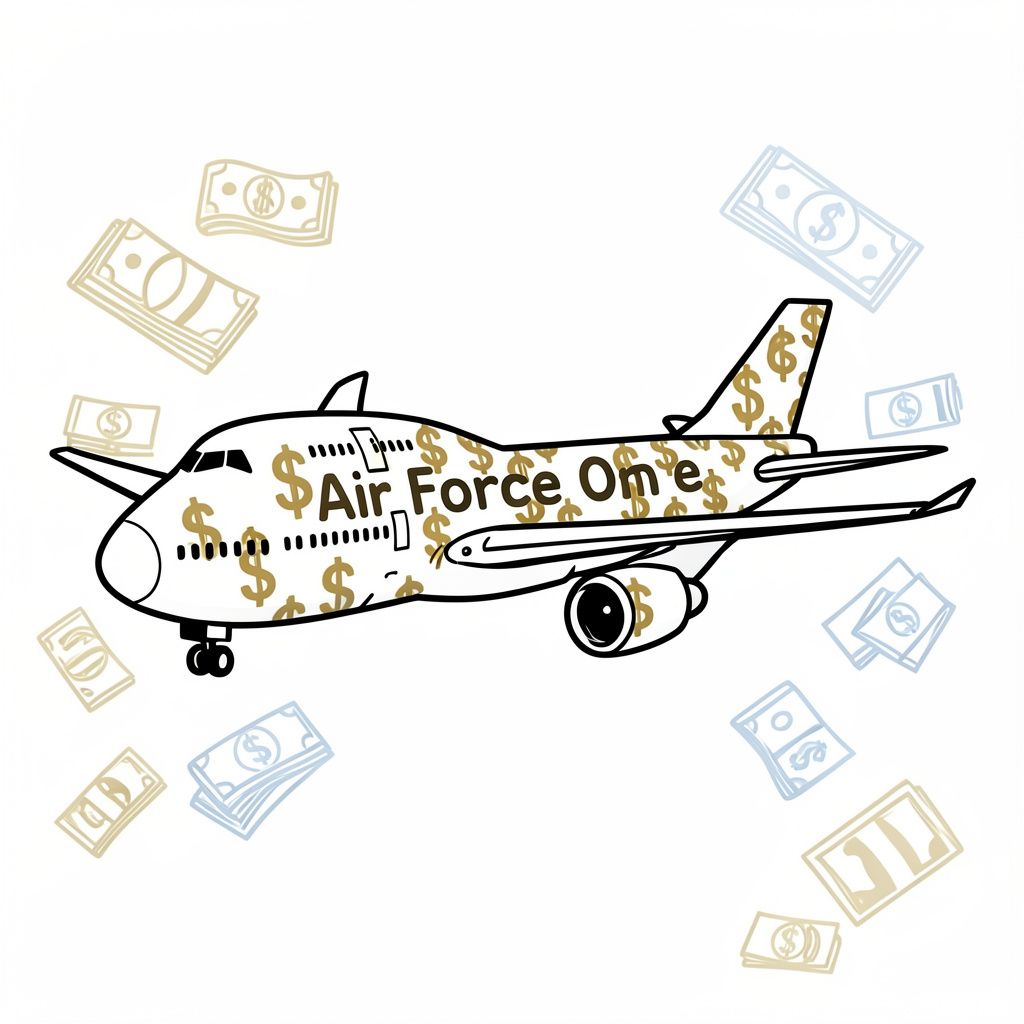
A Boeing 747-8, valued at $400 million and gifted by Qatar, was unveiled as the new Air Force One, marking a historic upgrade from the 35-year-old VC-25A fleet. This unprecedented foreign donation raises ethical and security questions while symbolizing deepening U.S.-Qatar ties. The jet, set to enter service soon, features luxury upgrades and advanced defense systems, but its acceptance has sparked debate over presidential gifts from foreign governments.
The Historic Unveiling: A Presidential Aircraft Like No Other
On Friday, 19 June 2026, President Donald Trump (Republican) unveiled the newest addition to the U.S. presidential fleet at Joint Base Andrews, Maryland: a $400 million Boeing 747-8 aircraft gifted by the State of Qatar [1][2][3]. The event marked the first time in U.S. history that a foreign government has donated an aircraft to serve as Air Force One, the official call sign for any U.S. Air Force aircraft carrying the president [1]. The jet, previously owned by the Qatari royal family, was formally transferred to the U.S. Department of Defense in July 2025 [4]. Trump, standing before the massive aircraft, declared it ‘the world’s most luxurious plane’ and asserted that ‘when it was built, it was built at a level that will probably never be seen again’ [1]. The unveiling ceremony included a farewell to the iconic Boeing 747-200, tail number 29000, which has served as Air Force One since 1990 and carried every president from George H.W. Bush to Trump [2][5].
Technical Specifications and Strategic Upgrades
The new Air Force One, designated VC-25B by the U.S. Air Force, represents a significant technological leap from its predecessor, the VC-25A [2]. The Boeing 747-8 model boasts a range of approximately 14,815 kilometers (9,206 miles), enabling non-stop flights between virtually any two points on the globe [GPT]. Trump highlighted this capability, stating the aircraft ‘flies further, you don’t have to stop for fuel every few hours… it’s pretty close to unlimited’ [1]. The jet’s interior has been minimally altered from its original head-of-state configuration, prioritizing mission functionality over aesthetic changes [6]. However, critical upgrades include advanced defense systems such as radar-jamming countermeasures, infrared tracking countermeasures, chaff dispensers for radar-guided missiles, and flares to blind heat-seeking missiles [4]. The aircraft’s exterior features a new color scheme of red, white, gold, and navy blue, replacing the iconic robin’s egg blue and white livery that has adorned presidential aircraft since the Kennedy administration [2][3]. Trump personally approved the design, stating, ‘The colors and the design were to my taste, I will say’ [3].
The Bridge Aircraft: A Temporary Solution with Long-Term Implications
The Qatar-donated jet will serve as a ‘bridge’ aircraft, filling the gap until two new Boeing 747-8s, currently under construction, are delivered in mid-2028 [2][4]. The Air Force initially expected the bridge aircraft to enter service in 2027, but modifications were completed ahead of schedule, allowing for its unveiling in June 2026 [6]. Gen. Dale White, the Department of Defense’s direct reporting portfolio manager for critical major weapons systems, stated that the jet will ‘relieve pressure on the aging VC-25A fleet’ [2]. The VC-25A aircraft, tail numbers 28000 and 29000, will remain in service and could still be used by the president as Air Force One, according to an Air Force spokesperson [2]. The bridge aircraft’s first official mission is slated for the NATO summit in Ankara, Turkey, next month, with a subsequent trip planned for the APEC summit in China in November 2026 [3]. Upon Trump’s departure from office, ownership of the aircraft will transfer to the Donald J. Trump Presidential Library Foundation, as confirmed by White House officials [1].
Ethical and Legal Controversies: The Foreign Gift Debate
The acceptance of the $400 million aircraft from Qatar has sparked significant ethical and legal debates, centering on the Emoluments Clause of the U.S. Constitution, which prohibits federal officials from receiving gifts from foreign governments without congressional approval [4][7]. Legal experts have raised concerns about the potential for conflicts of interest, given Qatar’s strategic interests in the Middle East and its history of lobbying U.S. officials [alert! ‘Legal analysis of Emoluments Clause application pending’]. Trump previously dismissed such concerns, stating in 2025 that it would be ‘stupid’ not to accept the gift [4]. The aircraft’s valuation, estimated at $400 million, makes it one of the largest foreign gifts ever received by the U.S. government [6]. The White House has not disclosed whether congressional approval was sought or obtained for the acceptance of this gift [alert! ‘Congressional approval status unverified’]. Additionally, security experts have questioned the wisdom of accepting a foreign-manufactured aircraft for presidential use, citing potential risks of espionage or sabotage [4]. The Air Force has stated that the aircraft underwent rigorous security vetting and modifications at a facility in Texas from September 2025 to June 2026 [1][6].
The Future of Presidential Travel: Delays and Cost Overruns
While the Qatar-donated aircraft provides a temporary solution, the long-term future of Air Force One remains mired in delays and cost overruns. The U.S. Air Force contracted Boeing in 2018 to deliver two new 747-8 aircraft as the next generation of presidential jets, with an original delivery date of 2024 [2][4]. However, the program has faced repeated setbacks, pushing the expected delivery to mid-2028 [2]. The delays have been attributed to technical challenges, supply chain issues, and the complexity of outfitting the aircraft with specialized communications and defense systems [GPT]. The cost of the Boeing-delivered aircraft has also ballooned, with estimates now exceeding $5.3 billion for the two jets, up from an initial projection of $3.9 billion [GPT]. The Qatar-donated bridge aircraft, while valued at $400 million, has incurred additional modification costs, though the exact figure remains classified [alert! ‘Modification costs not publicly disclosed’]. The Air Force has defended the program, with Air Force Chief of Staff Gen. Ken Wilsbach stating, ‘Many thought it could not be done, but the United States Air Force was able to execute and provide a secure, reliable aircraft for the President’ [6]. The new Boeing aircraft will feature the same color scheme as the Qatar-donated jet, reflecting Trump’s personal preference for a more patriotic and luxurious aesthetic [2].
Sources
- www.cbsnews.com
- thehill.com
- abcnews.com
- www.lemonde.fr
- www.washingtonpost.com
- www.npr.org
- apnews.com