Warriors' Bold Draft Move Blocked by Hornets—What's Next for Golden State?
San Francisco, Sunday, 21 June 2026.
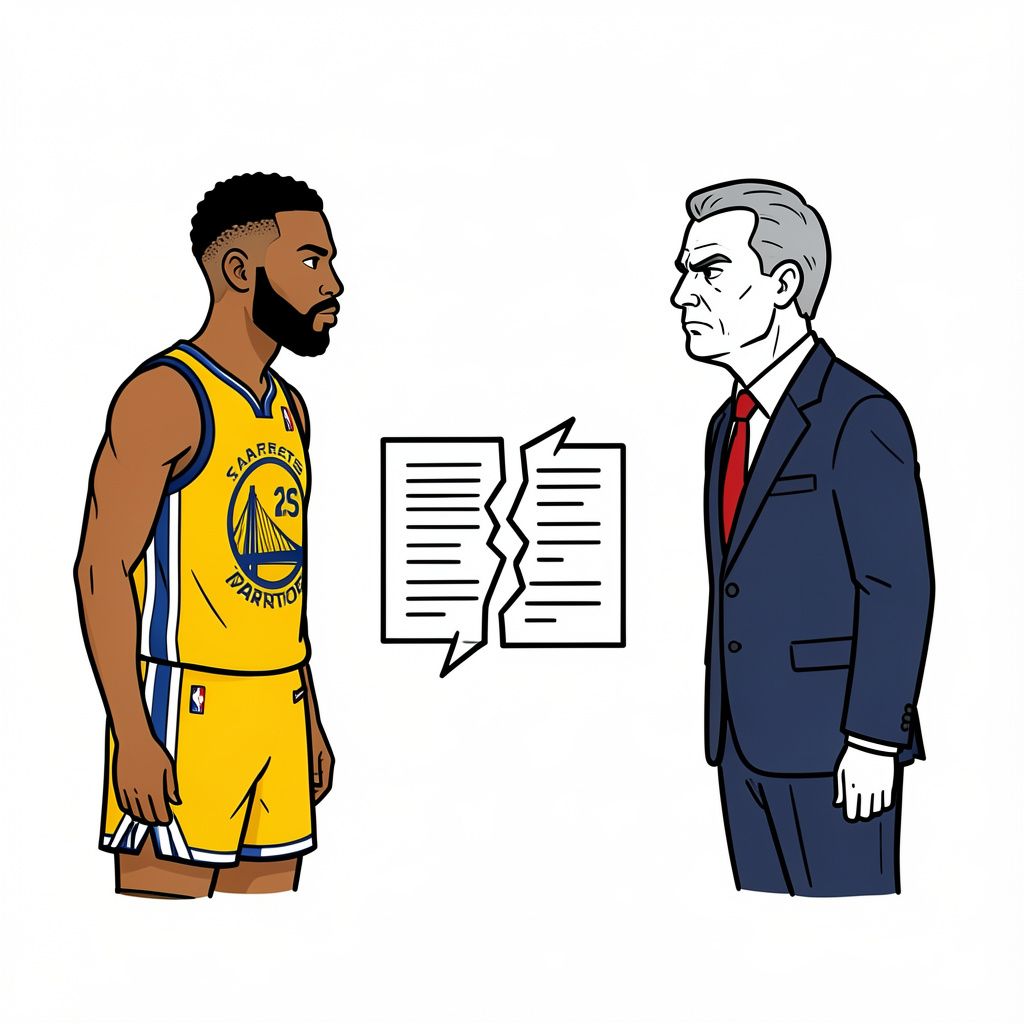
The Golden State Warriors’ push to acquire two first-round picks (14th and 18th) from the Charlotte Hornets was flatly rejected, leaving their draft strategy in flux. With the NBA Draft just days away, this setback forces Golden State to rethink how to balance immediate talent with long-term flexibility—all while Stephen Curry’s championship window remains open.
The Rejected Trade Proposal: What We Know
The Golden State Warriors (NYSE: DIS, parent company of ESPN) made a bold attempt to acquire the Charlotte Hornets’ 14th and 18th overall picks in the 2026 NBA Draft, but their inquiry was flatly rejected [1][2][3]. This development, confirmed by multiple sources on Sunday, 21 June 2026, comes just two days before the first round of the NBA Draft, scheduled for Tuesday, 23 June 2026, at Barclays Center in Brooklyn, New York [1]. The Warriors, holding the 11th overall pick, sought to secure a second first-round selection, a strategy that aligns with their broader goal of rejuvenating the roster while maintaining salary cap flexibility [2][3]. The Hornets’ decision to retain both picks underscores the competitive nature of draft negotiations, where teams increasingly value maintaining multiple assets in the first round [3].
Strategic Implications for Golden State
The rejection leaves the Warriors at a crossroads as they balance immediate competitiveness with long-term roster development. General Manager Mike Dunleavy has previously indicated a preference to use the No. 11 pick rather than trade it, citing the need to infuse youth and athleticism into the squad [3]. This pick represents Golden State’s highest selection since 2021, when they drafted Jonathan Kuminga at No. 7 [3]. The Warriors’ pursuit of additional picks reflects a calculated effort to maximize the remaining years of Stephen Curry’s championship window, which analysts project could extend through the 2027-28 season based on his current performance trajectory [GPT]. The team’s salary cap situation, with $163.8 million in projected cap space for the 2026-27 season (assuming a 10% increase from the 2025-26 cap of $148.9 million) [4], provides some flexibility, but the loss of these trade assets may force a reassessment of their draft-day strategy [alert! ‘Salary cap projections are estimates and subject to league adjustments’].
Prospects in Play: Who Could the Warriors Target?
With the No. 11 pick still in hand, Golden State is evaluating several prospects, including guards Karim Lopez, Cameron Carr, and Bennett Stirtz [5]. Stirtz, a 6’4” guard from Iowa, has emerged as a potential late-first-round steal, with some analysts projecting him as a high-upside player capable of contributing immediately [5]. The Warriors have also shown interest in Alabama’s Labaron Philon, another guard whose versatility could complement the team’s existing backcourt [2]. Brandin Podziemski, Golden State’s second-year guard, emphasized the team’s need for a player who can contribute right away, a sentiment that aligns with the Warriors’ broader strategy of sustaining their competitive edge [5]. If the Warriors opt to trade down, they may target prospects like Philon or Stirtz, who are projected to be available in the late teens [2][5].
Alternative Trade Scenarios: What’s Next for Golden State?
Despite the Hornets’ rejection, the Warriors are reportedly continuing to explore trade scenarios, including the possibility of moving down from the No. 11 pick if the right offer materializes [3]. Earlier reports suggested Golden State had engaged in discussions with the Oklahoma City Thunder and Memphis Grizzlies, though those talks did not advance beyond preliminary stages [2]. The Thunder reportedly offered picks No. 12 and No. 17 in exchange for the Warriors’ No. 11 pick and a Top-10-protected 2028 first-round selection, while the Grizzlies proposed picks No. 16 and No. 32 for the No. 11 pick [2]. Analysts have noted the risks associated with such trades, particularly the steep drop-off in talent after the first round [2]. As the draft approaches, the Warriors may pivot to a strategy of consolidating their assets or leveraging their pick to acquire a veteran player via trade, though no such deals have been confirmed [3][5].
The Bigger Picture: Warriors’ Long-Term Vision
The Warriors’ draft strategy reflects a broader organizational shift toward balancing short-term competitiveness with long-term sustainability. With Curry, 40, entering what could be his final All-NBA-caliber seasons, Golden State is under pressure to build a roster capable of contending beyond his prime [GPT]. The team’s recent draft history—marked by selections like Kuminga and Podziemski—demonstrates a willingness to take calculated risks on high-upside talent [3]. However, the rejection of their trade inquiry with the Hornets may force the Warriors to adopt a more conservative approach, focusing on securing a single impact player at No. 11 rather than pursuing multiple assets [1][3]. As the draft unfolds, the Warriors’ ability to adapt to these constraints will be critical in shaping their trajectory for the 2026-27 season and beyond.