New United Boeing 787 Aborts Flight After Electrical Odor Fills Cabin
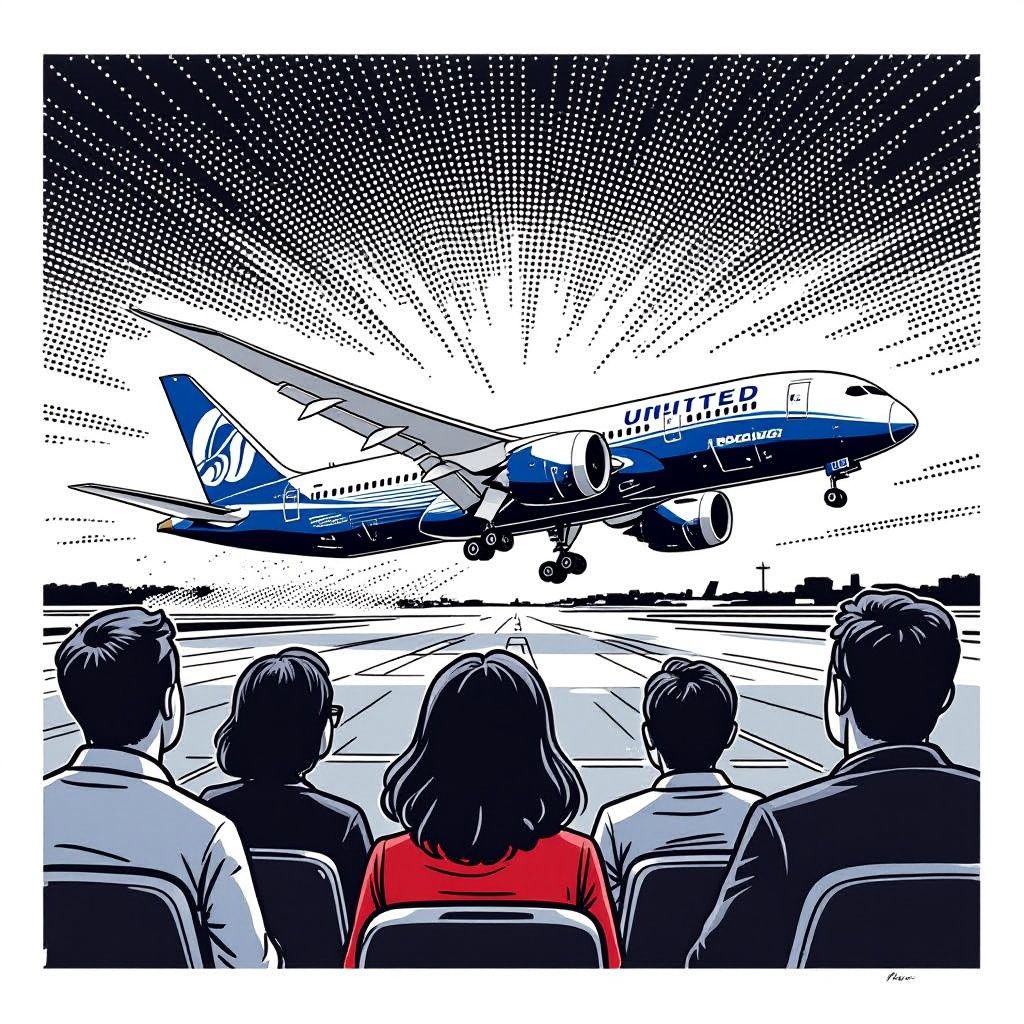
San Francisco, Friday, 24 April 2026.
A brand-new United Airlines Boeing 787 dumped fuel and made an emergency landing in Singapore due to an electrical odor, sparking fresh scrutiny over Boeing’s manufacturing quality.
Anatomy of the Emergency Over the South China Sea
Today, April 24, 2026, United Airlines (NASDAQ: UAL) [GPT] Flight UA2 departed Singapore Changi Airport (SIN) at 9:33 a.m. local time, bound for San Francisco (SFO) [2][3]. The Boeing (NYSE: BA) [GPT] 787-9 Dreamliner, carrying 212 passengers and 15 crew members, was climbing toward an altitude of 9448.8 meters [3][GPT] when the flight crew detected a severe anomaly [1][2][3]. Approximately 30 to 45 minutes into the scheduled 15-hour long-haul journey, the cockpit transmitted a Squawk 7700 code, signaling a general emergency, and aborted the flight path over the South China Sea [1][3].
A Brand-New Jet Grounded
The aircraft involved in the incident, registered as N61101, is a virtually brand-new addition to the United Airlines fleet [3][6]. The redesigned 787-9 Dreamliner, which features an “elevated interior,” had just completed its inaugural passenger flight from San Francisco to Singapore two days prior, on April 22, 2026 [1][2]. The abrupt grounding of an aircraft that is only months old has triggered immediate operational adjustments and widespread chatter across aviation social media channels [3][4][5][6]. This scrutiny comes at a sensitive time, as United plans to have at least 30 of these redesigned 787-9s in global operation by the end of 2027 [1].
Fleet Strategy and the Aging Aircraft Paradox
This high-profile disruption involving a state-of-the-art aircraft highlights a fascinating paradox in modern commercial aviation economics. While newer models like the 787-9 promise superior fuel efficiency and passenger comfort [1][7], the global airline industry is increasingly leaning on older airframes due to persistent supply chain bottlenecks and industrial delays stemming from the Covid-19 pandemic [7]. Data from Cirium indicates that the average age of Airbus and Boeing fleets currently sits between 20 and 25 years [7].