SpaceX Files for Approval to Launch One Million Orbital AI Data Centers
Washington D.C., Sunday, 1 February 2026.
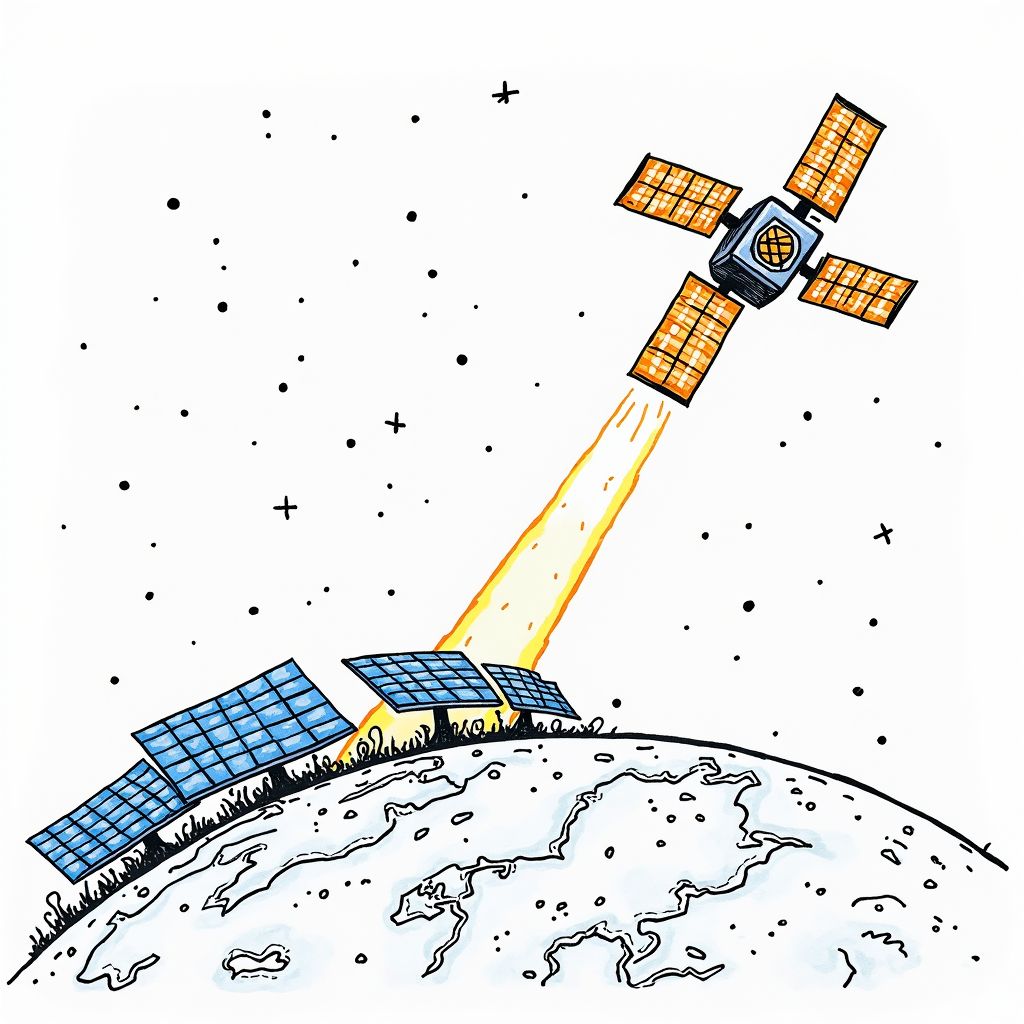
On January 31, 2026, SpaceX submitted a filing to the FCC seeking authorization for a constellation of one million solar-powered satellites designed to function as orbital data centers. This massive infrastructure project aims to address the escalating energy demands of artificial intelligence by shifting processing power off-planet. In a visionary statement, the company described the initiative as a step toward a ‘Kardashev II-level civilization,’ leveraging solar energy in space to reduce the strain on terrestrial power grids while dramatically expanding beyond the scope of the current Starlink network.
Technical Architecture and Operational Scope
According to the filing submitted to the Federal Communications Commission (FCC), the proposed ‘SpaceX Orbital Data Center System’ is designed to operate within Low Earth Orbit (LEO) at altitudes ranging between 500 kilometers and 2,000 kilometers [1][2]. These units are intended to utilize ‘optical links’—specifically laser technology—to establish high-bandwidth connections with the existing Starlink network and ground stations, creating a mesh network capable of handling massive data throughput [3][4]. To manage the density of such a vast constellation, SpaceX plans to distribute the satellites across narrow orbital shells, each spanning up to 50 kilometers, to deconflict with other systems possessing comparable ambitions [3].
Strategic Timing and Market Dynamics
This ambitious technical proposal arrives amidst significant corporate maneuvering. Reports indicate that SpaceX is preparing for an initial public offering (IPO) as early as June 2026, while simultaneously exploring a merger with xAI, Elon Musk’s dedicated artificial intelligence venture [1][4]. Industry observers suggest a strong correlation between these events; satellite analyst Tim Farrar described the filing as ‘rushed’ and ‘very early stage,’ positing that it may serve to justify the immense capital requirements needed to merge the hardware capabilities of SpaceX with the software demands of xAI [3].
Regulatory Realities and Orbital Congestion
Beyond the financial and technical challenges, the regulatory hurdle of launching one million satellites is substantial. For context, the European Space Agency estimates there are currently around 15,000 man-made satellites orbiting Earth [1]. The proposed constellation would represent a theoretical increase of roughly 66.667 times the total current orbital population. Given that the FCC recently deferred authorization for a significantly smaller tranche of nearly 15,000 Starlink satellites—approving only 7,500—it is widely believed that the one-million figure is a negotiation starting point rather than a guaranteed target [1][5].