Iowa Candidates Clash Over Missed Votes in Final Senate Debate
Des Moines, Friday, 16 October 2026.
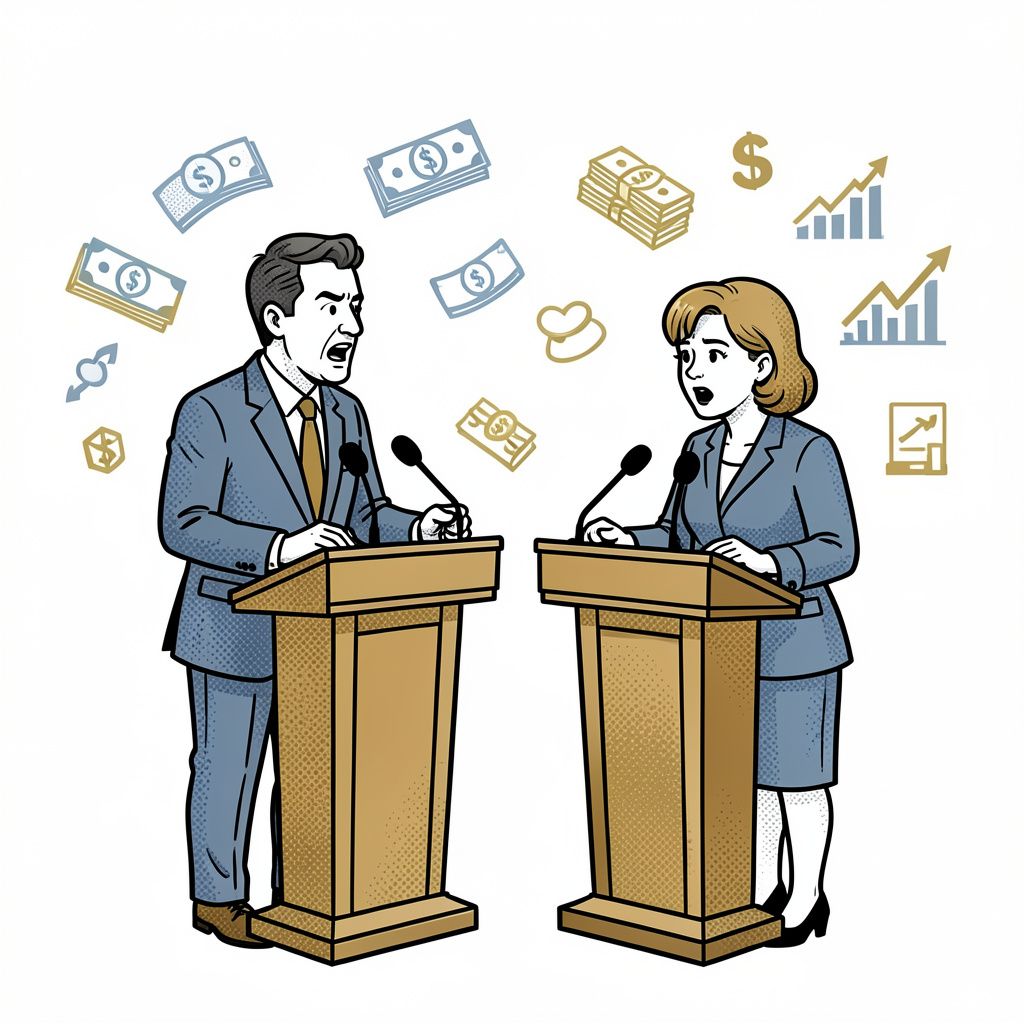
Iowa Senate candidates Ashley Hinson and Josh Turek clashed over legislative attendance and economic policy in their final debate, highlighting a toss-up race that could decide Senate control.
Debate Highlights Attendance Discrepancies
Republican Representative Ashley Hinson and Democratic State Representative Josh Turek faced off in their final televised debate on Tuesday, October 13, 2026, marking a critical juncture in the Iowa U.S. Senate race [5]. The contest, viewed as a toss-up by analysts, centers on replacing retiring Senator Joni Ernst and could influence the balance of power in Washington [4]. During the WHO-13 hosted event, the candidates exchanged sharp criticisms regarding their legislative records and commitment to constituents [7]. Hinson emphasized the importance of presence in governance, stating that missing workdays equates to grounds for termination in the private sector [5].
Legislative Record Under Scrutiny
Data presented during the campaign indicates significant disparities in legislative attendance between the two candidates. Turek missed 261 out of 445 House floor votes during the 2026 legislative session, representing a missed vote rate of 58.652 percent [2]. In contrast, Hinson has missed 33 roll-call votes since taking office in 2021, amounting to approximately 1.1 percent of her total votes [2]. Turek defended his absence by citing extensive campaigning across all 99 Iowa counties, claiming to have held hundreds of town halls [5]. Hinson countered that she has maintained a 99 percent attendance record while simultaneously campaigning [5].
Economic Policy and Energy Costs
Economic affordability and energy prices dominated the policy discussion, with both candidates addressing high gas and diesel costs impacting Iowa farmers. Hinson proposed a temporary gas tax reduction and a $1 biodiesel tax credit while opposing President Trump’s agreement to import Russian diesel [4]. Turek attributed current fuel price spikes to the conflict in Iran, alleging Hinson voted seven times to continue the war, a claim he argues has disproportionately raised costs for Iowans [3]. Both candidates agreed on the need to lower prices without benefiting the Russian economy, though their regulatory approaches differ [4].
Entitlement Programs and Future Security
The debate also covered future federal policy on entitlement spending, specifically Social Security and Medicare. Hinson stated she does not support raising the Social Security retirement age or cutting benefits, reversing a stance she held in 2020 [4]. Turek advocated for lifting the cap on Social Security payroll taxes, which currently applies to the first $184,500 of wages [4]. This divergence highlights the broader national conversation on fiscal responsibility versus social safety net preservation as the election approaches [GPT].
Ethics, Finance, and Polling Status
Ethical concerns regarding personal finances were raised, with Turek criticizing Hinson’s use of taxpayer-funded office budgets for a Washington D.C. apartment and her husband’s lobbying ties [2]. Hinson’s campaign clarified she holds no publicly traded stocks, though mutual funds are present in her financial disclosure [3]. As of October 13, 2026, polling averages show a tight race, with Real Clear Politics indicating a 0.6-percentage-point lead for Turek [4]. Early voting commenced on October 14, 2026, leading up to Election Day on November 3, 2026 [4].