United States Prepares for Energy and Mineral Exploration in Greenland
Washington, Wednesday, 14 October 2026.
Following a pivotal September security pact, President Trump announced impending Arctic oil, gas, and critical mineral exploration, highlighting Greenland’s growing economic and national security significance.
Presidential Announcement and Strategic Intent
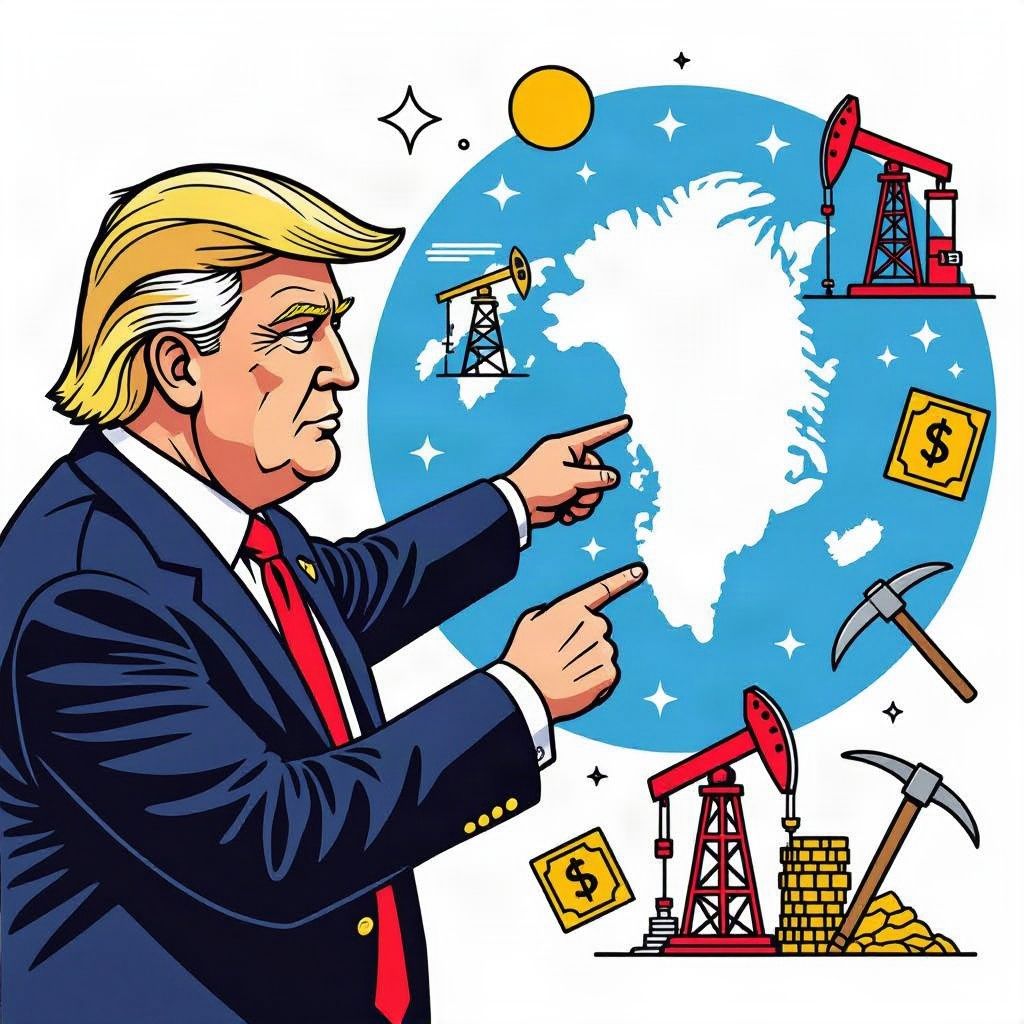
On Wednesday, 14 October 2026, President Donald Trump announced via Truth Social that “massive” oil, gas, and mineral exploitation projects are准备 to commence in Greenland [1][5]. The President stated that experts claim the amount of easily available oil in the region is far greater than that of almost any land anywhere in the world [6]. This declaration marks a significant shift in Arctic resource development strategy, though specific operational details, corporate partners, and regulatory approvals remain unconfirmed [1][3]. The announcement underscores the administration’s focus on energy independence and national security, positioning Greenland as a critical asset for the United States [7]. While the statement indicates strong intent, it is currently classified as an announcement of planned activity rather than implemented policy, pending further logistical and diplomatic coordination [3].
The September Security Agreement
This development follows a security agreement signed last month between the United States, Denmark, and Greenland [2][4]. The deal, finalized on 22 September 2026 in New York City, was intended to resolve tensions after previous threats by President Trump to take control of the strategically located island [2][6]. The agreement acknowledges Denmark’s sovereignty and Greenlanders’ right to self-determination while expanding U.S. military access [4][8]. It includes provisions for “minerals cooperation” and “cooperation on economic development and business promotion,” though it makes no explicit mention of oil or gas extraction specifics [1]. The pact also paves the way for additional U.S. bases and ensures U.S. military access if Greenland becomes independent from Denmark [1][8].
Regulatory and Environmental Landscape
Significant regulatory hurdles remain, as Greenland’s government halted the issuance of new oil and gas exploration licenses in 2021 due to environmental and climate concerns [3]. Approximately 80% of the island is covered in ice, and researchers have previously suggested that extracting Greenland’s minerals would be extremely difficult and expensive due to remote locations above the Arctic Circle [1]. Existing, valid licenses still require additional government approvals for drilling, indicating that immediate large-scale exploitation may face logistical challenges [3]. Furthermore, the security agreement is still subject to a second reading in Greenland’s parliament before being put to a final vote, with lawmakers expected to pass the legislation [4].
Implications for Arctic Defense
President Trump highlighted the national security benefits, stating that any future attack on the United States would have to come across Greenland, where defense systems could intercept threats [6][8]. The agreement facilitates the expansion of the Pituffik Space Base and permits the U.S. to establish additional military bases at Narsarsuaq and Mestersvig [2]. This infrastructure supports the proposed “Golden Dome” missile defense system, leveraging Greenland’s position on the shortest route for missiles between Russia and the United States [4][7]. The deal prohibits non-NATO countries from establishing bases on the island without mutual consent and contains no expiration date, solidifying long-term U.S. strategic presence [2][3].
Sources
- www.cnn.com
- www.cbsnews.com
- www.foxnews.com
- www.france24.com
- www.facebook.com
- www.usnews.com
- www.aa.com.tr
- nypost.com