Qatar Leads Urgent Diplomatic Push as Putin Offers to Mediate Widening Middle East Conflict
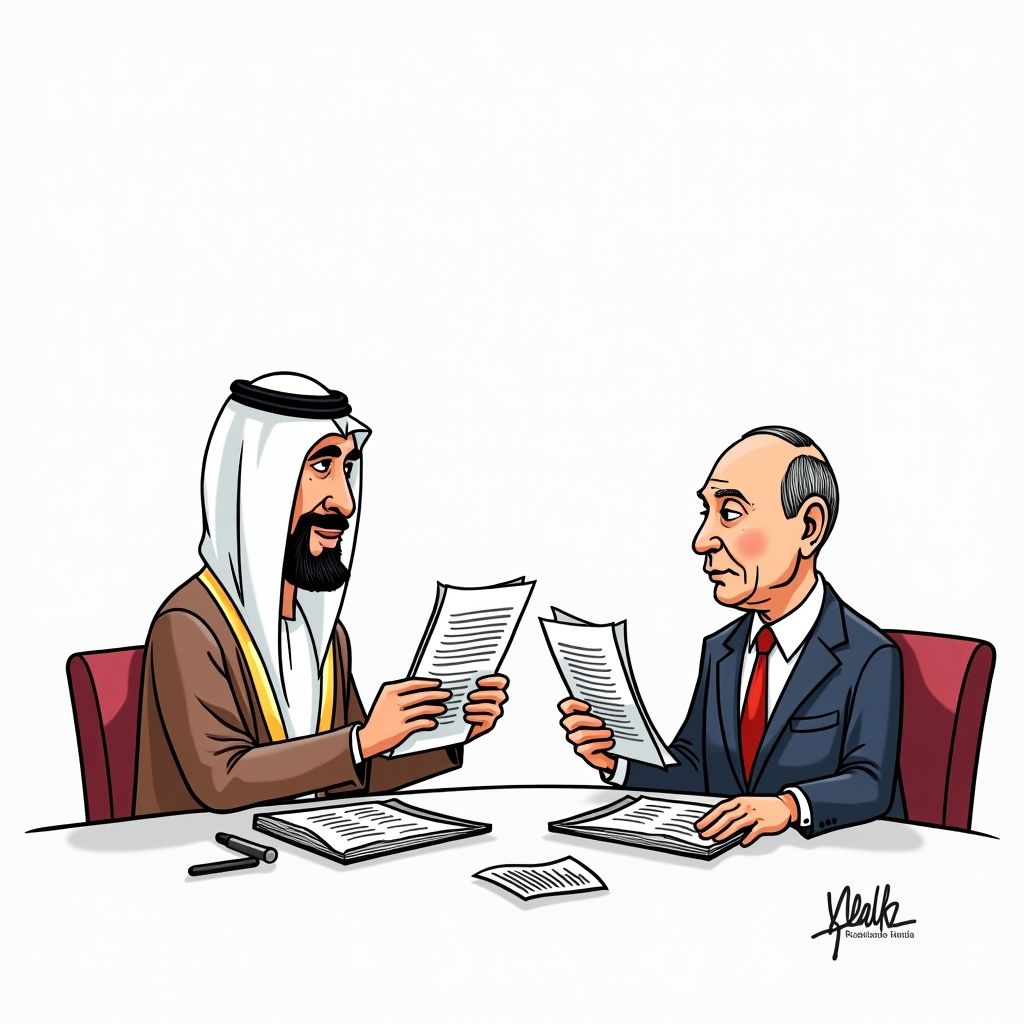
Doha, Monday, 2 March 2026.
On March 2, 2026, the Emir of Qatar engaged in high-stakes diplomacy with Russian President Vladimir Putin and UN Secretary-General António Guterres to contain the rapidly escalating Middle East crisis following joint US-Israeli strikes on Iran. While the Kremlin condemned the Western actions as “unprovoked aggression” and confirmed the death of Iranian Supreme Leader Ayatollah Ali Khamenei, Putin surprisingly offered to mediate with Tehran to protect Gulf nations from retaliatory attacks. This diplomatic flurry underscores Qatar’s pivotal role as a conduit between the West, Russia, and regional powers as they attempt to prevent the conflict from engulfing the entire Persian Gulf.
Kremlin Navigates Dual Narrative in Gulf Outreach
In a flurry of diplomatic activity on Monday, March 2, 2026, Russian President Vladimir Putin held a telephone conversation with the Emir of Qatar, Sheikh Tamim bin Hamad Al Thani, to address the “acute crisis” in the region [1]. The Kremlin’s official readout placed the primary blame for the escalation on the United States and Israel, characterizing their actions as a “flagrant violation of international law” that provoked the conflict [1]. However, the Qatari readout of the same call highlighted a different dimension of the conversation, noting that Putin expressed Russia’s solidarity with Qatar specifically in the face of “Iranian aggression” and offered support to strengthen the Gulf state’s security [5]. This diplomatic duality illustrates Russia’s complex position: condemning Western military intervention while simultaneously reassuring Gulf partners who are facing direct retaliation from Tehran [1][5].
Gulf Nations Under Fire: The Retaliation Effect
The conflict’s spillover into the Gulf Cooperation Council (GCC) states has become a central focus of the diplomatic scrambling. During a separate call on Monday with UAE President Mohammed bin Zayed Al Nahyan, Putin was informed that Iranian retaliatory strikes had caused damage within the UAE and posed a threat to civilians, despite the Emirates not being used as a staging ground for the attacks on Iran [6]. Putin characterized the situation as “unprecedented” and “tragic,” offering to convey the UAE’s position to Tehran in an effort to stabilize the situation [6]. Similarly, in his conversation with Bahrain’s King Hamad bin Isa Al Khalifa, the Russian President emphasized that Moscow is ready to utilize all available opportunities to contribute to regional stabilization [4][6].
Global Consensus on Qatar’s Mediation Role
Qatar’s position as a central mediator has been reinforced by support from both global and regional powers. On Monday, UN Secretary-General António Guterres spoke with the Emir of Qatar, stressing the immediate need for de-escalation and a return to dialogue amidst the widening war [2]. This followed a call on Sunday, March 1, from Algerian President Abdelmadjid Tebboune, who expressed full support for the mediation efforts led by the Emir to halt the dangerous escalation [3]. As the crisis deepens, Doha remains the diplomatic focal point where opposing geopolitical interests—from Moscow, the UN, and the Arab world—are converging in an attempt to prevent a total regional collapse.