Saudi Arabia Announces Wednesday Ramadan Start Amidst Regional Divergence on Timing
Riyadh, Wednesday, 18 February 2026.
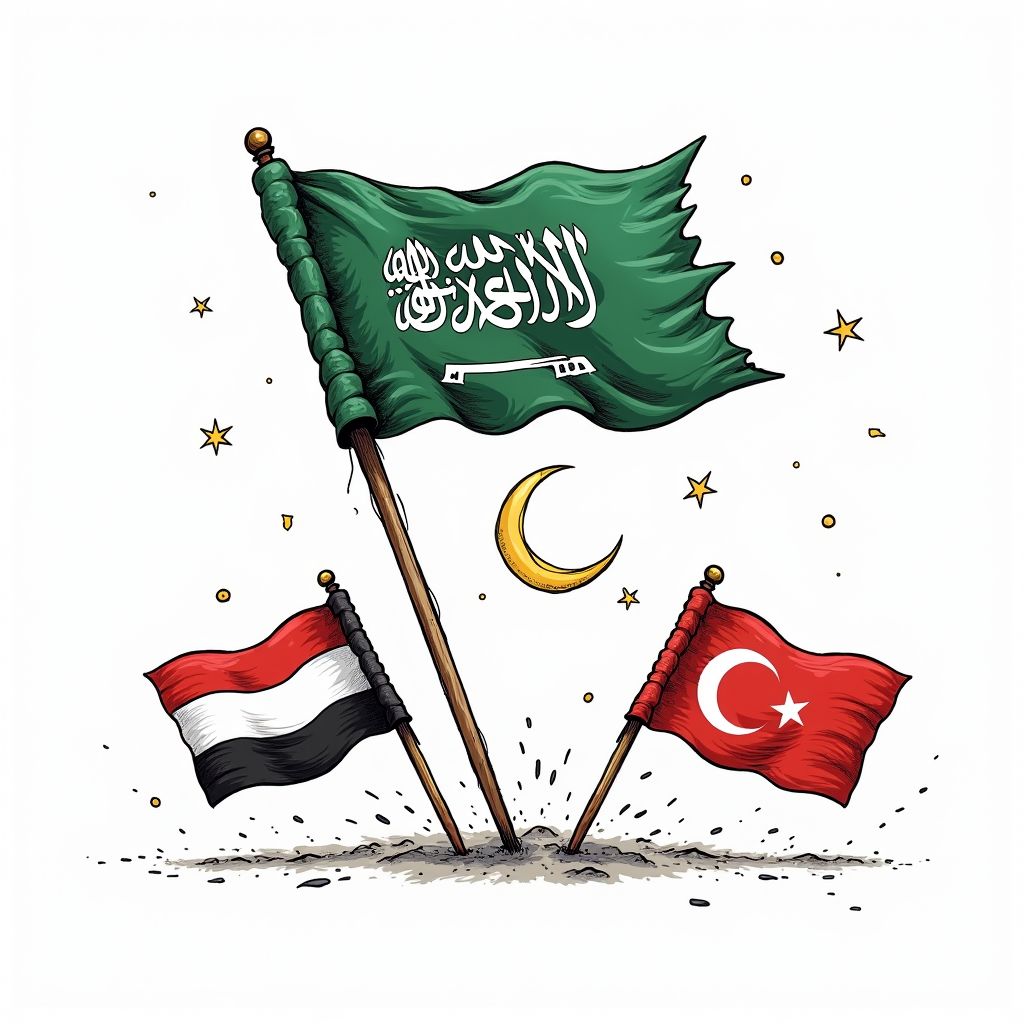
Saudi authorities confirmed the holy month begins today, defying astronomical models deeming the moon invisible. Consequently, regional markets split as Egypt and Turkey delay observance until Thursday.
Gulf Bloc Unifies on Wednesday Start While Neighbors Wait
Following a declaration by the Supreme Court on Tuesday evening, Saudi Arabia officially marked Wednesday, February 18, 2026, as the first day of Ramadan [3][6]. The Kingdom’s announcement, based on the sighting of the crescent moon by observers in Hawtat Sudair and Tumair, triggered a synchronized start across the Gulf Cooperation Council (GCC) states [3]. The United Arab Emirates, Qatar, Kuwait, and Bahrain immediately aligned with Riyadh, declaring Wednesday the start of the holy month [1][4]. This coordination is critical for the region’s integrated financial markets, ensuring that the shift to reduced working hours and adjusted trading sessions occurs simultaneously across these interconnected economies [GPT].
Scientific Calculations Clash with Traditional Sighting
The confirmation of the moon sighting by Saudi authorities has reignited a longstanding debate between astronomical calculation and traditional ocular verification. Leading up to Tuesday’s sunset, scientific consensus strongly suggested that sighting the crescent would be unfeasible. The Sharjah Academy for Astronomy, Space Sciences and Technology (SAASST) stated it was “scientifically impossible” to sight the moon on Tuesday, February 17 [1]. Imad Ahmed, director of the New Crescent Society, supported this view, asserting that the crescent was astronomically impossible to see with either telescopes or the naked eye anywhere in the Middle East, Asia, or Europe [1][4].
Economic and Social Rhythms Adjust
As the holy month commences, the focus in Saudi Arabia and aligned nations shifts toward religious tourism and the night economy. Large numbers of pilgrims are expected to arrive in Mecca to perform Umrah, a pilgrimage that carries heightened spiritual significance during Ramadan [7]. While the start dates differ, the economic impact is immediate, with retail and hospitality sectors pivoting to cater to post-sunset consumption. The duration of this year’s fasting season remains to be seen; astronomical forecasts from Dubai suggest a 29-day month, though the official end of Ramadan will again depend on moon sightings [3].
Sources
- www.middleeasteye.net
- www.islamic-relief.org.uk
- gulfnews.com
- www.dw.com
- www.lemonde.fr
- www.arabnews.jp
- www.moroccoworldnews.com