The Widening Divide Between Solid Economic Growth and Voter Realities
Washington, Sunday, 1 November 2026.
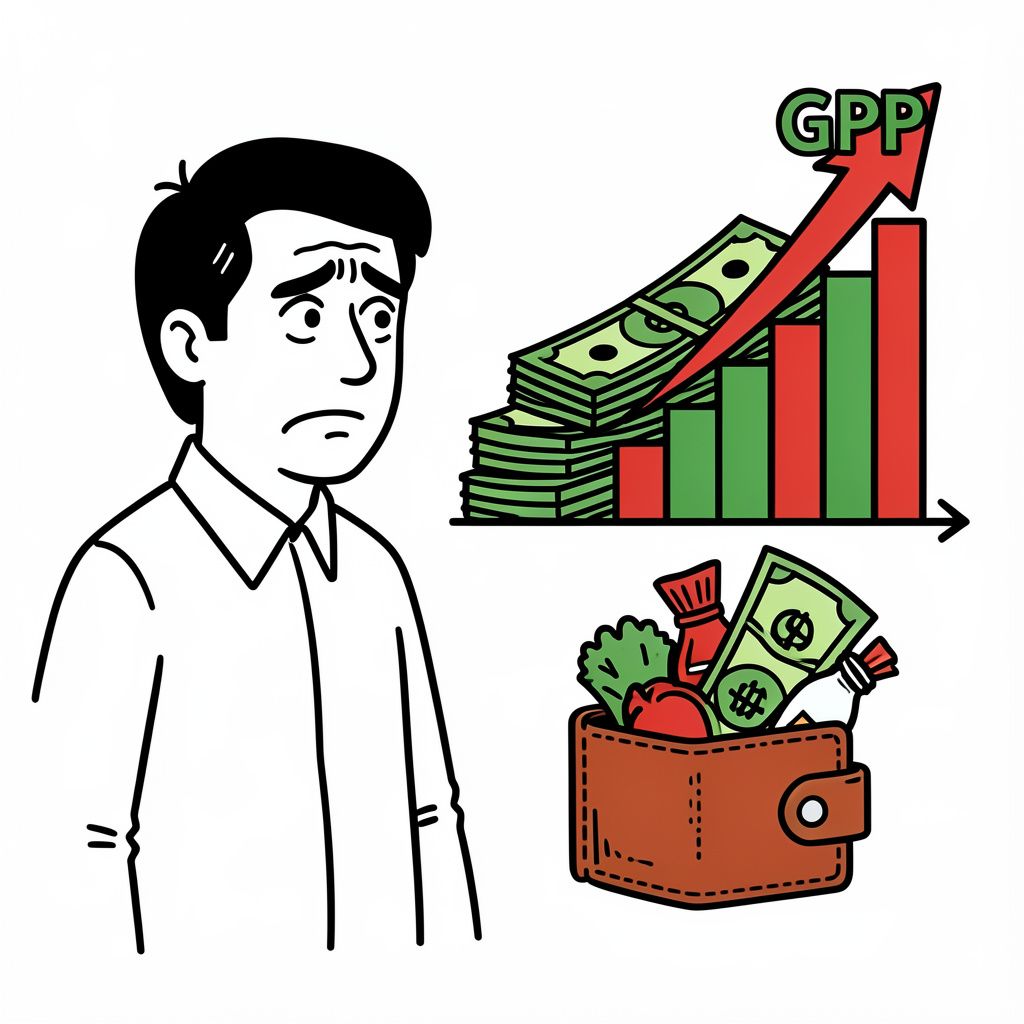
Despite 3.4 percent GDP growth, 74 percent of Americans view the economy poorly ahead of midterms, as cumulative price hikes outpace wages and squeeze household budgets.
The Paradox of Growth and Perception
As the U.S. economy records a 3.4 percent annualized GDP growth rate through the third quarter of 2026 [5], a stark disconnect persists between macroeconomic indicators and public sentiment. Unemployment remains anchored at 4.2 percent, down from earlier highs [4][5], yet 74 percent of Americans describe economic conditions as poor [1][3][5]. This divergence reflects a widening gap between headline figures and lived realities, where wages struggle to keep pace with cumulative price increases of 6.8 percent since December 2024 [1][3]. The result is a cost-of-living crisis that overshadows nominal gains, particularly for households reliant on stagnant incomes or fixed benefits. 69.8 percentage points separate voter sentiment from the reported unemployment rate, highlighting the depth of public skepticism [GPT].
Inflation and Wage Stagnation: The Core of Voter Frustration
Inflation, measured at 3.7 percent annually through September 2026, continues to outstrip wage growth, which has lagged behind since April 2026 [3][4][6]. The Federal Reserve’s preferred inflation gauge, the Personal Consumption Expenditures (PCE) index, shows prices rising faster than the central bank’s 2 percent target, eroding purchasing power despite robust GDP expansion [3][4]. Real hourly earnings have declined by -2.2 percentage points over the past year, with average hourly pay increases of 5.9 percent failing to offset the cumulative 6.8 percent price surge [1][3][4]. In Cleveland, residents like Jolene Simecek describe a decade-long rent hike from $785 to nearly $1,600, while Social Security recipients like Phebie White watch fixed incomes erode under rising utility and healthcare costs [1]. These anecdotes underscore a broader trend: 84 percent of voters under 35 rate the economy poorly, citing affordability as their top concern [5][6].
Housing and Gasoline: The Pressure Points Shaping Midterm Outcomes
Housing affordability has emerged as a decisive issue, with the average 30-year fixed mortgage rate hovering at 7.25 percent—a level not seen since the early 2000s [4]. The housing sector, historically sensitive to interest rates, has contracted for eight of the last ten quarters, exacerbating supply shortages and driving rents upward [4][5]. In Boston, parents like Greg and Audrey Dunn faced $114,000 in annual daycare costs for three children, a figure that dwarfs median household incomes in many regions [1]. Meanwhile, gasoline prices have become a symbolic flashpoint: the U.S. national average surpassed $4 per gallon in October 2026, fueled by geopolitical tensions [6]. AAA data shows a 1.19 USD increase from the prior year, with diesel prices surging 2.65 USD per gallon [3]. This affordability squeeze is reflected in polls, where 71 percent of respondents now deem gasoline unaffordable, up from 28 percent in February 2026 [3].
Political Fallout and the Road to November 3
The midterm elections, scheduled for November 3, 2026, are being framed as a referendum on economic stewardship, with 50 percent of voters calling the economy an “extremely important” issue [6]. President Donald Trump’s approval rating on economic handling stands at 25 percent, while 20 percent approve of his management of the cost of living—a disconnect mirrored in broader disapproval of his administration’s economic policies [6]. Democrats hold a 9-point edge in generic congressional ballot polling, with voters citing the economy as their top priority over issues like healthcare or foreign policy [6][alert! ‘Polling data is time-sensitive and may shift rapidly’]. Federal Reserve Chairman Kevin Warsh’s assertion that “the economy is strong” contrasts sharply with Mark Zandi’s warning of “extraordinarily low” hiring rates, illustrating the fractured narrative [4][5]. As voters weigh these competing signals, the outcome hinges on whether they perceive the economy’s growth as inclusive or extractive—a question that may redefine political fortunes in the coming weeks.
Sources
- www.cnn.com
- www.washingtonpost.com
- abcnews.com
- www.npr.org
- www.audacy.com
- www.wsj.com
- www.facebook.com
- www.youtube.com