Tech Selloff Cuts Elon Musk's Fortune by $64 Billion in a Single Day
Austin, Monday, 23 November 2026.
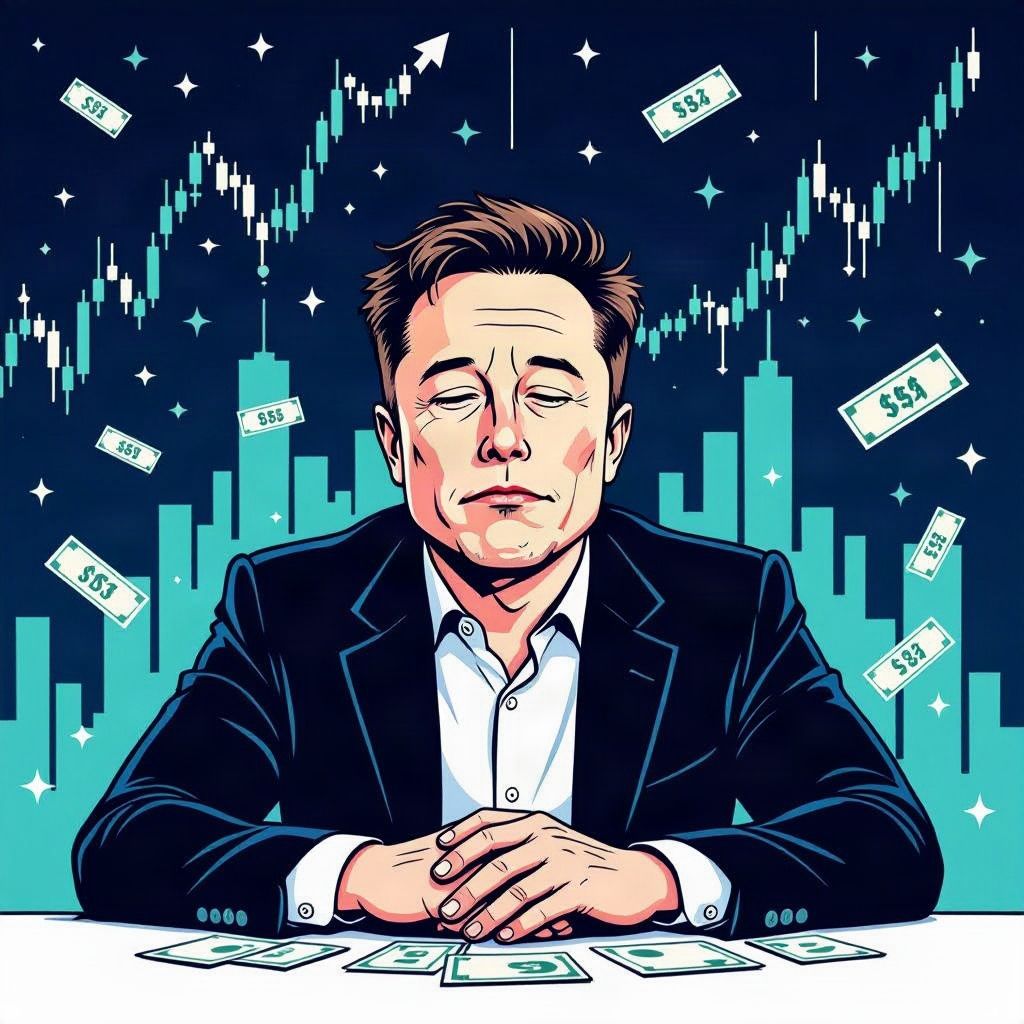
A broader technology downturn triggered a steep $64 billion single-day decline in Elon Musk’s wealth, driven by market reassessments of artificial intelligence assets across Tesla and SpaceX.
Market Turmoil Triggers Record Wealth Erosion
Elon Musk’s net worth plummeted by an estimated $64 billion on Friday, 21 November 2026, marking one of the largest single-day wealth declines in history. The precipitous drop was driven by a broad sell-off in technology stocks, which pushed the S&P 500 into correction territory and the Nasdaq 100 into bear market territory [1]. The market rout disproportionately affected high-multiple tech assets, particularly those tied to artificial intelligence (AI), a sector in which Musk’s two flagship companies—Tesla Inc. (NASDAQ: TSLA) and SpaceX—have significant exposure. While Musk’s fortune remains in the $811 billion to $894 billion range according to real-time tracking indices [1][5], the sudden contraction underscores the extreme volatility faced by tech billionaires whose wealth is heavily concentrated in publicly traded and privately held tech ventures.
Tesla and SpaceX Bear the Brunt of Investor Skepticism
Tesla (NASDAQ: TSLA), already grappling with slowing growth in its core electric vehicle (EV) business and intensifying competition in China, saw its stock price fall to $345 on Friday, down from a recent high of $413 in October [1]. The decline reflects broader concerns about Tesla’s ability to sustain its AI-driven pivot, which includes ambitions in full self-driving (FSD) technology, robotaxis, and the Optimus humanoid robot program [1]. Similarly, SpaceX, whose valuation has been buoyed by its AI initiatives—including the Grok large language model and its burgeoning data center business—saw its implied valuation contract sharply. The company’s stock, which had reached an all-time high of $225, dropped to $127 on Friday [1]. This retreat was exacerbated by weakness in key AI data center players such as CoreWeave (NASDAQ: CRWV) and Nebius (NASDAQ: NBIS), which have seen their valuations slump amid growing skepticism about the sustainability of AI-driven revenue growth [GPT].
AI Sector Reassessment Sends Shockwaves Through Musk’s Portfolio
The AI sector, once hailed as a transformative growth engine, has come under intense scrutiny as investors reassess the premiums placed on high-growth, high-multiple stocks. The pressure on AI-related assets was exemplified by the performance of Anthropic, a direct competitor to Grok, whose valuation fell to $1.18 trillion just two days after its highly anticipated public debut [1][3]. Anthropic’s rapid deflation in value has raised questions about the sustainability of Grok’s valuation, particularly given SpaceX’s significant capital expenditures in its AI infrastructure, which exceeded $16.4 billion in its latest reporting period [1]. The Superintelligence division of SpaceX, which generated $7.56 billion in revenue and accounted for 52% of the company’s total revenue, remains SpaceX’s most capital-intensive segment—a dual-edged sword that amplifies both growth potential and risk exposure. This dynamic has left investors questioning whether the AI investment thesis remains intact or if a broader sectoral correction is underway.
Broader Implications: A Cautionary Tale for Tech Billionaires
Musk’s staggering wealth loss was not an isolated incident. Other technology billionaires also experienced significant declines, with Michael Dell shedding over $16.2 billion, Mark Zuckerberg losing $12.1 billion, and Jensen Huang’s fortune tumbling to $105 billion from a year-to-date high of nearly $200 billion [1]. These losses highlight the interconnected risks faced by executives whose wealth is tied to volatile tech assets. Despite the turmoil, Musk retains his position as the world’s wealthiest individual, a testament to the sheer scale of his holdings in both Tesla and SpaceX [5]. However, the episode serves as a stark reminder of the fragility of fortunes built on high-growth narratives, particularly in sectors as speculative as AI. As public and private markets continue to reassess the premiums placed on future growth, Musk’s experience may foreshadow a more cautious approach to valuation across the tech landscape.
Sources
- www.benzinga.com
- www.businessinsider.com
- www.forbes.com
- www.bloomberg.com
- www.benzinga.com
- www.benzinga.com
- www.facebook.com