The Economic Toll of Washington's Indefinite Military Deployment
Washington, Monday, 20 April 2026.
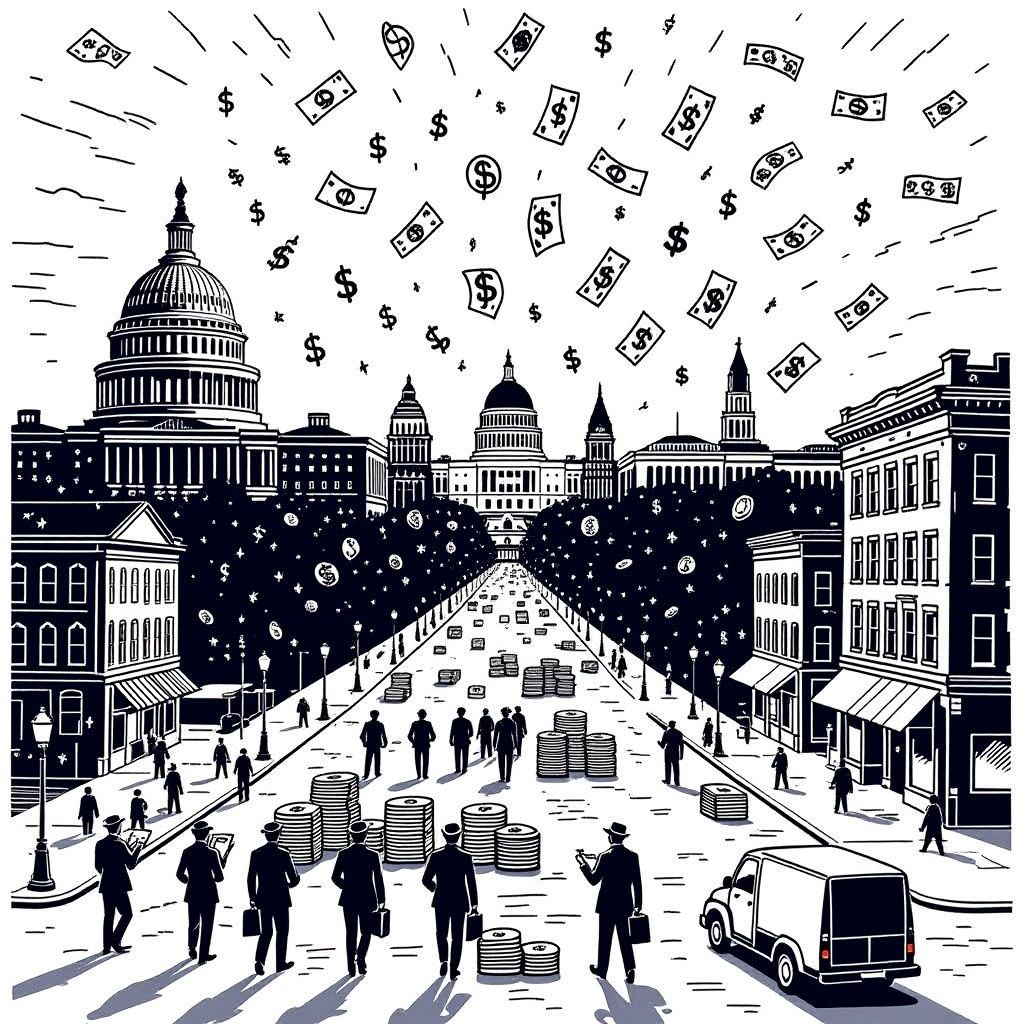
As Washington D.C.’s indefinite troop deployment costs taxpayers over $1 million daily, local leaders and investors warn of mounting disruptions to regional commerce and economic stability.
The Financial and Operational Burden on the Capital
Eight months after Republican President Donald Trump issued an executive order in August 2025 declaring a crime emergency, more than 2,500 National Guard troops remain stationed across Washington, D.C. [1]. The financial weight of this ongoing military presence is substantial. According to Phil Mendelson, chairman of the District of Columbia Council, the deployment costs taxpayers “more than a million dollars a day” [1]. Because Washington, D.C. operates as a federal district rather than a sovereign state—a unique status established by the U.S. Constitution to serve as the nation’s capital [GPT]—the President exercises direct control over the D.C. National Guard, effectively bypassing local government resistance and limiting the city’s ability to manage its own security budgets [1].
Political Tensions and the Limits of Local Autonomy
The indefinite nature of the deployment is increasingly intersecting with local and national political timelines. With city primaries and a special at-large council election scheduled for 16 June 2026 [alert! ‘Source indicates these are upcoming scheduled events that could be affected by ongoing political pressure and federal presence’], advocacy groups are mobilizing [1]. Keya Chatterjee, executive director of Free DC, announced protests planned for 1 May 2026, demanding “an end to the military occupation of D.C. before the June election” [1]. Despite these planned demonstrations, the troop presence has been sparsely debated in mayoral and congressional campaigns, largely because local officials have virtually no legal authority to end the deployment [1]. Scott Michelman, legal director for the ACLU of the District of Columbia, emphasized the governance gap, stating, “We should have local control and local democratic accountability for the people who enforce our laws” [1].
Looking Ahead: Electoral Security and Long-Term Projections
Looking toward the broader national landscape, the D.C. deployment has sparked congressional anxiety regarding the upcoming midterm elections. During a House Appropriations subcommittee hearing on 17 April 2026, Representative Joe Morelle, a New York Democrat, questioned the chief of the National Guard Bureau, General Steven Nordhaus, about the potential for troops to be stationed at polling places [2]. General Nordhaus assured lawmakers that the Guard “always follows the Constitution,” noting that federal law strictly prohibits military deployment to polls unless actively repelling armed enemies [2]. These concerns are fueled by past statements from President Trump, who falsely claimed the 2020 election was stolen and suggested he should have used the Guard to seize ballot boxes, alongside recent urging from former adviser Steve Bannon to deploy military and Immigration and Customs Enforcement agents to patrol voting sites [2].