Priced Out: How Surging Living Costs Are Fueling a Maryland Exodus
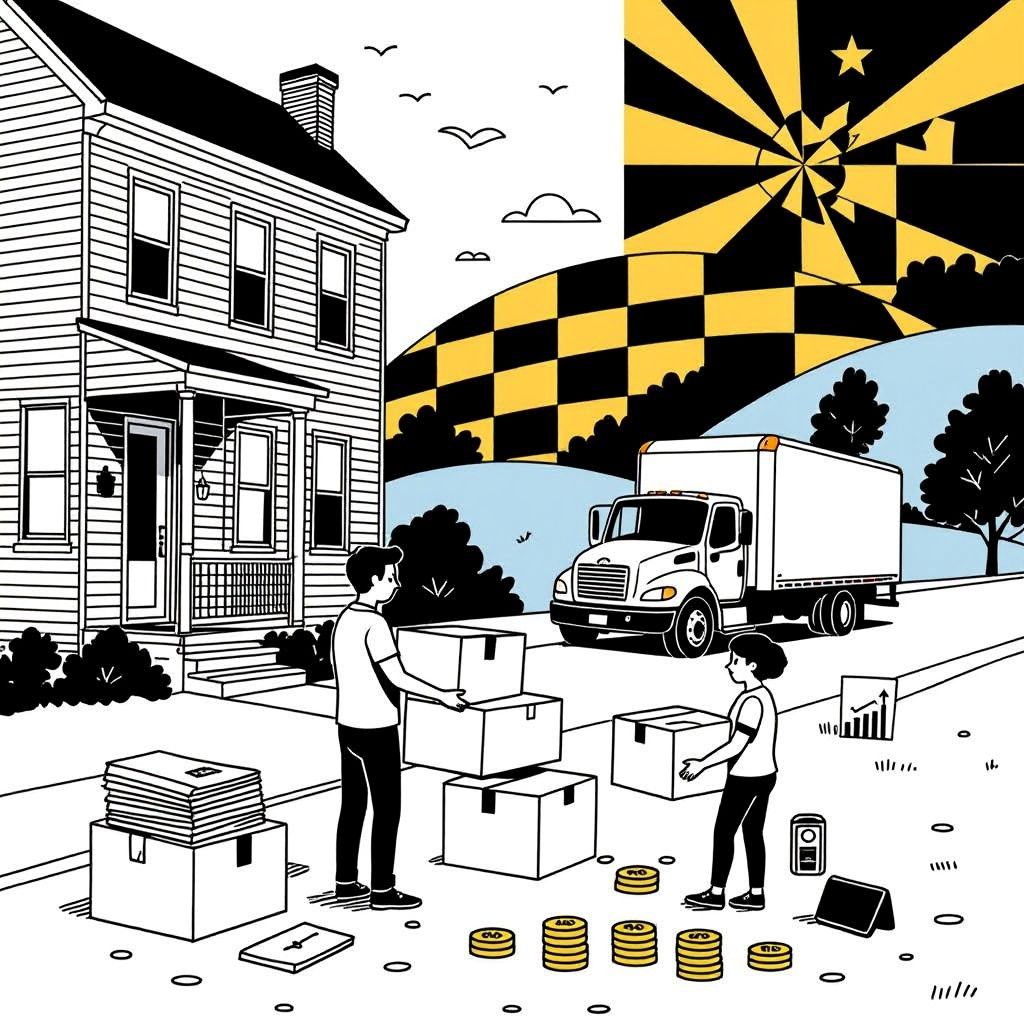
Baltimore, Thursday, 23 April 2026.
Ranked the second most expensive state to raise a child, Maryland faces a growing demographic crisis as surging housing and utility costs force middle-class families to relocate for affordability.
The Staggering Price of Parenthood
As of April 2026, Maryland holds the unenviable position of being the second most expensive state in the nation to raise a child [1]. Families face an average annual expenditure of $36,419 during a child’s first five years, with the state also recording the second-highest infant daycare costs in the United States at an average of $25,321 per year [1]. For low-income households, the state provides a child tax credit of up to $500 per child, but this phases out entirely for families earning $25,000 or more, leaving middle-class earners to absorb the full brunt of childcare inflation [1].
Housing Shortages and Utility Shocks
Beyond childcare, structural housing deficits and skyrocketing utility bills are accelerating the exodus. A report released in October 2025 by Maryland Comptroller Brooke Lierman identified a current shortage of approximately 100,000 housing units, projecting a need for nearly 600,000 additional units by 2045 [3]. The state’s regulatory environment—ranked the sixth most regulated for residential development—has stifled new construction, contributing to a median home price of $446,400 and average monthly homeowner costs of $2,389 [4]. Consequently, the proportion of Maryland households earning enough to afford a median-priced home plummeted from 75 percent in 2000 to less than 50 percent by 2022 [4].
A Demographic Shift in Outmigration
This confluence of pressures has triggered a pronounced demographic shift. Between 2010 and 2023, Maryland saw 2.3 million residents move to other states while only attracting approximately 2.0 million, resulting in a net domestic outmigration loss of 300000 residents [4]. The pace has accelerated recently, with the state losing 127,000 residents between 2021 and 2023, and over 18,000 more between July 2023 and July 2024 [3]. Currently, Maryland ranks 45th nationally in domestic state migration, according to the Maryland Chamber of Commerce [1].
Policy Pressures and Economic Outlook
The migration patterns closely track regional affordability. While Maryland gains residents from notoriously expensive states like New York and New Jersey, it is bleeding population to more affordable markets [4]. Between 2010 and 2023, roughly 31 percent of net outmigrants relocated to Florida, and 26 percent moved to neighboring Pennsylvania, where the median listing price as of March 2026 was notably lower at approximately $300,000 [3][4]. Third-generation Marylander Kristen Holt, who spends nearly $5,000 annually on electricity, noted that housing costs and retirement taxes have already driven her parents and two siblings to states like North Carolina, Virginia, and West Virginia [1].