Trump and Xi Set May Summit in Beijing Following Delays Over Iran Conflict
Washington, Friday, 27 March 2026.
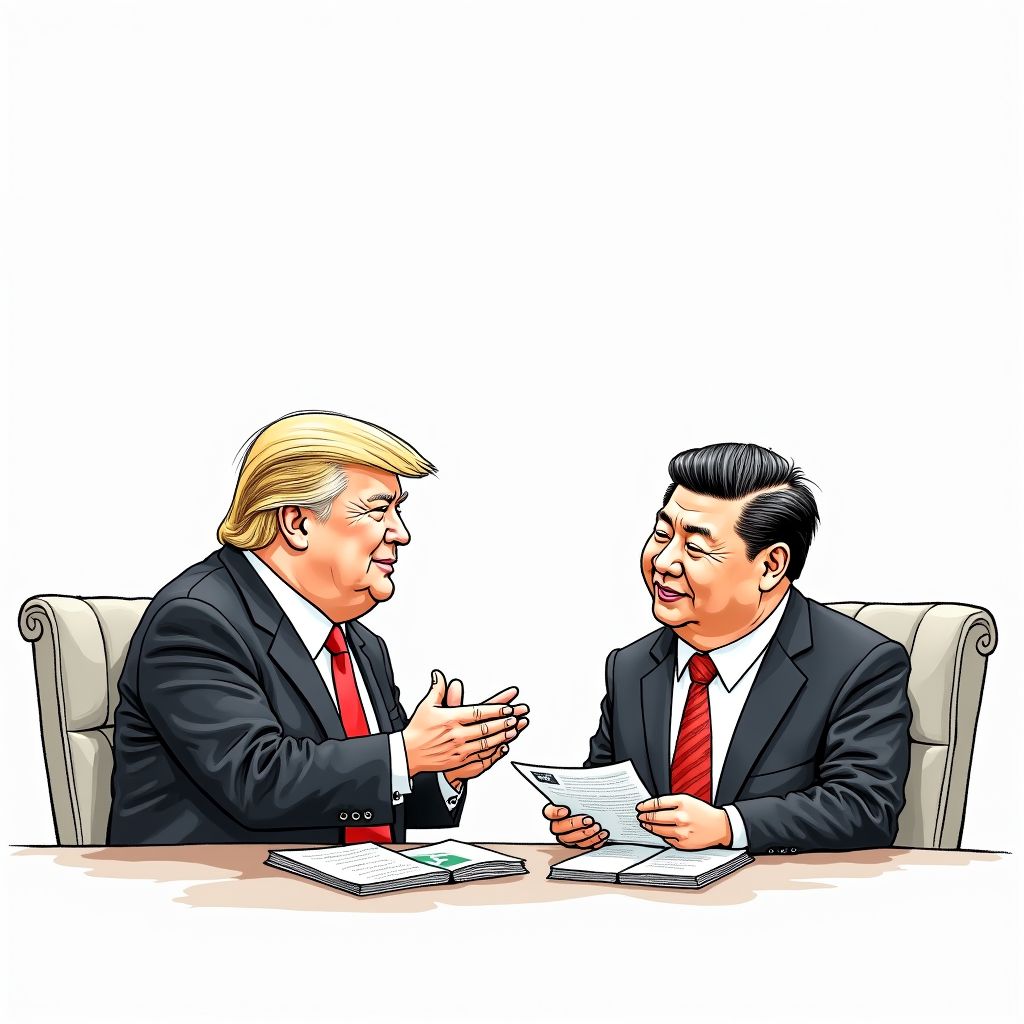
Delayed by the Iran conflict, Trump’s May 14-15 summit with Xi in Beijing marks the first US presidential visit to China in nearly a decade, carrying high economic stakes.
Navigating Geopolitical Shocks and Energy Markets
White House Press Secretary Karoline Leavitt confirmed on March 26, 2026, that the diplomatic summit between President Donald Trump and Chinese President Xi Jinping has been rescheduled for May 14 and 15 in Beijing [1][2][6][8]. The high-stakes meeting was originally slated to occur between late March and early April but was postponed due to the outbreak of the joint U.S.-Israel military campaign against Iran, which commenced on February 28, 2026 [1][2][6]. According to Leavitt, President Xi accepted the postponement, acknowledging the necessity of President Trump remaining in the United States during the initial combat operations [1][3][5][6].
The Economic Weight of the Summit
The closure of the Strait of Hormuz acutely threatens Chinese economic interests, given the nation’s heavy reliance on Middle Eastern energy imports [GPT]. In 2025, Beijing purchased over 80% of all Iranian oil shipments, amounting to 1.38 million barrels per day [6]. To contextualize this specific vulnerability against China’s broader energy demands, the country imported a total of 12 million barrels of oil daily during the first two months of 2026 [2]. This indicates that the equivalent of 11.5 percent of China’s total daily import volume in early 2026 was sourced specifically from Iran the previous year [2][6]. Chinese Foreign Ministry spokesperson Lin Jian highlighted the severity of the situation on March 18, 2026, noting that the disruption in the strait has severely impacted international goods and energy trade [6].
Taiwan Tensions and Domestic Skepticism
Geopolitical friction between Washington and Beijing extends beyond the Middle East, with Taiwan remaining a central point of contention on the summit’s agenda [2]. The Trump administration has actively increased U.S. arms sales to Taiwan, and reports from March 26, 2026, indicate that an additional arms package is expected to be announced following the May visit [2]. This development prompted a swift response from the Chinese defense ministry, which publicly urged the United States to handle the Taiwan issue with “extreme caution” [2].
Rebuilding Diplomatic Bridges
The May 14-15 summit will mark the first time a sitting U.S. president has visited China since President Trump’s three-day trip in November 2017 [1][2][3]. Despite the prolonged gap in formal state visits to Beijing, the two leaders have maintained intermittent direct contact, most recently meeting in October 2025 at Gimhae International Airport in South Korea on the sidelines of the Asia-Pacific Economic Cooperation (APEC) summit [3][4]. Chinese state media, including an editorial in the Global Times, has actively encouraged these renewed diplomatic interactions, characterizing the recent lack of people-to-people exchanges as abnormal [3].
Sources
- www.upi.com
- www.reuters.com
- www.bbc.com
- www.pbs.org
- www.scmp.com
- www.aljazeera.com
- www.youtube.com
- www.bloomberg.com