Companies Add Friction to Hiring Pipelines as Automated Resume Flood Breaks Recruiting
New York, Thursday, 27 August 2026.
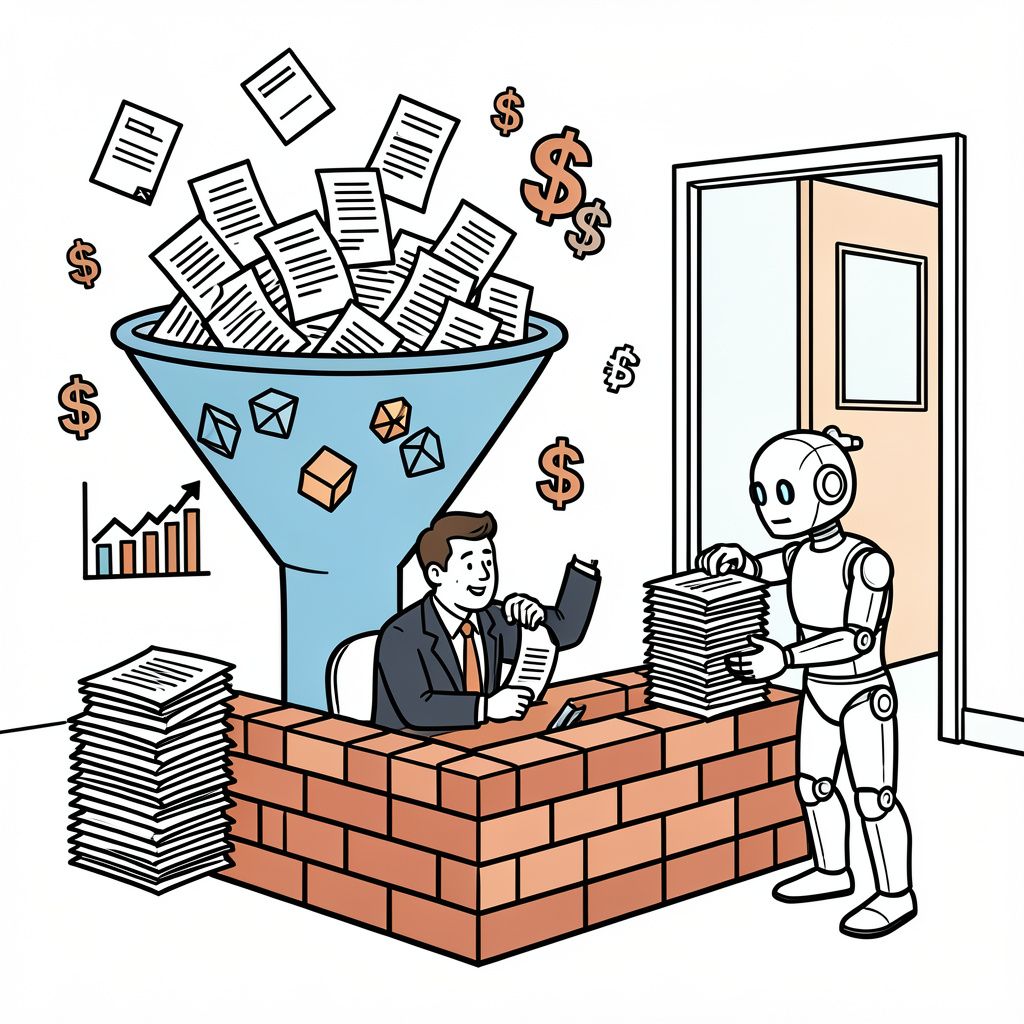
Up to 60% of job applications are now AI-generated. To combat thousands of low-quality submissions swamping recruiting systems, corporate leaders are intentionally making application processes harder.
The Surge in Automated Applications
As of August 2026, corporate recruitment systems are experiencing an unprecedented influx of job applications driven by artificial intelligence tools. Andrew Stockwell, Head of People at Vendr, reports that job listings which previously attracted up to 100 applicants now receive hundreds to over 1,000 applications within 24 to 48 hours due to AI-generated submissions [1]. This represents a significant increase in volume, calculated as a 900 percent rise in application traffic compared to pre-AI norms [1]. Similarly, Ophir Samson, Head of Voice AI for Greenhouse, notes that the industry-wide goal of a seamless application experience has resulted in some roles receiving 2,000 applicants in a 24-hour period [1]. This surge occurs against a backdrop where job openings have stabilized at approximately 7 million following a peak of 12.3 million in March 2022, according to Bureau of Labor Statistics data [1]. The disparity between available roles and application volume has created a bottleneck, forcing employers to re-evaluate automated hiring pipelines to combat administrative burnout [1].
The Economics of Intentional Friction
In response to the overload, recruitment strategies are shifting away from frictionless processes toward implementing friction to filter out low-quality candidates. As of 24 August 2026, companies are intentionally making application processes harder to distinguish genuine interest from automated spam [1]. This reversal targets the post-pandemic trend that favored one-click apply features, which experts now argue degraded the quality of hire [1]. Operational efficiency is a key driver; manual screening of 200 CVs typically requires 6 to 10 hours, whereas AI-powered platforms like Hirecise process and rank the same volume in under 5 minutes [6]. This efficiency gain reduces the time-to-hire by a factor of 3, according to platform data [6]. Additionally, SmartRecruiters reports that AI-powered matching and screening can lead to a 6x increase in candidate review speed and a 75% reduction in manual screening time [2]. These metrics highlight the economic necessity of adopting specialized tools to manage the 72 times faster processing capability compared to manual methods [6].
Operational Risks and Compliance Challenges
The reliance on AI introduces significant legal and operational risks if not managed correctly. Estimates suggest that 30% to 60% of current job resumes are AI-written, inflating candidate qualifications and overwhelming human capacity [4]. Using generic AI tools to filter resumes and job descriptions without proper safeguards is identified as a major legal liability for recruiting departments [4]. Jonathan Duarte, host of GoHire Talks, warns that uploading job descriptions and resumes to public AI models like ChatGPT can result in lawsuits due to data privacy and bias concerns [4]. Furthermore, compliance with regulations such as the EU AI Act is becoming critical for volume recruitment, requiring more than a standard Applicant Tracking System [5]. A study report published on 21 August 2026 surveyed 204 HR experts regarding these trends, emphasizing the need for GDPR compliance and structured AI workflows [5]. Failure to address these risks can lead to broken hiring funnels where talent acquisition operations are blamed for systemic workflow failures [3].
Rebuilding Workflows for the Future
Industry leaders argue that the solution lies in rebuilding workflows rather than simply adding headcount. Jeremy Piker, a Recruiting Operations Leader, emphasizes that recruiting operations failures are consistent across tech, finance, and healthcare sectors, stemming from systemic workflow deficits [4]. He notes that it is not uncommon to have a seven-round interview process now, which feels entirely flawed and creates excessive work for hiring managers [4]. The focus is shifting toward operationalizing talent acquisition and auditing existing technology stacks to determine if they serve business needs [4]. Authentic connections are becoming paramount; building a personal brand around genuine connections is becoming the only source of trust as AI grows bigger [4]. As companies navigate this landscape, the goal is to allow recruiters to have better human-to-human conversations rather than performing robotic checkbox screenings [4].