Alphabet Enlists Outside Cloud Partners to Challenge Market Rivals in Artificial Intelligence Silicon
Mountain View, Wednesday, 28 October 2026.
Alphabet will offer custom chips via Oracle Cloud Infrastructure by 2027, unlocking massive external distribution and directly challenging dominant merchant accelerator suppliers across enterprise computing.
Alphabet’s Strategic Pivot: From Cloud to AI Chip Dominance
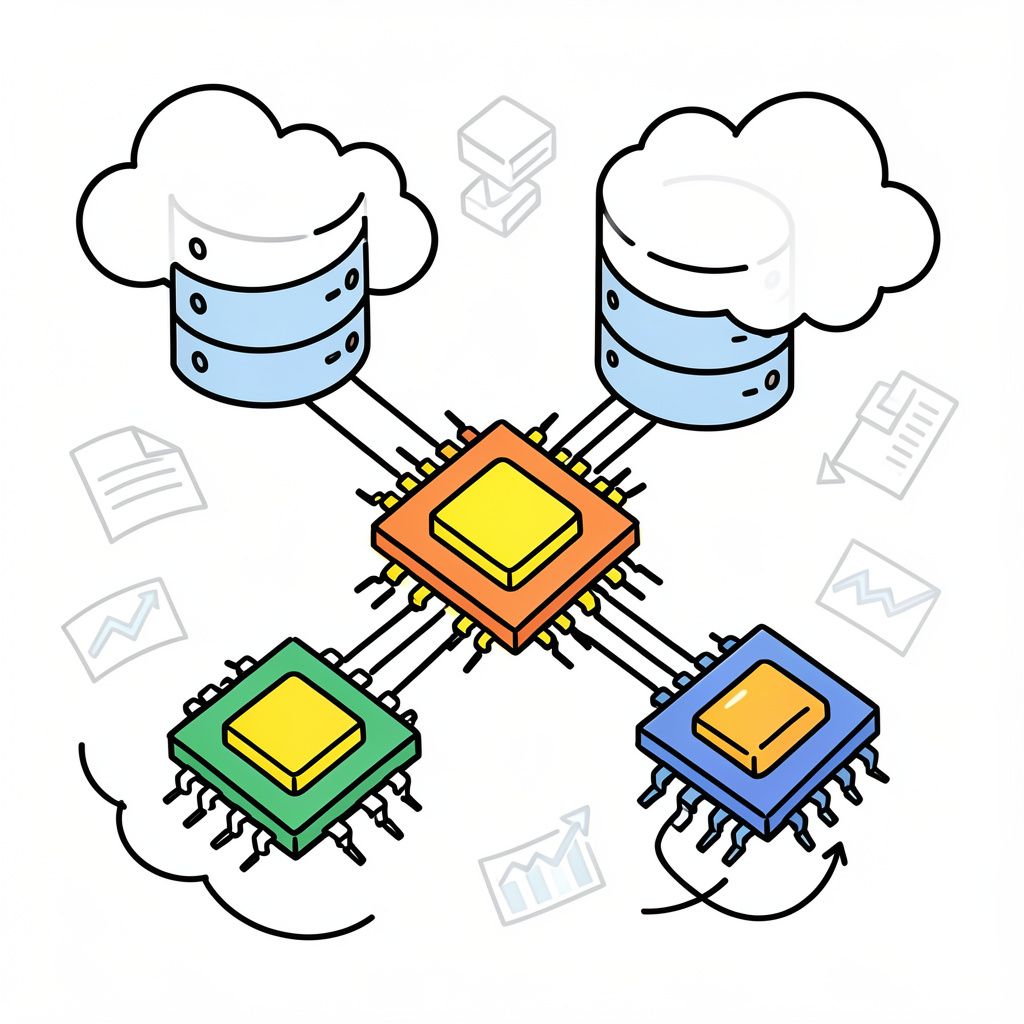
On October 27, 2026, Alphabet Inc. (NASDAQ: GOOGL) announced a landmark strategic shift in its artificial intelligence (AI) infrastructure playbook, enlisting Oracle Cloud Infrastructure (OCI) as its first external partner to distribute custom Tensor Processing Units (TPUs) starting in calendar year 2027 [1][4]. This move marks a deliberate departure from Google Cloud’s traditionally closed ecosystem, where TPUs have exclusively operated since their inception in 2013 [2][4]. The initiative is designed to unlock massive external distribution channels, positioning Alphabet to directly challenge merchant chip suppliers such as Nvidia, which currently dominate the enterprise AI silicon market [1][4][5]. The partnership reflects a broader industry trend where hyperscalers are leveraging proprietary hardware to gain competitive advantages in AI workloads [GPT].
Breaking Down Google’s TPU Ecosystem: Performance and Evolution
Google’s TPUs, initially designed as application-specific integrated circuits (ASICs) to accelerate machine learning workloads, have undergone significant evolution since the launch of TPU v1 in 2013, which delivered 92 TFLOPS and 30 times the throughput per watt of contemporary processors [2]. By 2026, the eighth-generation TPU models deliver up to 12.6 PFLOPS of native FP4 compute per chip, representing over a 100-fold performance increase compared to TPU v1 [2]. These chips utilize a systolic array architecture, featuring thousands of directly connected multiply-accumulators, with Cloud TPU v3 processors containing two systolic arrays of 128 x 128 ALUs on a single processor [3]. The architecture is engineered for direct liquid cooling at rack scale, aligning with next-generation data center profiles such as those employed by Oracle Cloud Infrastructure [2].
Oracle Cloud Integration: A New Era for TPU Accessibility
The collaboration between Google Cloud and Oracle will enable workloads to be assignable to TPUs on either Google Cloud or Oracle infrastructure, starting in 2027 [2][4]. Oracle Cloud Infrastructure will utilize its Acceleron networking, featuring SmartNIC with hardware-level tenant isolation, High Performance Fabric, and Zero Trust Packet Routing, to ensure secure and high-performance integration with Google’s TPUs [2]. This partnership makes OCI the first hyperscaler outside Google to offer TPUs, expanding access to Google’s custom silicon beyond its proprietary cloud environment for the first time [2][4]. The move aligns with Google’s broader strategy to monetize its hardware innovations while fostering a more competitive AI chip ecosystem [1][2].
Market Implications: Challenging Nvidia and Accelerating AI Silicon Adoption
The partnership arrives at a pivotal moment as enterprise demand for high-performance AI silicon accelerates, with Google positioning itself as a formidable competitor to Nvidia, the current market leader in AI accelerators [1][5]. Analysts from Check Capital Management have highlighted Google’s potential to take market share from Nvidia, emphasizing the company’s strong competitive position in the AI chip space [1]. The initiative also reflects a broader industry shift, as companies like OpenAI and Anthropic increasingly seek alternatives to Nvidia’s dominance. Anthropic, for instance, agreed in October 2025 to use up to 1 million Google TPUs in a deal worth tens of billions of dollars, underscoring the critical role TPUs play in AI infrastructure [1][alert! ‘OpenAI’s TPU purchases remain unverified as of October 28, 2026’].
Financial and Strategic Outlook: Revenue Projections and Cloud Competition
Google Cloud reported $25 billion in revenue for Q2 2026, trailing Amazon Web Services ($42 billion) and Microsoft Azure ($29 billion), highlighting the competitive pressure in the cloud infrastructure market [1]. However, Google’s push into external TPU distribution is expected to drive significant revenue growth. TD Cowen projects $9.4 billion in TPU sales for the second half of 2026 and $62.5 billion for 2027, while Wells Fargo forecasts approximately $9 billion in third-quarter 2026 sales and $99 billion in 2027 [1][5]. These projections underscore the potential of TPUs as a major revenue driver for Alphabet, particularly as the company expands its hardware commercialization efforts [1][5]. CFO Anat Ashkenazi noted that only a small portion of TPU revenue would be recognized in 2026, with the vast majority expected in 2027, reflecting the long-term investment horizon of the initiative [1].
Sources
- www.cnbc.com
- cloud.google.com
- docs.cloud.google.com
- www.facebook.com
- www.facebook.com
- www.gurufocus.com