Trump Postpones Crucial Summit with Xi Jinping Amid Iran Conflict
Washington, Tuesday, 17 March 2026.
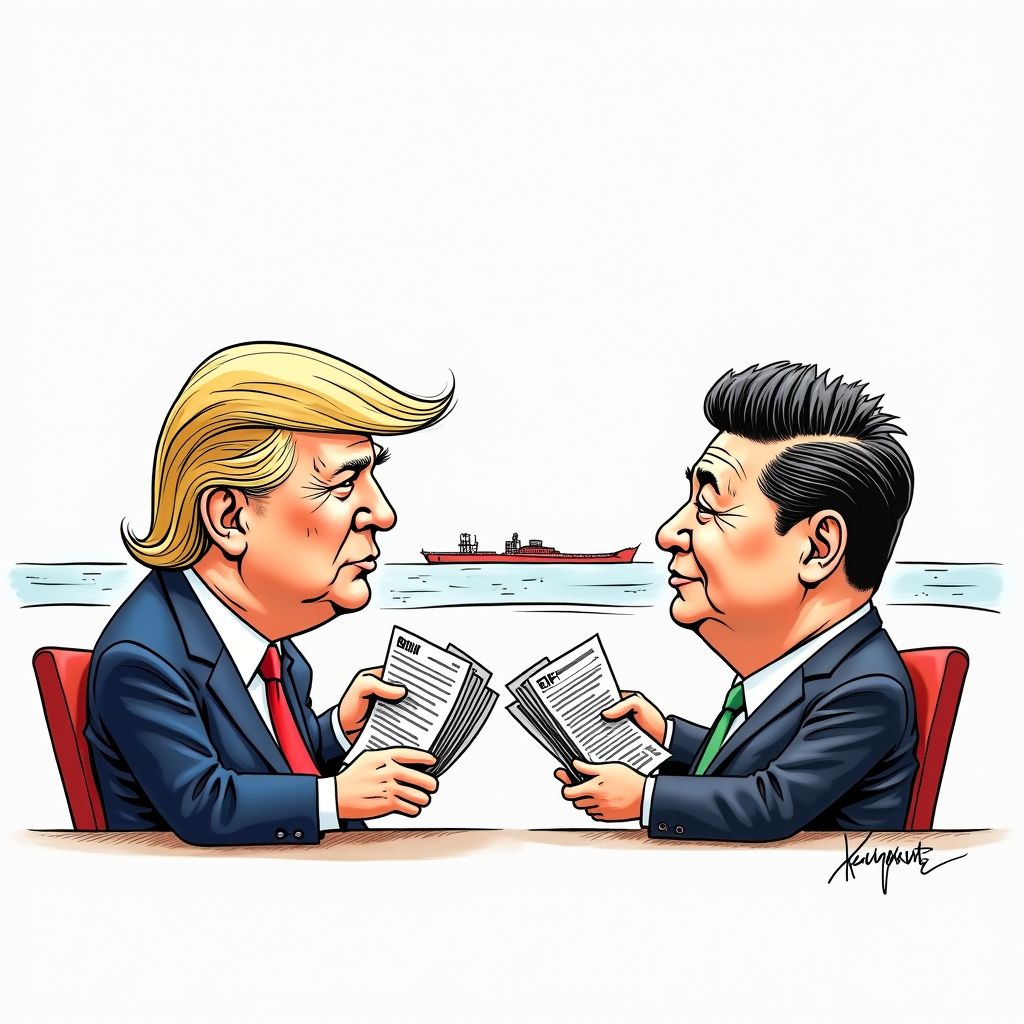
President Trump is delaying his upcoming summit with Xi Jinping to focus on the Iran war, pausing critical trade negotiations while urging Beijing to secure the Strait of Hormuz.
Logistical Shifts Amid Middle East Escalation
Originally slated to take place in Beijing between March 31 and April 2, 2026, the highly anticipated summit between U.S. President Donald Trump and Chinese President Xi Jinping is facing a postponement of approximately one month [3][7]. Addressing reporters from the White House on Monday, March 16, President Trump attributed the scheduling shift directly to the escalating U.S.-Israeli military campaign against Iran, dubbed “Operation Epic Fury” [3][6][8]. The conflict, which commenced with large-scale strikes on February 28, 2026, demands the President’s presence in Washington, D.C., to coordinate ongoing military efforts [3][6]. White House Press Secretary Karoline Leavitt emphasized that while the meeting is not in jeopardy, adjusting the timeline is a necessary logistical response to the commander-in-chief’s wartime responsibilities [6][7].
The Strait of Hormuz and Global Energy Markets
At the center of the economic fallout from the Iran conflict is the Strait of Hormuz, a critical maritime chokepoint currently facing an Iranian blockade [1]. Approximately one-fifth of the world’s crude oil transits through this waterway, making its security paramount to global energy markets [3][4]. Over the weekend, President Trump publicly called upon several nations—including China, France, Japan, South Korea, and the United Kingdom—to deploy naval assistance to reopen the strait [1][4]. The U.S. military has already taken action in the region, with the President noting on March 8 that American forces had destroyed 28 ships capable of deploying naval mines [4].
Trade Talks Proceed Despite Diplomatic Pauses
Even as the leaders’ summit faces a delay, bilateral economic negotiations are actively continuing behind the scenes. The diplomatic pause coincides with a renewed U.S. investigation into potentially unfair trade practices by China and over a dozen other countries, which the Trump administration launched on March 8, 2026 [2]. This investigation adds a layer of complexity to the trade dynamic, yet it has not halted ongoing discussions. Over the March 14-15 weekend, Treasury Secretary Bessent met with a Chinese delegation led by Vice Premier He Lifeng in Paris [2][3].
Geopolitical Complexities and Future Outlook
The overarching shadow of the Middle East conflict continues to complicate the U.S.-China relationship. China, which counts Iran as a strategic ally, has openly condemned the U.S. and Israeli military strikes, characterizing them as violations of international law [4]. The human toll of the conflict is severe; the initial February 28 attacks alone resulted in over 1,200 fatalities, including the death of Iran’s Supreme Leader, Ayatollah Ali Khamenei [3]. This stark geopolitical divide means that any future dialogue between Trump and Xi will inevitably require navigating their diametrically opposed positions on the Middle East [alert! ‘The exact agenda of the rescheduled meeting has not been officially released, so the extent to which the Iran conflict will dominate the talks remains speculative’].
Sources
- www.politico.com
- www.cnbc.com
- www.aljazeera.com
- www.nbcnews.com
- www.washingtonpost.com
- www.pbs.org
- thehill.com
- www.instagram.com