Strategic Draft Investments: NFL Franchises Target Alabama Receiver Germie Bernard
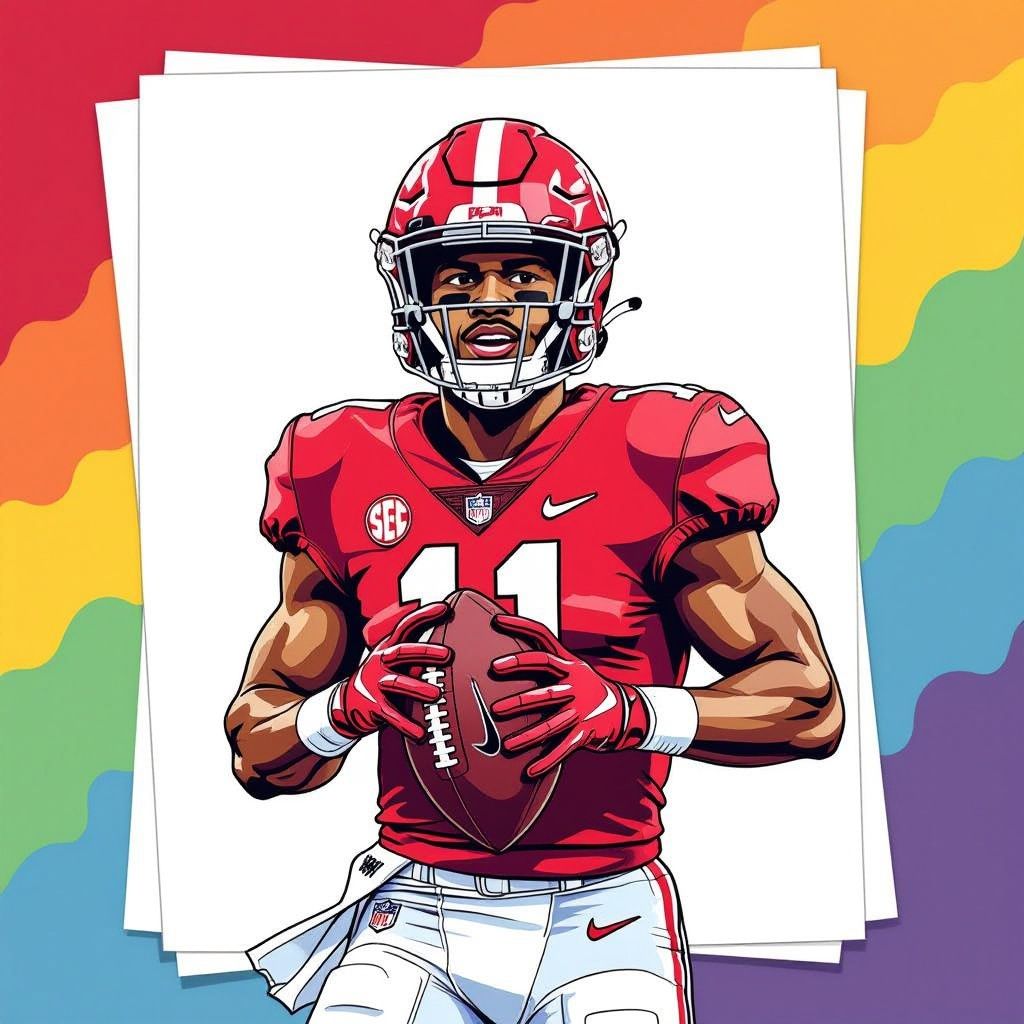
New York, Saturday, 25 April 2026.
NFL franchises are targeting Alabama receiver Germie Bernard in the 2026 draft. His standout versatility represents a crucial investment designed to optimize on-field performance and drive overall franchise valuation.
Valuing Versatility in the Modern Football Market
Evaluating offensive assets requires a deep dive into physical metrics and historical production. Germie Bernard, a 22-year-old prospect, presents a robust physical profile, standing 1.86 meters tall and weighing 93.4 kilograms [2]. His collegiate trajectory highlights a steady accumulation of market value; after transferring to Alabama in 2024 to follow head coach Kalen DeBoer, he recorded 50 receptions for 726 meters [2]. By the 2025 season, Bernard had secured the primary receiver role, catching 64 passes for 862 yards—equivalent to 788.213 meters—and scoring seven touchdowns across 14 games [1][2]. His physical dimensions, combined with a 4.48-second performance in the standard combine sprint, solidify his status as a premium asset for franchises looking to diversify their offensive portfolios [1][2].
Blocking and Unselfish Play as Tangible Assets
In the high-stakes NFL ecosystem, a wide receiver’s valuation extends well beyond catching passes; perimeter blocking is a vital metric for a team’s running game efficiency and overall offensive output [GPT]. Bernard explicitly demonstrated this utility during a 16 November 2024 game against Mercer, where he executed a devastating block that neutralized a defensive back and a safety, directly facilitating a touchdown [1]. Bernard later articulated his operational philosophy, noting that the receiver position is inherently unselfish [1]. He explained that once his primary assignment is neutralized, he actively seeks secondary blocking targets to ensure his teammates reach the end zone [1].
Capital Allocation and Draft Day Dynamics
While Bernard’s profile represents a high-yield investment for offensive coordinators, front offices must constantly balance these selections against defensive liabilities. For instance, the New York Giants utilized their crucial 37th overall pick on Day 2 to draft Tennessee cornerback Colton Hood, a 1.829-meter, 87.5-kilogram defender with a 1.028-meter vertical leap [3]. This defensive acquisition followed their first-round capital expenditures on linebacker Arvell Reese and offensive lineman Francis Mauigoa on 23 April 2026 [3]. The Giants’ strategy underscores the complex resource allocation decisions franchises face, especially after trading away their 2025 third-round pick in a previous transaction for Jaxson Dart [3].