American Oil Company Defies Greenland Warnings by Landing Unauthorized Drilling Equipment
Nuuk, Saturday, 1 August 2026.
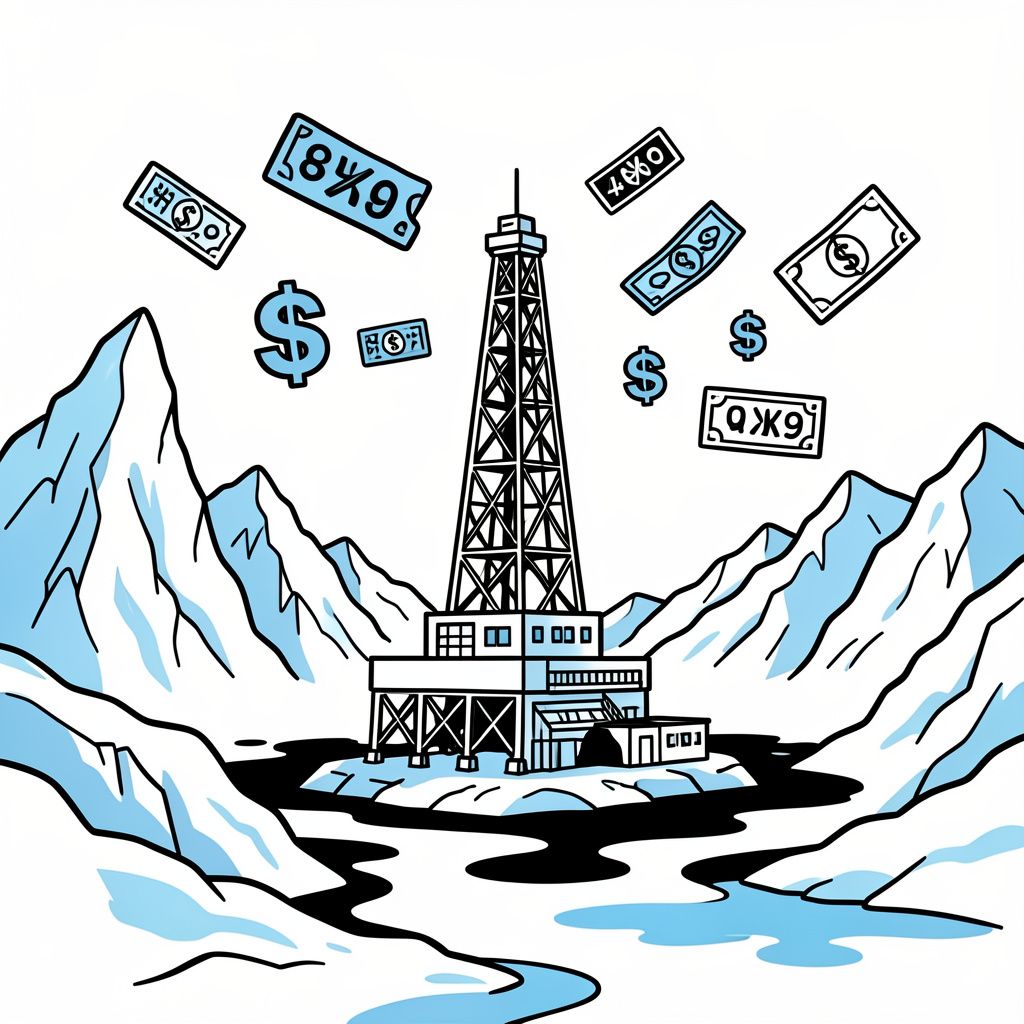
An American energy firm landed unauthorized equipment in Greenland to pursue an estimated 13 billion barrels of oil, sparking severe warnings from Arctic officials over legal compliance.
Unauthorized Landing Escalates Regulatory Conflict
On 30 July 2026, the Greenlandic Department of Mineral Resources issued a strong warning to Greenland Energy Company following the unauthorized landing of drilling equipment in Jameson Land [1][8]. The equipment, belonging to subcontractor White Flame Energy, was transported from Tasiilaq to Nerlerit Inaat without the required prior approval from local authorities [1][8]. This action directly contravened explicit instructions from Greenlandic officials to desist from landing personnel or machinery without valid permits [1][3]. While the department deemed the current storage conditions at Nerlerit Inaat orderly, they emphasized that all future logistical movements require explicit authorization before execution [1][8].
Legal Context and Licensing Disputes
Although Greenland implemented a ban on new oil exploration licenses in 2021, Greenland Energy Company operates under a handful of older, existing licenses that remain legally valid [2][7]. Revoking these legacy licenses would constitute expropriation, potentially exposing the government to significant compensation claims [2][7]. Despite holding these licenses, the company lacks specific permits for drilling operations and equipment placement, a distinction emphasized by the Ministry of Mineral Resources [2][7]. Department Head Jørgen Hammeken-Holm stated that the company is only permitted to move camp structures, not drilling rigs, without further approval [2].
Disputed Reserve Estimates and Financial Stakes
A significant discrepancy exists regarding the potential oil reserves in the Jameson Land basin, creating tension between corporate projections and geological assessments [2][4]. Greenland Energy Company claims the area holds approximately 13 billion barrels of oil, a figure used to attract international investment [2][4]. In contrast, a 2022 joint report by GEUS, Nunaoil, and the Greenlandic government estimates the reserves at only 350 million barrels [2][7]. The company’s estimate exceeds the government’s assessment by 3614.286 percent, a variance geologist Thomas Varming describes atypical for standard industry reporting [2][7].
Capital Raises and Market Activity
To fund its operations, Greenland Energy Company completed a stock exchange listing during the week of 27 July 2026 to 1 August 2026, raising 1.5 billion DKK [2]. The company aims to secure an additional 500 million DKK to construct infrastructure links for drilling wells and temporary crew housing [7]. Director Robert Price has framed the project as vital for U.S. and European energy security, aiming to reduce dependence on Russian energy sources [2][4]. However, analysts note that securing necessary environmental and operational approvals typically takes between three to six months, casting doubt on the company’s autumn 2026 drilling timeline [2][7].
Enforcement Threats and Company Response
Greenlandic authorities have indicated readiness to employ police forces, described as broad-shouldered figures in black uniforms, to handle illegal activities if necessary [1][8]. In extreme cases, the Arctic Command may be utilized to enforce compliance with sovereign regulations [1][8]. In response to the warning, Greenland Energy Company Director Roderick McIllree apologized for the failure to notify authorities about the equipment move to the commercial area at Nerlerit Inaat [1][8]. McIllree stated the company believed storage in the airport’s commercial zone did not require separate permission, acknowledging the oversight as a mistake not to be repeated [1][8].
Future Operations and Compliance Deadlines
Greenland Energy Company plans to initiate drilling operations in October 2026, with each well estimated to take approximately 30 days to complete [7]. Equipment preparation in Montreal was scheduled for completion before August 2026, with transport to Greenland planned for late summer 2026 [7]. However, the Ministry of Mineral Resources maintains that current applications are incomplete regarding technical and environmental requirements [2]. Officials characterize the company’s announcement of autumn drilling as a stunt intended to pressure regulators and attract investors rather than a feasible operational schedule [2][7].
Sources
- www.dr.dk
- danwatch.dk
- ing.dk
- frihedsbrevet.dk
- www.zetland.dk
- www.facebook.com
- danwatch.dk
- dk.headtopics.com