How Canada's Expanded Citizenship Law Unintentionally Risks U.S. Security Clearances
Washington, D.C., Wednesday, 20 May 2026.
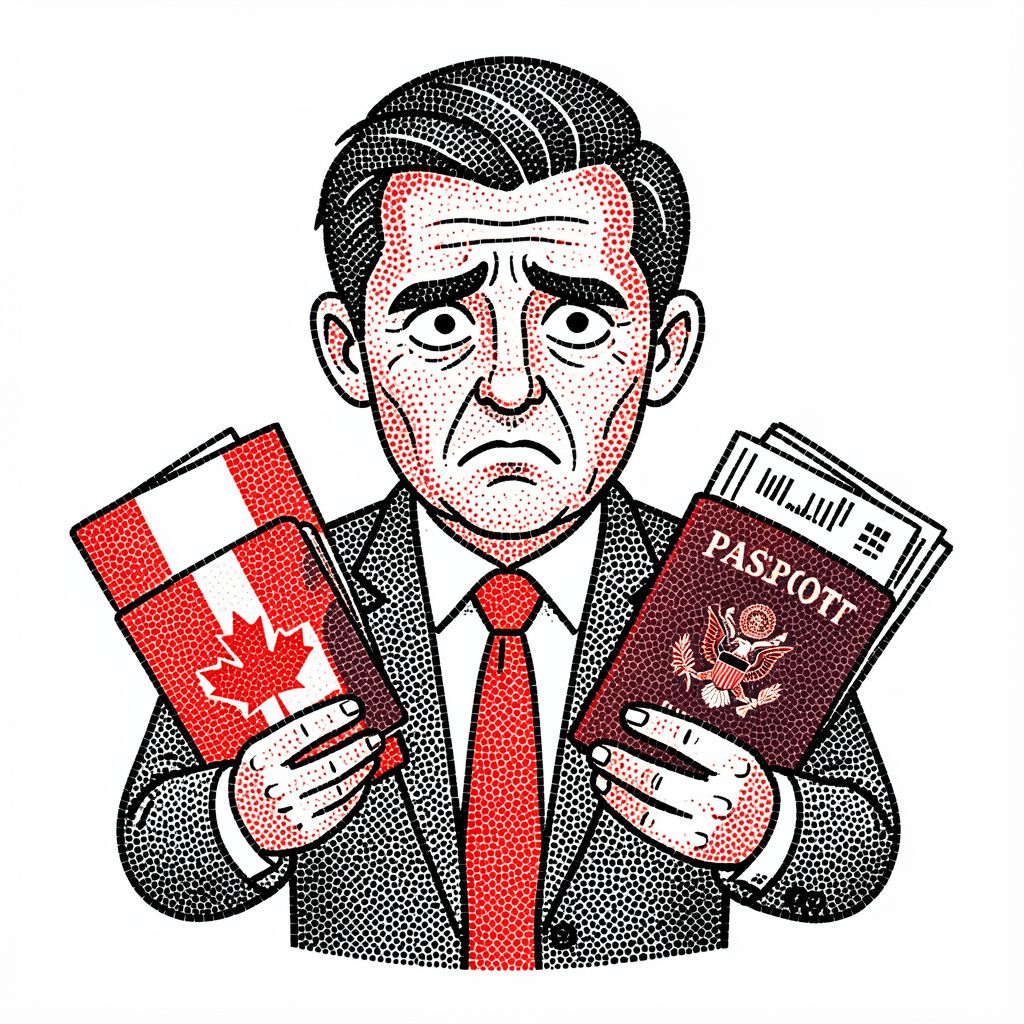
Canada’s December 2025 citizenship expansion inadvertently makes many Americans dual citizens. For U.S. security clearance holders, unknowingly failing to report this automatic status risks severe professional consequences.
The Mechanics of Bill C-3 and Citizenship by Descent
On December 15, 2025, the Canadian government enacted Bill C-3, a legislative update that fundamentally altered the country’s citizenship by descent rules [1][2]. Prior to this legislation, Canada imposed a strict “first-generation limit” on inheriting citizenship, but the new law retroactively removed this restriction for individuals born before the effective date [2]. As a result of this sweeping change, millions of individuals residing in the United States may have inadvertently acquired Canadian citizenship without ever submitting an application [1]. The expansive nature of the law has even captured the attention of immigration professionals who note that high-profile public figures, such as Shiloh Jolie, are among the thousands whose legal status has been altered [2].
Navigating Foreign Preference and Personal Conduct Guidelines
For the vast network of United States defense contractors, technology executives, and federal employees, this newly acquired status intersects directly with national security protocols [GPT]. Holding dual citizenship is not inherently disqualifying for maintaining a United States security clearance, but it triggers immediate scrutiny under adjudicative guidelines, specifically Guideline C, which governs Foreign Preference [1]. The primary threat to clearance holders is not the citizenship itself, but rather the failure to properly disclose this status under strict federal reporting mandates, such as the Security Executive Agent Directive 3 (SEAD-3) [1].
Proactive Compliance Strategies for Professionals
To safeguard their security clearances, affected professionals must adopt stringent compliance measures immediately. Legal experts advise that individuals holding or eligible for Canadian citizenship must consistently use a United States passport for all international travel [1]. Furthermore, under current federal guidelines, clearance holders are required to report all foreign travel, explicitly including trips across the northern border to Canada [1]. Any change in citizenship status must be disclosed promptly to security officers, and individuals are strongly cautioned against exercising any rights associated with their foreign citizenship [1].