Transatlantic Flight Diverted After Threatening Bluetooth Network Sparks Security Alert
Newark, Monday, 1 June 2026.
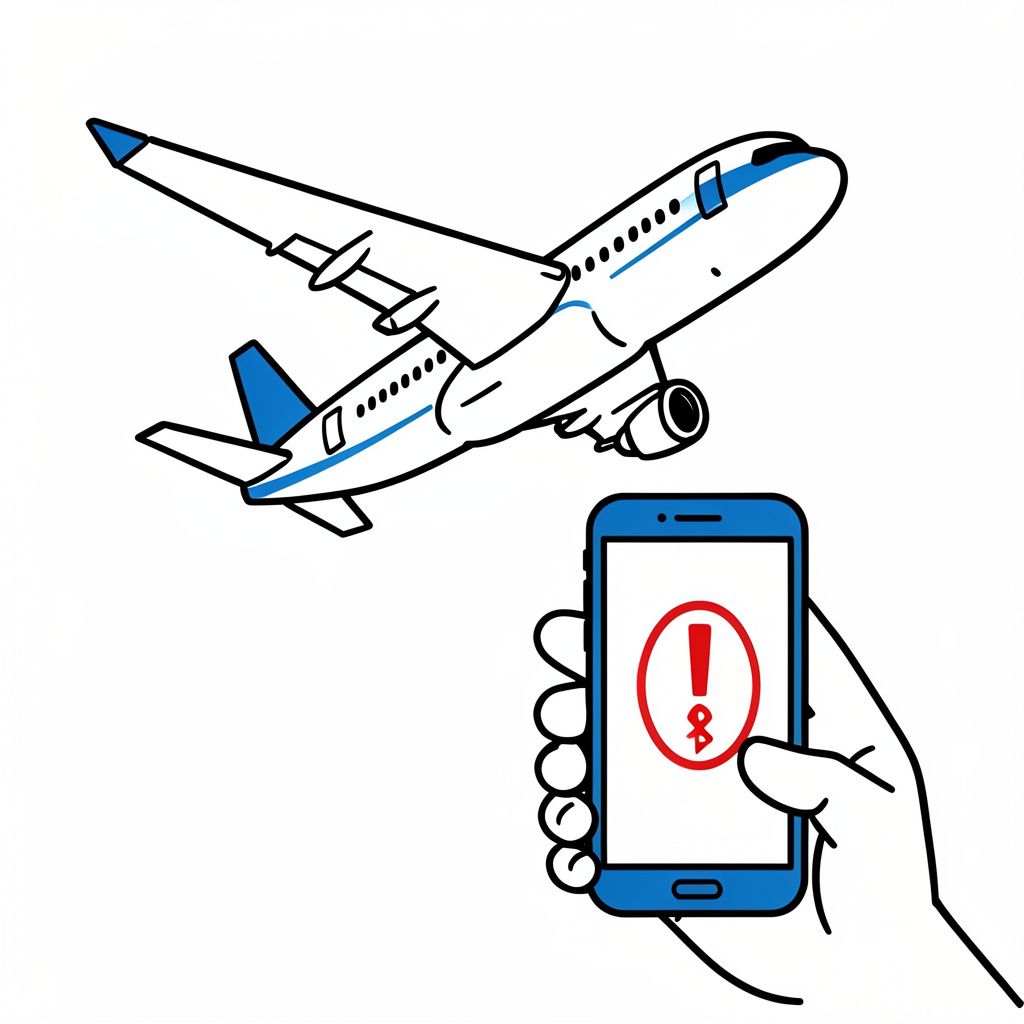
A United Airlines flight to Spain was forced to return to Newark after a passenger’s Bluetooth network, named “BOMB,” triggered a major security protocol and massive operational disruptions.
Mid-Flight Reversal: Anatomy of a Digital Threat
On Saturday, May 30, 2026, United Airlines (NASDAQ: UAL) Flight 236 departed Newark Liberty International Airport at approximately 5:43 p.m., bound for Palma de Mallorca, Spain [1][4]. The Boeing 767 was carrying a total of 202 individuals, comprising 190 passengers and 12 crew members [1][4]. Roughly 90 minutes into the transatlantic journey, the aircraft abruptly reversed course over the Atlantic Ocean [1]. The diversion was triggered by an unusual digital anomaly: a passenger detected an active Bluetooth network explicitly labeled with the word “BOMB” during the flight’s takeoff [1][4].
Stringent Ground Protocols and Logistical Fallout
While a digital prank may seem harmless to its creator, the financial and logistical consequences of such nuisances are severe for commercial carriers [GPT]. Upon landing, the aircraft was immediately met by law enforcement personnel [1]. Passengers were mandated to evacuate the plane, leaving most personal items behind, while Port Authority police and K9 units conducted a comprehensive sweep of both the passenger cabin and the cargo hold [1][3][4]. Subsequently, all 190 passengers were required to undergo complete rescreening procedures administered by the Transportation Security Administration (TSA) and U.S. Customs and Border Protection before they could be cleared to reboard [2][4][5].
A Broader Pattern of Operational Friction
This Bluetooth-induced diversion is not an isolated operational hurdle for United Airlines in recent days [alert! ‘Contextualizing recent events based on May 2026 incident reports’]. Just one day prior, on Friday, May 29, 2026, United Flight 2005 en route from Chicago to Minneapolis was forced to make an emergency diversion to Madison, Wisconsin [5]. In that instance, a 75-year-old passenger experiencing a reported mental health crisis attempted to breach the cockpit, requiring the individual to be physically restrained by the crew until federal and local authorities intervened on the ground [5].