US Power Generation Hits Record Growth Amidst Rising Data Center Demand
Washington, Thursday, 15 January 2026.
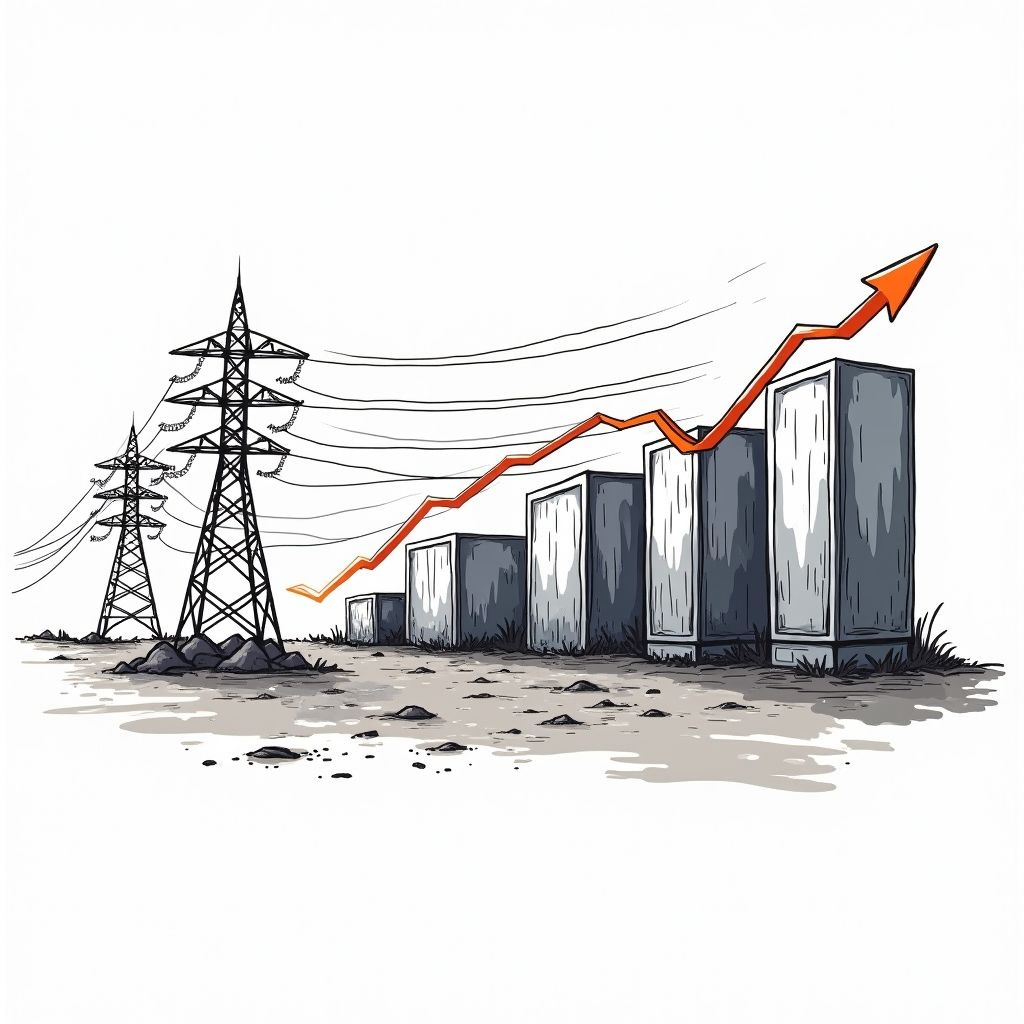
United States utility electricity generation climbed 3% in 2025, marking the beginning of the strongest four-year demand growth period in a quarter-century. Driven largely by the explosive energy needs of data centers and artificial intelligence, this surge has reshaped the grid’s composition, triggering a 13% rebound in coal consumption and a 2.4% rise in emissions. As the EIA forecasts continued expansion through 2027, the sector faces a pivotal moment where soaring technological demand collides with shifting federal policies and significant infrastructure constraints.
Forecasting a Historic Demand Surge
The U.S. Energy Information Administration (EIA) forecasts that electricity use will grow by 1% in 2026 and accelerate to 3% in 2027 [2][3]. This trajectory signifies the first time since 2007 that power demand has risen for four consecutive years, representing the strongest four-year growth period since 2000 [3][5]. The commercial sector is the primary catalyst for this acceleration, with electricity sales projected to increase by 2.4% in 2026 and jump to 4.3% in 2027, following a 2.4% rise in 2025 [3]. Regional data highlights the uneven nature of this boom; the West South Central region alone is expected to account for more than 40% of the industrial sector’s total sales increase in 2026, driven by rising energy needs for oil and natural gas extraction and LNG production [3].
The Digital Infrastructure Driver
Data centers supporting artificial intelligence and cloud computing are the central force behind these load revisions. American Electric Power (AEP) reported in October 2025 that its projected load additions through 2030 had risen to 28 GW, with approximately 80% of that capacity tied to data centers [2]. This localized pressure reflects a broader national trend; Wood Mackenzie recently reported that U.S. utilities have committed to connecting over 160 GW of new large-load demand through 2037 [2]. Currently, data centers consume between 2% and 3% of total U.S. electricity, a figure that could potentially double by the end of the decade as individual facilities now require between 100 MW and 500 MW of power [6].
A Resurgence in Fossil Fuels
To meet this escalating demand, the U.S. energy mix has seen a marked pivot back toward traditional baseload sources. While clean power generation grew by 6% in 2025, fossil fuel generation also rose by 1%, maintaining its dominance at approximately 83% of total energy supplies [1]. This reliance resulted in a 13% increase in coal consumption by electric utilities in 2025 compared to 2024, contributing to a 2.4% rise in greenhouse gas emissions after two years of decline [4]. The Department of Energy has supported this shift by launching a $625 million fund in October 2025 to retrofit and recommission aging coal power stations [2]. Chris Womack, CEO of Southern Company, underscored the necessity of this strategy, noting, “We’re going to extend coal plants as long as we can because we need those resources on the grid” [2].
Infrastructure Bottlenecks and Policy Shifts
Despite the urgent need for new capacity, the development pipeline faces significant attrition. In 2025, approximately 1,800 power projects were canceled, 90% of which were clean energy facilities [6]. These cancellations removed an estimated 85 GW of battery storage, 80 GW of wind, and 50 GW of solar capacity from the grid’s future supply [6]. Federal interventions late in the year further impacted the sector, with the suspension of major developments like Vineyard Wind 1 and Revolution Wind removing approximately 26.5 GW of planned clean energy capacity [6].
Legislative Headwinds
Future renewable development also faces new fiscal hurdles following the passage of the “Big Beautiful Bill” by the U.S. Senate in July 2025. The legislation imposes taxes of 50% on wind and 30% on solar projects completed after December 2027 if they utilize Chinese components [2]. While the EIA still projects solar power to increase by 21% in both 2026 and 2027, adding nearly 70 GW of capacity [2], the combination of high cancellation rates and protectionist tax policies introduces substantial uncertainty into the pace of the energy transition.
Summary
The U.S. energy sector in early 2026 is defined by a collision between unprecedented technological demand and infrastructure constraints. With the EIA forecasting the highest power demand growth in a quarter-century [5], the grid is increasingly relying on a 13% surge in coal burn and robust natural gas production to maintain reliability [1][4]. As utilities navigate a landscape of canceled renewable projects and shifting federal incentives, the balance between powering the digital economy and managing emissions remains precarious.
Sources
- www.reuters.com
- www.datacenterdynamics.com
- www.publicpower.org
- www.nytimes.com
- www.rtoinsider.com
- www.landgate.com