US Policy Shifts Force Ukraine to Reevaluate Defense Strategy
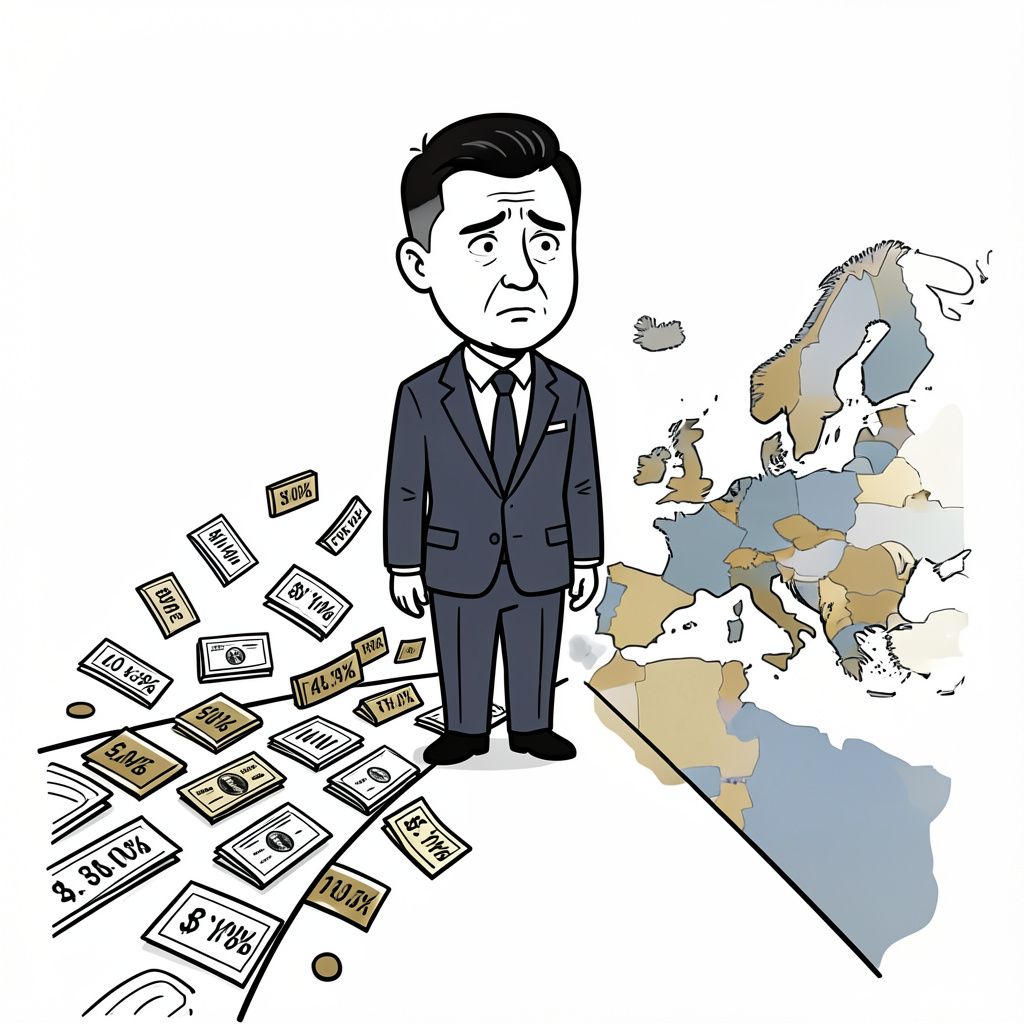
Kyiv, Monday, 19 October 2026.
President Zelensky accused the White House of pressuring Ukraine to surrender by easing Russian sanctions and restricting crucial intelligence, exposing growing geopolitical risks for European defense and energy markets.
Escalating Diplomatic Tensions
On 2026-10-18, President Volodymyr Zelenskyy publicly stated that the Trump administration is taking measures to force Ukraine to capitulate to Russia, describing these actions as a string of recent developments bolstering Russia’s war machine while undermining Ukraine’s defensive capabilities [1][2]. This accusation marks a significant escalation in tensions, with Zelenskyy noting during a Bloomberg News interview that he did not want to believe Washington sought an end to the war at Ukraine’s expense, but concluded that is how the situation appears [1]. The friction intensified during the week of 2026-10-12 to 2026-10-18, culminating in Zelenskyy accusing President Trump of having an instinctive affinity for autocrats, specifically referencing Vladimir Putin [1][3]. During an appearance on NBC’s Meet the Press on 2026-10-18, Zelensky further clarified his stance, stating that if the U.S. more formally sides with Russia, Ukraine will not prevail and will not be able to stand [7]. The White House has defended its position, with President Trump arguing that his decisions are aimed at negotiating peace and avoiding actions that would drive Russia away from the bargaining table [8].
Sanctions and Energy Security
A central point of contention involves U.S. sanctions policy toward Russia’s energy sector. On 2026-10-16, President Trump issued an executive order suspending Russia-related sanctions that were scheduled to take effect on 2026-10-18, citing national security concerns and the need to analyze economic impacts [6][8]. The suspended sanctions, signed into law in September 2026, authorized tariffs of up to 100% on imports from the top five purchasers of Russian oil and gas [6]. U.S. Secretary of State Marco Rubio stated the executive order institutes a 60-day pause to analyze the economic impact of the sanctions on the U.S. and global markets [6]. Zelenskyy criticized the move, stating the sanctions could have helped enormously and were supposed to impose truly effective pressure on Russia to bring the war to an end [6]. Meanwhile, Ukrainian authorities reported significant human costs from recent strikes, with at least 9 deaths and approximately 60 injuries from Russian strikes across Ukraine between 2026-10-16 and 2026-10-18, totaling 69 casualties in that period [6]. Additionally, on the night of 2026-10-17 and early 2026-10-18, Ukraine launched a significant drone attack on St. Petersburg, targeting an oil refinery and other infrastructure, resulting in at least one death and five injuries in Russia [4][8].
Intelligence and Defense Implications
Defense and intelligence sharing have become critical flashpoints in the relationship. Zelenskyy alleged that Ukraine received no advance warning from U.S. partners regarding ballistic missile attacks that occurred on the night of 2026-10-11, claiming this lack of warning happened multiple times during the preceding week [4]. While US Secretary of State Marco Rubio denied any pause in intelligence sharing, Zelenskyy maintained that only the United States has the unique intelligence to warn when Russia uses ballistic missiles, and they did not receive it during ballistic attacks during three days [4][8]. Compounding these issues, reports indicate technical restrictions on Starshield service, specifically speed limits on mobile receivers, which hinders interception of Russian long-range drones [8]. On 2026-10-19, President Zelensky held an online meeting with U.S. lawmakers, characterizing the conflict as being in the most difficult situation from the very beginning of this war and alleging that support is being intentionally slowed [4]. Despite these challenges, Zelenskyy confirmed ongoing diplomatic efforts, noting virtually nonstop communication with U.S. envoys Steve Witkoff and Jared Kushner regarding future steps [8].
Sources
- www.nytimes.com
- www.bloomberg.com
- www.washingtonpost.com
- www.cnn.com
- www.wsj.com
- www.bbc.com
- www.facebook.com
- www.aljazeera.com