UK and German Military Chiefs Issue Joint Plea for Rearmament Amid Rising Russian Threats
Berlin, Monday, 16 February 2026.
Citing a moral imperative against a westward-shifting Russian military, defense chiefs press for rearmament, despite polls revealing only 25% of Britons support the necessary tax hikes.
A Moral Call to Arms
In a decisive intervention following the Munich Security Conference, which concluded today, February 16, 2026, the defense chiefs of the United Kingdom and Germany have issued a joint appeal to their citizens to accept the heavy burdens of rearmament [1][5]. Writing in The Guardian and Die Welt on February 15, Air Chief Marshal Sir Richard Knighton and General Carsten Breuer argued that preparing for war is not an act of aggression but a “moral dimension” of national responsibility [1][2]. The commanders warned that Russia’s military posture has “shifted decisively westward,” necessitating a “step change” in European defense capabilities to prevent Moscow from extending its aggression beyond Ukraine [1]. They stressed that “rearmament is not warmongering” but rather the only viable path to protect populations and preserve peace in an era where deterrence fails if adversaries perceive disunity [1][2].
Mobilizing Industry and Personnel
The push for readiness involves tangible, large-scale commitments from both nations. Britain is currently constructing at least six munitions factories to sustain necessary stockpiles [1][3]. Simultaneously, Germany has amended its constitution to make unrestricted funding available for defense and is permanently stationing a combat brigade of 4,000 to 5,000 troops on NATO’s eastern flank [1][3]. However, staffing these initiatives remains a critical bottleneck. Germany is seeking to recruit 80,000 additional active soldiers [2]. On February 16, 2026, CDU defense politician Jens Röwekamp suggested that if voluntary recruitment fails to staff the Lithuania brigade—which currently has just under 1,800 soldiers against a target of 4,800 by 2027—mandatory conscription for the mission might be required [4]. This aligns with the chiefs’ call for a “whole-of-society” approach, requiring resilient infrastructure and national institutions prepared for high-threat environments [2].
The Economic Disconnect
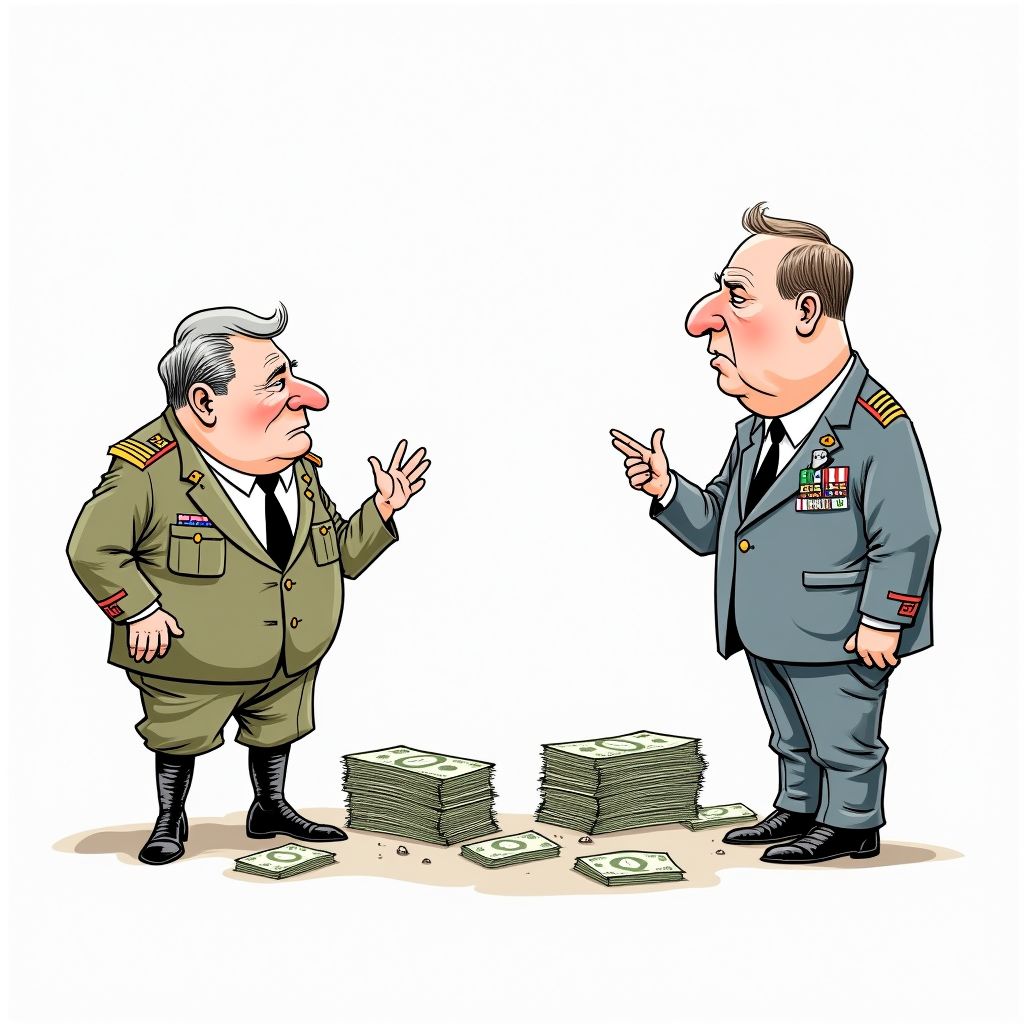
Despite the urgency expressed by military leadership, there is a profound gap between strategic necessity and public economic appetite. A YouGov poll conducted in Britain this month indicates that only 25% of voters favor tax rises to fund increased military spending, while just 24% support spending cuts elsewhere [1]. Similarly, German and French voters have shown a decreasing willingness to support higher defense budgets at the expense of other investments compared to last year [1]. This reluctance persists even as the disparity in spending becomes stark; Russia is now allocating more than 7% of its GDP to defense, whereas Britain spends just under 2.5% [6]. To address the industrial shortfall, the European Union’s Security Action for Europe (Safe) initiative is set to inject €150 billion (£130 billion) into the continent’s defense industrial base [3], while Germany has appropriated over €1 trillion for the rearmament of the Bundeswehr [5].
Strategic Autonomy in a New Era
The appeal comes against the backdrop of a shifting transatlantic relationship. Speaking at the Munich Security Conference on February 14, U.S. Secretary of State Marco Rubio emphasized that while the U.S. wants Europe to be strong, allies should not be “shackled by guilt and shame” regarding their national interests [5]. In response to the evolving geopolitical landscape, German Chancellor Friedrich Merz warned on February 13 that Europe has entered an era characterized by “great power politics” where freedom is no longer a given [1][5]. Merz also disclosed initial talks with French President Emmanuel Macron regarding the potential extension of France’s nuclear umbrella [1]. This drive for closer cooperation is further underpinned by the 2024 Trinity House agreement between the UK and Germany [1] and the commitment by NATO leaders to reach defense spending targets of 5% of GDP by 2035 [1].