Global Oil Shock Threatens to Exclude 40 Million from the Middle Class
Vienna, Wednesday, 27 May 2026.
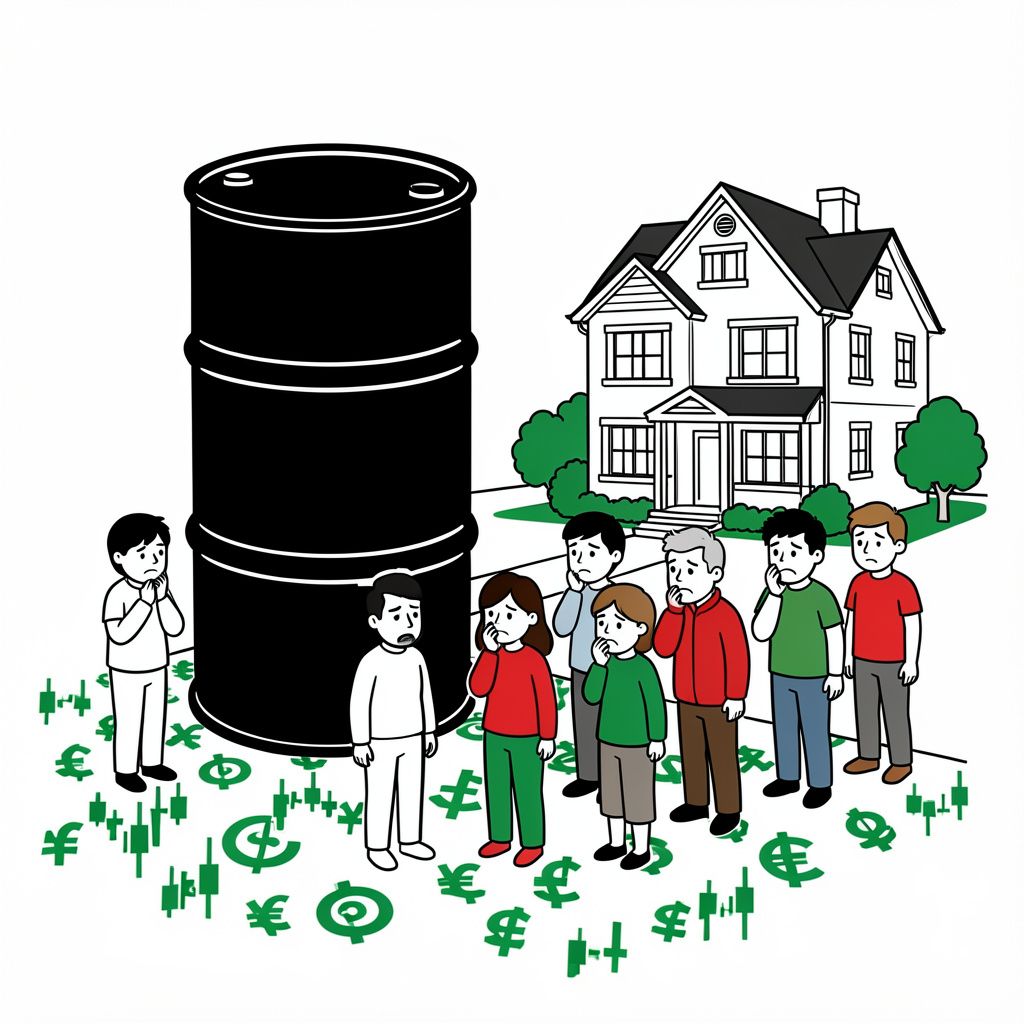
Sustained oil prices above $120 a barrel could block 40 million people from entering the middle class in 2026, wiping out $2.2 trillion in global consumer spending.
The Anatomy of a Severe Oil Shock
The catalyst for this economic contraction stems from the ongoing geopolitical conflict in Iran, which has sent shockwaves through global energy markets in 2026 [2][3]. Between May 2025 and May 2026, global energy costs surged by 18% [3]. The immediate macroeconomic effects were felt sharply in the United States, where gasoline prices leaped between 35% and 58% during the first four months of 2026 alone [1]. This rapid price escalation has already exacted a toll on global purchasing power; pre-war projections indicate that this initial shock resulted in a global loss of approximately 6 million new consumer class entrants and erased $145 billion in potential spending by late April 2026 [1].
Derailing the Global Consumer Engine
The newly released World Consumer Outlook by World Data Lab, published on May 26, 2026, quantifies the severe threat these dynamics pose to emerging consumer markets [1]. Under a baseline scenario, the global consumer class is still projected to grow in line with long-term trends, adding 113 million people and injecting $2.9 trillion in new spending into the global economy in 2026 [1]. Asia remains the primary engine for this growth, expected to drive 79% of new consumer class entrants globally, with India and China alone accounting for 61% of these new consumers [1].
Ripple Effects Across Global Industries
The macroeconomic squeeze on the middle class is already rippling through discretionary sectors, notably global travel and tourism [GPT]. For example, in New Zealand—where tourism is the second-largest export earner and supports one in nine jobs—the industry is facing acute operational pressures [2]. A May 26, 2026 broadcast of the “Bridge talks Business” podcast highlighted that substantial hikes in jet fuel and diesel prices, driven by the conflict in Iran, are threatening profit margins across the sector [2]. Despite a strong summer season from December 2025 to March 2026 that saw tourism volumes recover to 96% of pre-Covid levels, the inflationary environment since March 2026 has forced many domestic infrastructure and tourism projects to be paused or reassessed [2].
Diverging Trajectories and Future Outlook
Looking beyond the immediate volatility of 2026, a broader structural shift is underway in global consumer demographics [1]. Between 2025 and 2030, Asia’s middle-class population is projected to grow by 18%, while affluent spending in Western nations is set to expand by 15% [1]. This divergence presents multinational corporations with two distinct trajectories: navigating the fragile, energy-sensitive emergence of millions of new consumers in the East, while catering to established, affluent demographics in the West [1].