Amgen Defies FDA Withdrawal Request for Drug Linked to Liver Failure
Thousand Oaks, Tuesday, 7 April 2026.
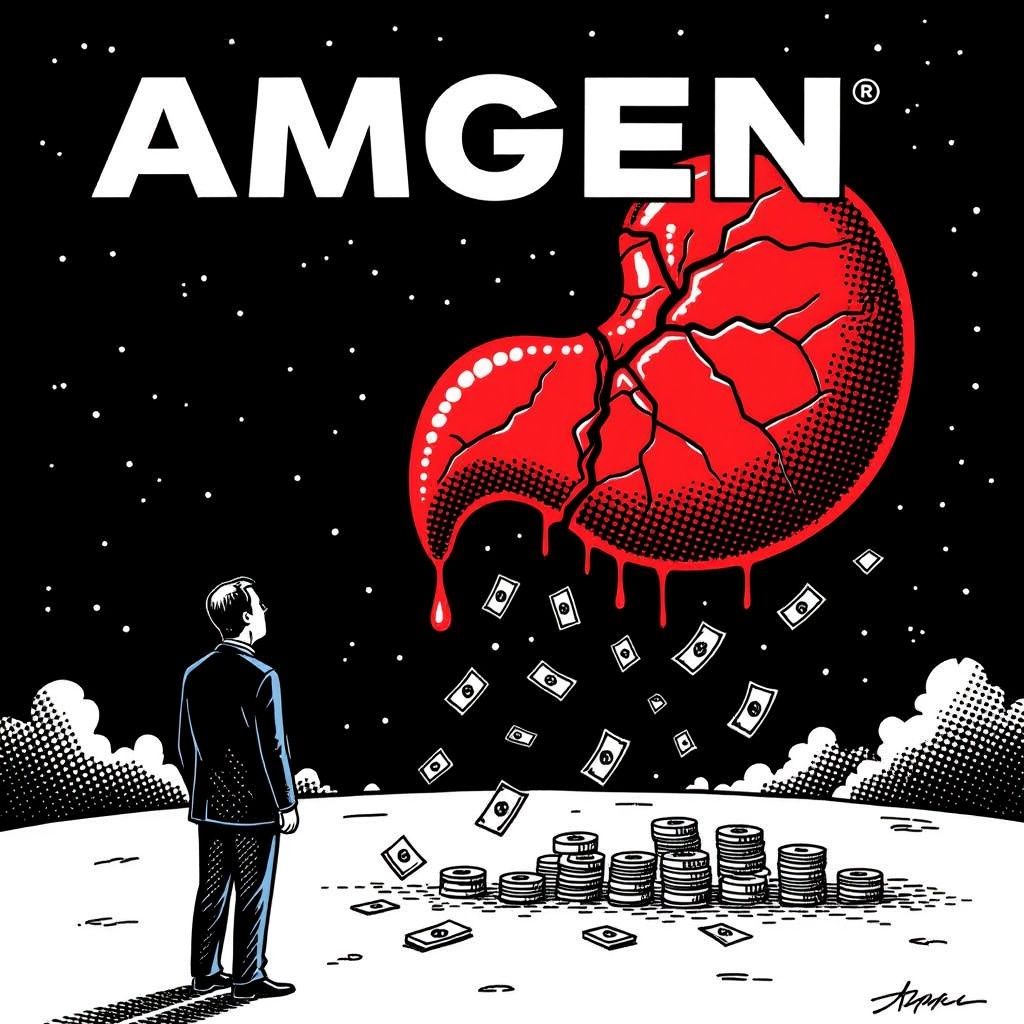
Despite eight reported deaths and an FDA withdrawal request, Amgen continues marketing its drug Tavneos, risking significant legal and financial fallout over severe liver failure complications.
A Deepening Regulatory Standoff
The roots of the current crisis trace back to October 2021, when the U.S. Food and Drug Administration (FDA) initially approved Tavneos (avacopan) for the treatment of severe active anti-neutrophil cytoplasmic autoantibody (ANCA)-associated vasculitis [2]. Amgen acquired the drug’s original developer, ChemoCentryx, a year later in October 2022 [2]. However, the regulatory environment shifted dramatically on January 16, 2026, when the FDA formally requested the voluntary withdrawal of Tavneos from the market [2]. This request stemmed from emerging concerns regarding hepatotoxicity and the re-adjudication of primary endpoint results involving nine out of 331 patients in the drug’s pivotal ADVOCATE trial—a subset representing just 2.719 percent of the trial’s population [2][3]. In a bold move, Amgen informed the FDA on January 28, 2026, that it would not pull the medication, citing confidence in its benefit-risk profile and a lack of awareness regarding issues with the underlying patient data [2][3].
The Clinical Reality of Vanishing Bile Duct Syndrome
Central to the FDA’s safety alert is the manifestation of vanishing bile duct syndrome (VBDS) among Tavneos users [1][4]. VBDS is a rare and severe condition characterized by the progressive destruction and disappearance of intra-hepatic bile ducts [1][4]. This structural loss leads to cholestasis—a decrease in bile flow—and can cause permanent liver damage [1][3]. The FDA has identified seven specific cases of VBDS potentially caused by Tavneos [3]. While the exact biological mechanism triggering this syndrome remains unestablished [1], the clinical outcomes are undeniably severe, prompting urgent warnings to medical providers [3][4].
Mounting Legal and Market Pressures
Amgen’s defiance of the FDA’s withdrawal request has opened the door to substantial legal vulnerabilities. National pharmaceutical injury attorneys are already organizing investigations into product liability and medical malpractice claims [1]. Legal experts are preparing to represent patients who have suffered acute liver injury, as well as families pursuing wrongful death lawsuits against the pharmaceutical giant [1][4]. The core of these legal challenges will likely focus on whether Amgen adequately warned the public and whether the drug’s continued presence on the market post-FDA warning constitutes negligence [alert! ‘projected legal strategy based on standard product liability practices’].
Global Scrutiny and Future Implications
The controversy is not confined to the United States. In January 2026, the European Medicines Agency (EMA) also launched a review of Tavneos, explicitly citing emerging information that raises questions about the integrity of the study data [3]. Interestingly, while the U.S. prescribing information currently lacks a specific warning for VBDS, the drug’s labels in Europe and Australia already mention post-marketing cases of the syndrome [3]. Amgen did proactively submit an update to the FDA in 2024 to add VBDS to the U.S. label [2], but the agency’s subsequent withdrawal request indicates that a simple label update is no longer viewed as sufficient by regulators [alert! ‘The FDA withdrawal request suggests regulatory concerns exceed what a label update can mitigate, though the exact internal FDA reasoning for rejecting just a label update is inferred’].