China and North Korea Reopen Border Bridge to Boost Trade Ties
Dandong, Sunday, 25 October 2026.
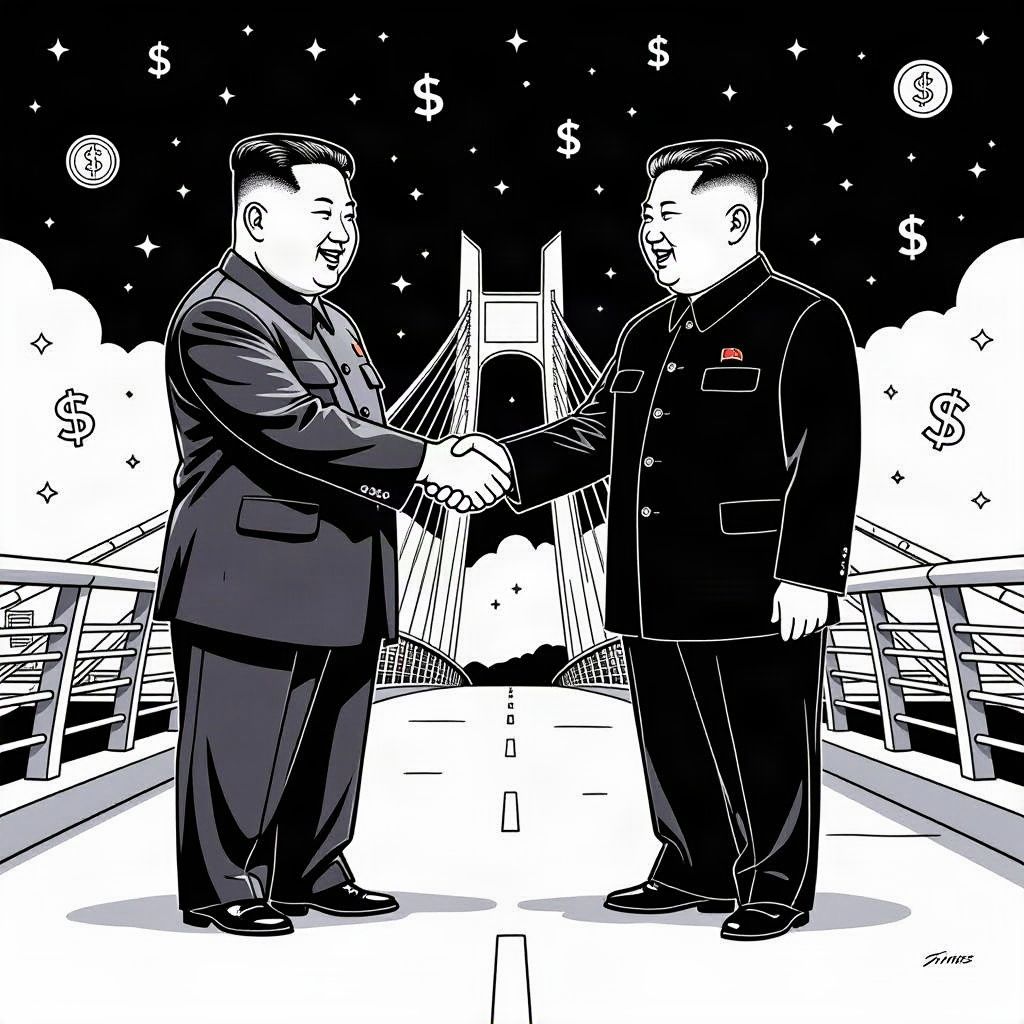
North Korean leader Kim Jong Un visited Dandong as both nations leveraged the opening of the New Yalu River Bridge, idle for 12 years, to expand cross-border economic cooperation.
Historic Cross-Border Diplomacy in Dandong
On October 24, 2026, Wang Huning, Member of the Politburo Standing Committee of the Chinese Communist Party, accompanied North Korean Supreme Leader Kim Jong Un on a high-profile visit to Dandong, a key border city linking China to North Korea across the Yalu River. The visit, unprecedented in its public exposure, underscores a deliberate effort by both nations to recalibrate bilateral relations amid shifting geopolitical dynamics in Northeast Asia. Wang Huning, also Chairman of the National Committee of the Chinese People’s Political Consultative Conference (CPPCC), conveyed personal greetings from Chinese President Xi Jinping to Kim Jong Un during the visit marking the 76th anniversary of China’s entry into the Korean War through the Chinese People’s Volunteers (CPV) operation. [1][2][3][4][5]
Symbolic Gestures and Historical Reverence
The morning of October 24 began with a solemn tribute at the Memorial Hall of the War to Resist U.S. Aggression and Aid Korea in Dandong. Wang Huning and Kim Jong Un laid a wreath at the CPV Martyrs’ Monument, accompanied by the national anthems of both countries. The flower basket bore an inscription in Korean reading, ‘Forever remembering the martyrs of the Chinese People’s Volunteers.’ Kim Jong Un paused to adjust the ribbon before a moment of silence was observed by all attendees. He then visited the memorial’s exhibits, which detail the bravery of CPV soldiers and the joint wartime efforts of the two nations. Kim Jong Un presented the memorial with a framed historical photo inscribed with his handwritten message of gratitude. [1][2][3][4][5]
Economic Cooperation and the New Yalu River Bridge
A central focus of the visit was the newly operational New Yalu River Bridge, which connects Dandong’s Yalu River District to North Korea’s Sinuiju. After 12 years of dormancy following its 2014 completion, the bridge was inaugurated on October 15, 2026, and now serves as a physical symbol of enhanced connectivity. Wang Huning emphasized the bridge’s role as ‘an opportunity to expand personnel exchanges and trade cooperation’ between the two countries. This infrastructure milestone arrives on the 65th anniversary of the 1961 China-North Korea Treaty of Friendship, Cooperation, and Mutual Assistance—a symbolic alignment of economic revival and historical continuity. [1][2][3][4][5]
Manufacturing Diplomacy and Strategic Messaging
In the afternoon, Wang Huning accompanied Kim Jong Un on a tour of a Dandong-based automobile manufacturing facility. The visit included an inspection of the production workshop and a briefing on operations, highlighting practical cooperation in industrial sectors. As Kim Jong Un departed Dandong, Wang Huning saw him off at the New Yalu River Bridge—a gesture underscoring the visit’s dual emphasis on historical remembrance and forward-looking economic engagement. Kim Jong Un expressed appreciation for China’s long-standing support to North Korea’s socialist development and conveyed well-wishes for the upcoming fifth plenary session of the 20th Central Committee of the CPC. [1][2][3][4][5]
Geopolitical Implications for Northeast Asia and Global Markets
The timing and scale of the visit—occurring just days before the CPC’s fifth plenary session—suggest strategic signaling to both domestic and international audiences. Analysts note that the renewed emphasis on China-DPRK ties comes amid heightened regional tensions, including U.S.-led military exercises in the Asia-Pacific and ongoing sanctions enforcement against North Korea. For multinational corporations and supply chain managers, the reopening of the New Yalu River Bridge introduces new variables in cross-border logistics planning, particularly for sectors engaged in light manufacturing, textiles, and minerals. While formal sanctions remain in place, the bridge’s activation may facilitate limited humanitarian and approved trade flows under existing exemptions. [1][2][3][4][alert! ‘No public data available on specific trade volumes post-bridge reopening as of October 25, 2026’]
A New Chapter in Bilateral Relations?
The visit follows two landmark reciprocal state visits: Xi Jinping’s trip to Pyongyang in June 2026 during the 65th anniversary of the Treaty of Friendship, and Kim Jong Un’s reciprocal visit to Beijing in September 2025. These engagements marked the normalization of high-level exchanges after a prolonged period of limited contact. Wang Huning’s remarks in Dandong framed the relationship within the ‘common cause of socialism,’ signaling ideological alignment as a foundation for deeper cooperation. Kim Jong Un’s reciprocal praise for China’s development achievements under Xi’s leadership—achieved despite external pressures—serves as a diplomatic affirmation of China’s strategic partnership amid global isolationist trends. [1][2][3][4][5]