Unusually High Ocean Tides Threaten California Coastal Cities and Rail Travel
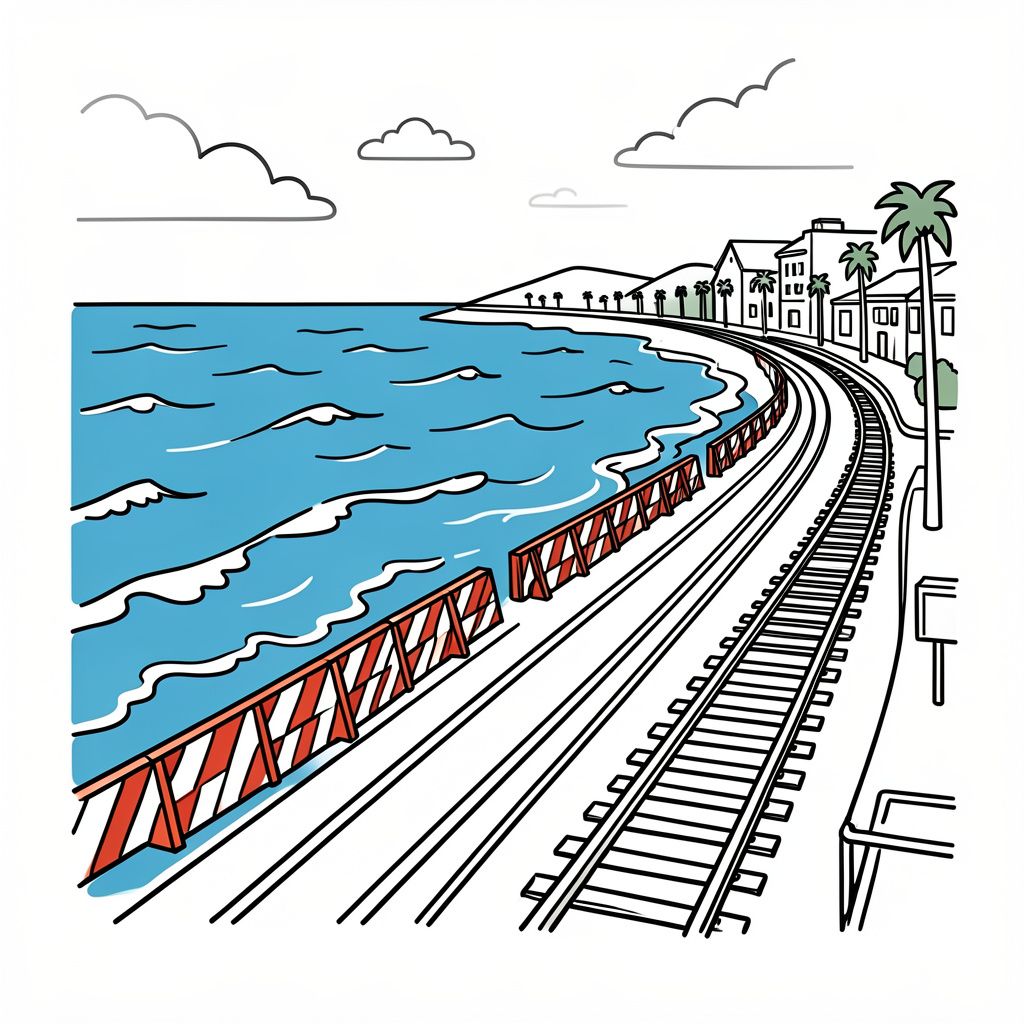
Los Angeles, Sunday, 25 October 2026.
Record ocean tides approaching 2.5 meters threaten California’s coast through Thursday, halting Metrolink rail lines and pushing low-lying business districts to deploy emergency flood defenses.
King Tides and El Niño Combine to Threaten Coastal Infrastructure
As Southern California braces for historically high ocean tides through Thursday, October 29, 2026, a convergence of seasonal king tides and El Niño-driven warm waters is amplifying flood risks along the coastline [1][3][5]. Forecasts from the National Weather Service indicate that ocean levels in Orange and San Diego counties will rise 1.706 to 1.7 feet above predicted tides, while Los Angeles County faces projections reaching 2.29 meters to 2.44 meters (7.5 to 8 feet) during peak periods from Monday, October 26 through Wednesday, October 28 [3]. The elevated water levels—already running 0.457 to 0.559 meters (18 to 22 inches) higher than astronomical predictions in areas like Newport Beach—are exacerbating erosion and flooding risks in communities still recovering from recent hurricane-generated surf and destructive waves [5].
Economic Disruptions and Infrastructure at Risk
The economic fallout from these record tides extends beyond immediate property damage, disrupting critical transportation corridors and commercial activity in coastal hubs. Metrolink has suspended Orange County Line service between Laguna Niguel/Mission Viejo and Oceanside stations from Monday, October 26 through Friday, October 30, 2026, with normal service expected to resume on Saturday, October 31—isolating communities and hindering labor mobility [3]. Low-lying commercial properties, including beachfront retail and hospitality businesses, face inundation risks, while maritime infrastructure, such as ports and marinas, is vulnerable to tidal overflow and beach erosion [1][3]. Municipalities are deploying emergency mitigation measures, including sandbags, protective berms, and sand nourishment projects, but costs are mounting. For example, Long Beach’s ongoing $11.4 million beach restoration project, which involves dredging 317,102 cubic meters (415,000 cubic yards) of sand, highlights the scale of investments required to address chronic erosion exacerbated by these tides [3].
Regional Preparedness and Long-Term Vulnerabilities
Coastal cities are implementing short-term defenses while acknowledging the limitations of their efforts amid an escalating climate challenge. Newport Beach has declared a local emergency, activated its emergency operations center, and relocated approximately 76,455 cubic meters (100,000 cubic yards) of sand to eroded beaches, but officials warn that ‘it’s likely to get worse before it gets better’ [5]. The city’s adjusted forecasts predict peaks of 2.53 meters (8.3 feet) on Monday, 2.59 meters (8.5 feet) on Tuesday, and 2.56 meters (8.4 feet) on Wednesday, underscoring the unpredictability of the event [5]. Meanwhile, Seal Beach is constructing seasonal sand berms, and other communities like Playa del Rey and Venice are reinforcing shorelines with sand and sandbags [2][3]. However, regional shoreline widening projects, not expected to be completed until February 2027, signal that these measures are temporary solutions to a systemic issue [3].
Broader Economic and Climate Implications
The financial burden of these tides extends to homeowners and insurers, with vulnerable oceanfront properties—particularly in areas like the Long Beach Peninsula, where eight structures and 13 addresses were red-tagged following Tropical Storm Rachel on October 10, 2026—facing increased risk of damage and higher insurance premiums [3]. Climate scientist Daniel Swain noted that while no hurricane-generated swell is expected to coincide with this event, the elevated baseline water levels will intensify the impact of future storms [5]. The National Weather Service has urged residents and visitors to avoid flooded areas and refrain from driving through barricades, emphasizing the need for proactive measures to protect flood-prone property [3]. Looking ahead, the California Coastal Commission has flagged additional king tides for November 24–26, December 23–25, and January 21–22, 2026, suggesting that this winter’s challenges are far from over [5].
Sources
- timesofsandiego.com
- www.facebook.com
- ktla.com
- www.facebook.com
- www.surfer.com
- tidesandcurrents.noaa.gov
- www.sfchronicle.com
- www.surfline.com