Deadliest Avalanche in Modern California History Claims Eight Lives Near Truckee
Truckee, Wednesday, 18 February 2026.
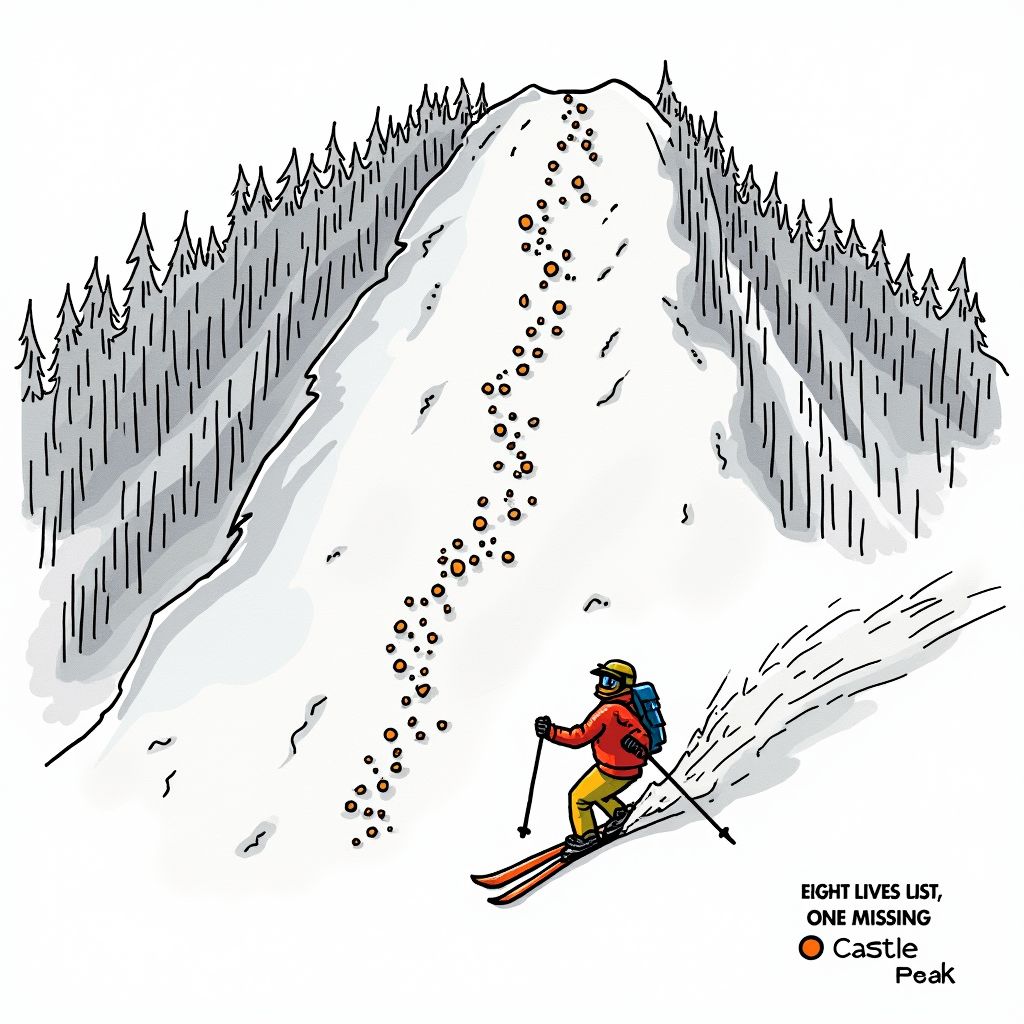
Authorities confirm eight deaths in California’s deadliest modern avalanche near Castle Peak. One skier remains missing as severe storms hamper recovery efforts for the guided backcountry group.
Transition from Rescue to Recovery
In a somber update provided on Wednesday, February 18, Nevada County officials confirmed that the bodies of eight skiers have been recovered following the massive avalanche that struck near Truckee the previous day [4][6]. One member of the touring party remains missing and is presumed dead, marking this event as the deadliest avalanche in modern California history [4]. Sheriff Shannan Moon stated that authorities have notified the families of the missing skiers that the operation has officially shifted from a rescue mission to a recovery effort, a decision driven by the passage of time and the extreme environmental conditions [7].
Incident Specifics
The avalanche occurred at approximately 11:30 a.m. on Tuesday, February 17, in the Castle Peak area, a popular backcountry destination located northwest of Lake Tahoe [1][2]. The slide took place on a north-facing slope at an elevation of approximately 2,500 meters, near the Frog Lake Backcountry Huts [7]. According to reports from the Sierra Avalanche Center, the slide was rated as a D2.5, classifying it between “large” and “very large,” and measured approximately 91 meters in width—roughly the length of a football field [3][6].
Anatomy of a Disaster
The catastrophic event coincided with a severe winter storm that has battered the Sierra Nevada region. In the 48 hours leading up to the incident, the area experienced rapid snow accumulation, with nearly 0.9 meters of fresh snow recorded at Donner Peak [4]. Data from the Boreal Mountain Ski Resort indicated approximately 76.2 centimeters of snowfall in the 24 hours prior to the slide [1]. This intense precipitation, combined with gale-force winds that were forecast to exceed 160 km/h across ridge tops, created highly unstable conditions [5]. Consequently, the Sierra Avalanche Center had issued a bulletin warning of “HIGH avalanche danger” on Tuesday, explicitly advising against travel in avalanche terrain due to the likelihood of slides capable of burying or injuring individuals [1][4].
Warning Signs and Snowpack Stability
The instability of the snowpack was a known variable leading into the week. Blackbird Mountain Guides, the company leading the expedition, had posted a video on Sunday, February 15, highlighting the presence of a weak layer of snow that could result in “unpredictable avalanches” [5][6]. The dangerous conditions were exacerbated by the rapid loading of new snow onto these fragile layers [2]. Despite these risks, the group of 15—comprising four guides and 11 clients—was attempting to return to the trailhead after a three-day stay at the Frog Lake huts when the incident occurred [3][4].
Rescue Operations and Survival
Of the 15 individuals caught in the slide, six survived. The survivors, who utilized emergency beacons and iPhone S.O.S. signals to contact help, were located by rescue teams approximately six hours after the avalanche struck [4]. This survival rate represents exactly 40% of the group. The survivors were forced to shelter in a treed area while awaiting extraction, and two were subsequently hospitalized—one was treated for non-life-threatening injuries and the other was released shortly after [4][7]. The rescue operation was massive and complex, involving nearly 50 first responders from multiple agencies who battled blizzard conditions to reach the site [2].
Historical Context and Risk
This tragedy has surpassed recent records for avalanche fatalities in the region. While the United States has averaged 27 avalanche deaths annually over the past decade, an event of this magnitude in California is historically significant [7]. For context, the deadliest avalanche in U.S. history occurred in 1910 at Stevens Pass in Washington, claiming 96 lives [7]. Locally, the Castle Peak area had already seen a fatality earlier this year; in January 2026, a 42-year-old snowmobiler was killed in a slide in the same vicinity [5]. The recurrence of such incidents highlights the dynamic and often perilous nature of the Sierra Nevada backcountry during high-intensity storm cycles.
Sources
- www.nbcnews.com
- www.nbcbayarea.com
- www.sfgate.com
- www.nytimes.com
- www.capradio.org
- www.rgj.com
- www.nbcnews.com