Geopolitical Risks Shadow UK Economy as OBR Slashes 2026 Growth Forecasts
London, Wednesday, 4 March 2026.
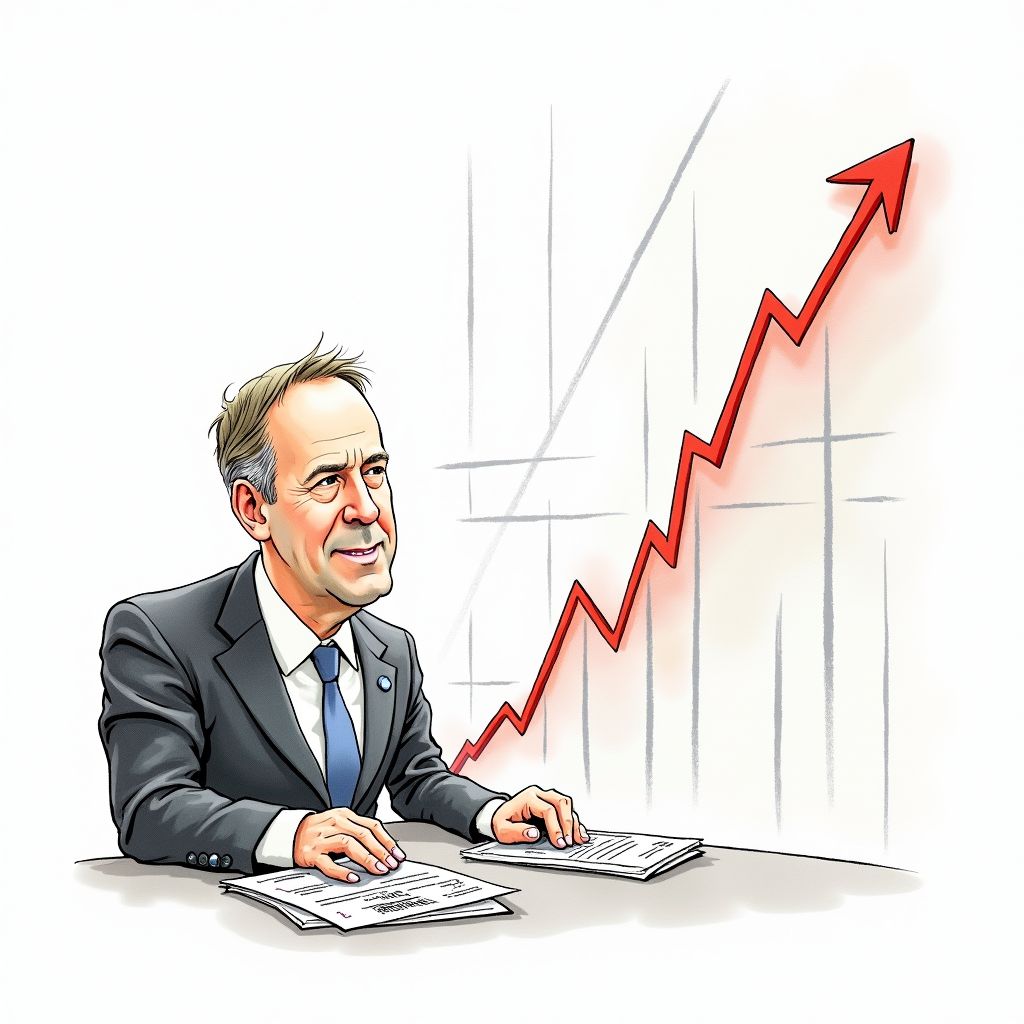
Despite the OBR cutting 2026 growth forecasts to 1.1%, Chancellor Reeves stands firm, though these figures notably exclude the unquantified economic shock of the recently erupted Middle East conflict.
Geopolitical Risks Shadow UK Economy as OBR Slashes 2026 Growth Forecasts
The Office for Budget Responsibility (OBR) has officially revised the UK’s expected growth rate for 2026 down to 1.1%, a notable decrease from the 1.4% forecast issued in November 2025 [1]. Crucially, these economic projections were finalized before the outbreak of the current conflict in the Middle East, a geopolitical development the OBR warns could have a “very significant” impact on the nation’s economic trajectory [1]. While the immediate growth outlook has dampened, the OBR has slightly upgraded its estimates for the subsequent years, forecasting growth of 1.6% for both 2027 and 2028, up from the previous 1.5% prediction [1].
Inflationary Trends and Labor Market Pressures
On the price stability front, the outlook appears more favorable. Inflation is expected to average 2.3% through 2026—improving upon the earlier estimate of 2.5%—and is projected to reach the Bank of England’s 2% target by the end of the year [1]. However, the labor market presents a more challenging picture for households. The unemployment rate is now predicted to peak at 5.3% in 2026, a sharp rise from the 4.9% forecast during the previous Budget [1]. Amidst these shifts, the fiscal burden on the economy is growing; the government’s total tax take is forecast to ascend to a “historic high” by 2030-31, encompassing almost 38% of GDP [1].
Fiscal Headroom and Strategic Defenses
Addressing Parliament on Tuesday, 3 March 2026, Chancellor Rachel Reeves maintained that her administration has “restored economic stability” despite the downgraded near-term figures [2]. Reeves insists that her current fiscal path remains “the right economic plan,” pointing to an improvement in the public finances [1]. Specifically, the Chancellor’s fiscal “headroom”—the capital buffer available within her fiscal rules—has increased to £23.6bn, up from £21.7bn [1]. However, David Miles of the OBR’s Budget Responsibility Committee described the economic activity in the first few months of 2026 as “disappointingly weak,” noting that growth “doesn’t seem to have picked up very strongly” [1].
External Shocks and Monetary Policy
The Chancellor’s domestic agenda is currently threatened by volatile external factors. Sky News political editor Beth Rigby highlights that the escalating conflict in the Middle East represents a “massive curveball” that Reeves cannot control, overshadowing the Spring forecast [3]. Recent increases in oil and gas prices have already reignited concerns about a resurgence of inflation [1]. These energy cost dynamics pose a tangible risk to monetary easing; if high energy costs persist, the Bank of England may be forced to implement fewer interest rate cuts this year than previously anticipated [1]. Looking ahead, Reeves is scheduled to outline “three major choices that will determine the course of our economy into the future” in a speech later this month [1].