Iran Signals Rapid Selection of New Supreme Leader to Mitigate Uncertainty
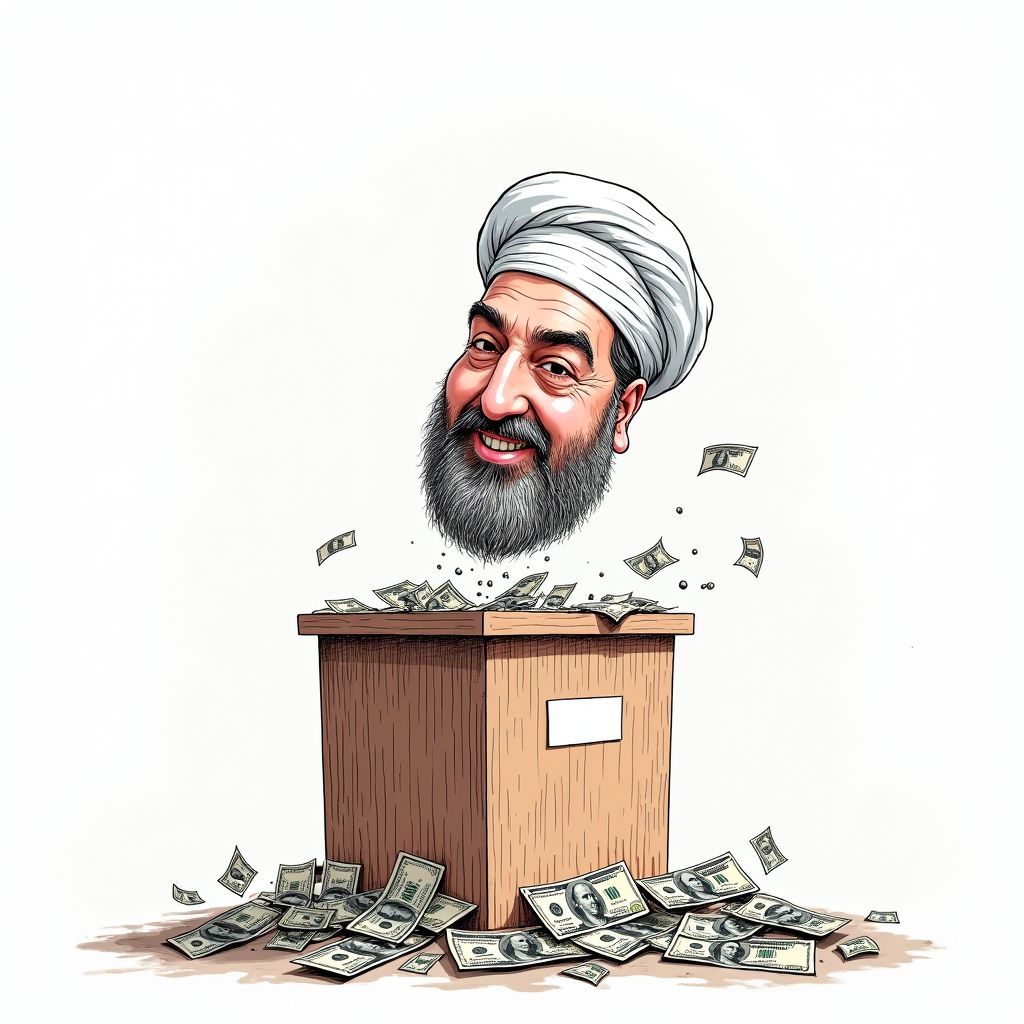
Tehran, Monday, 2 March 2026.
Foreign Minister Araghchi suggests a new Supreme Leader could be chosen within days, a strategic move to stabilize markets and political order following Ayatollah Khamenei’s death on Saturday.
Accelerating the Succession Process
Following the critical power vacuum created by the death of Ayatollah Ali Khamenei on Saturday, February 28—a situation previously analyzed as a potential catalyst for military destabilization [1]—Tehran is moving with unexpected speed to consolidate its leadership. On Monday, Foreign Minister Abbas Araghchi indicated that the Assembly of Experts, the clerical body responsible for appointing the Supreme Leader, could select a successor within as little as one or two days [2]. This accelerated timeline appears to be a direct response to the heightened vulnerability of the regime; a transition council comprising President Masoud Pezeshkian, the head of the judiciary, and a jurist from the Guardian Council has already begun its work as of Sunday [2]. While the nation observes a 40-day mourning period, the regime’s priority is clearly to project continuity to both domestic audiences and international markets [2].
Escalation in the Gulf
The urgency of the political transition is underscored by the rapid expansion of military conflict across the region. Following the U.S.-Israeli strikes that killed Khamenei and 200 others, Iranian forces launched retaliatory strikes widening across the Gulf on Saturday, targeting Dubai, Doha, Manama, and Duqm [2]. The United States responded with significant force; President Donald Trump announced “major combat operations,” describing Iran as the principal source of terror in the region [3]. In the maritime domain, the conflict has intensified, with U.S. strikes on Iranian vessels in the Gulf of Oman resulting in the sinking of nine vessels, according to statements by President Trump [4]. These developments represent a severe escalation that threatens vital energy corridors, increasing the risk premium on global oil markets.
Diplomatic Ambiguities and Market Signals
Despite the kinetic escalation, complex diplomatic signaling suggests Tehran may be attempting to manage the scope of the conflict while navigating its internal transition. Foreign Minister Araghchi offered a contradictory narrative regarding recent aggression, claiming that Iran’s armed forces are “independent and somewhat isolated” and asserting that attacks on targets in Oman were “not our choice” [4]. This distancing from specific military actions may indicate internal command-and-control fractures or a deliberate diplomatic maneuver. Furthermore, Araghchi has engaged with Oman’s Foreign Minister Badr bin Hamad al-Busaidi, stating that Tehran remains open to serious efforts at de-escalation [5]. Oman, a long-time mediator which had facilitated U.S.-Iran talks prior to the outbreak of war, continues to urge a ceasefire [5]. Araghchi also noted that a “very good discussion” had taken place with the United States prior to the strikes, blaming those against diplomacy for spoiling the progress [6].
Summary
As Iran navigates the immediate aftermath of Ayatollah Khamenei’s death, the regime is pursuing a dual strategy: rapidly filling the position of Supreme Leader to ensure political survival while simultaneously managing a hot war with the United States and Israel. The potential selection of a new leader within 48 hours aims to mitigate the uncertainty that typically rattles financial markets during regime changes. However, with U.S. forces actively engaging Iranian assets in the Gulf of Oman and Iranian strikes hitting major Gulf economic hubs [2][4], the region remains in a state of extreme volatility. Investors should closely monitor the identity of the incoming Supreme Leader and the coherence of Iran’s military command structure in the coming days.