Wall Street Reaches Record Highs While Everyday American Families Face Growing Living Costs
Washington, Saturday, 15 August 2026.
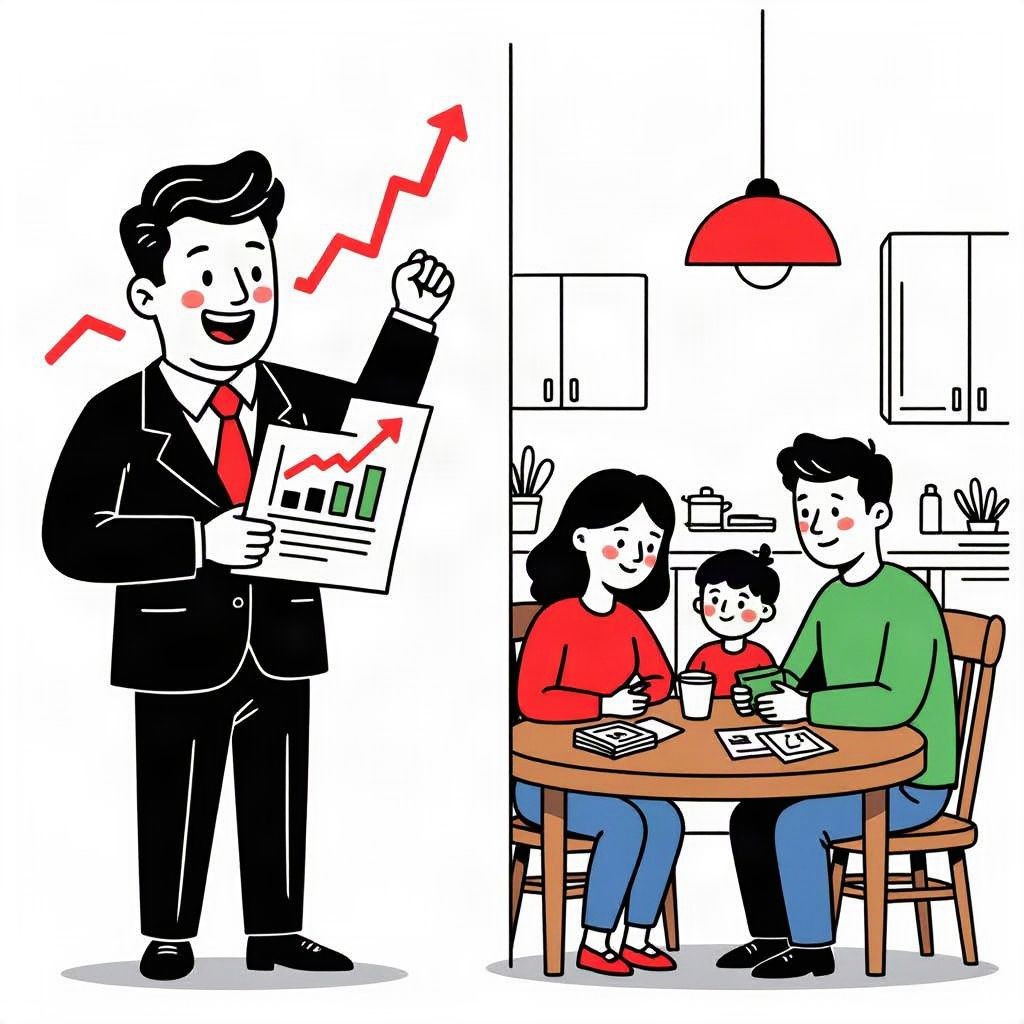
Record stock market gains highlight a growing gap between strong Wall Street performance and mounting household financial pressure, driven by rising utility costs, slowing job growth, and elevated inflation.
Wall Street Reaches Record Highs While Everyday American Families Face Growing Living Costs
On 14 August 2026, President Donald Trump highlighted record equity prices and corporate market performance as primary evidence of American economic resilience [1]. The President described the economy as doing unbelievably from the standpoint of Wall Street and claimed it was the best market in history, noting benefits for 401(k)s [1]. This assertion comes amidst a complex economic landscape where financial markets exhibit relative calm despite broader trade policy uncertainties [2]. However, the emphasis on stock market gains has amplified an ongoing political debate between business leadership celebrating stability and critics highlighting persistent cost-of-living pressures facing middle-income households [1]. Senator Bernie Sanders noted that while the rich get richer, millions of Americans cannot afford basic necessities like food, housing, and healthcare [1]. The Alliance for Retired Americans questioned the reality of the economic boom for those not living on Wall Street [1].
Diverging Economic Realities and Household Strain
While equity markets surge, underlying data suggests significant strain on household finances. On 7 August 2026, the Labor Department reported that the U.S. economy lost 23,000 jobs in July, wage growth slowed, and the unemployment rate fell primarily due to workforce exit [1]. Research published in July 2026 by the Urban Institute indicates families are increasingly using savings and credit for groceries [1]. Furthermore, The Century Foundation and Protect Borrowers reported a worsening utility debt crisis where energy bills increased three times faster than inflation during the current administration [1]. The national average monthly utility bill reached $280 in early 2026, marking a 12% increase since the end of 2024 [1]. This implies the average bill was approximately 250 dollars at the end of 2024 [1]. Consumer sentiment data showed a decline in August 2026 following two months of improvement, signaling growing apprehension among households [1].
Tariffs, Tech Investment, and Inflationary Pressures
Financial markets have adjusted to high tariff levels, currently the highest in a century, supported by a tech infrastructure investment boom that offsets weaknesses in retail sectors [2]. In July 2026, the Trump administration announced new import taxes of at least 10 percent on countries representing the vast majority of U.S. trade [2]. While investors have mostly moved on, a January 2026 poll indicated that more than two-thirds of U.S. voters blamed tariffs for rising prices [2]. An economist at a large hedge fund noted that uncertainty was even more relevant than the actual level of the tariffs, though doubts remain that this level of tariffs will continue [2]. Kevin Gordon, head of macro research and strategy at Charles Schwab, warned that if inflation remains hot months from now, people should not be surprised as to why [2]. White House spokesperson Kush Desai defended the administration’s tariff strategy via email on 13 August 2026 [2].
Geopolitical Strains and Political Fallout
Economic discussions are further complicated by geopolitical tensions, specifically regarding the U.S.’s ongoing military operations against Iran and the effective closure of the Strait of Hormuz [3]. Fuel prices have surged in the U.S. and across the globe during this period [3]. Treasury Secretary Scott Bessent announced on 14 August 2026 that the administration would impose greater economic pressure the following week to force Iran to reopen the trading passage [3]. Republican strategist Karl Rove criticized President Trump’s insistence that the U.S. economy is thriving despite rising prices, stating the President should stop gaslighting the American public [3]. Democrats are targeting the tariff and affordability issues as a political strategy to win control of one or both chambers of Congress in the upcoming fall 2026 elections [2]. The divergence between market metrics and household experiences remains a central topic ahead of these legislative sessions [1].