New York Coalition Challenges State Fiscal Policy with Aggressive Tax Proposals for Corporations and Wealthy Residents
Albany, Thursday, 12 February 2026.
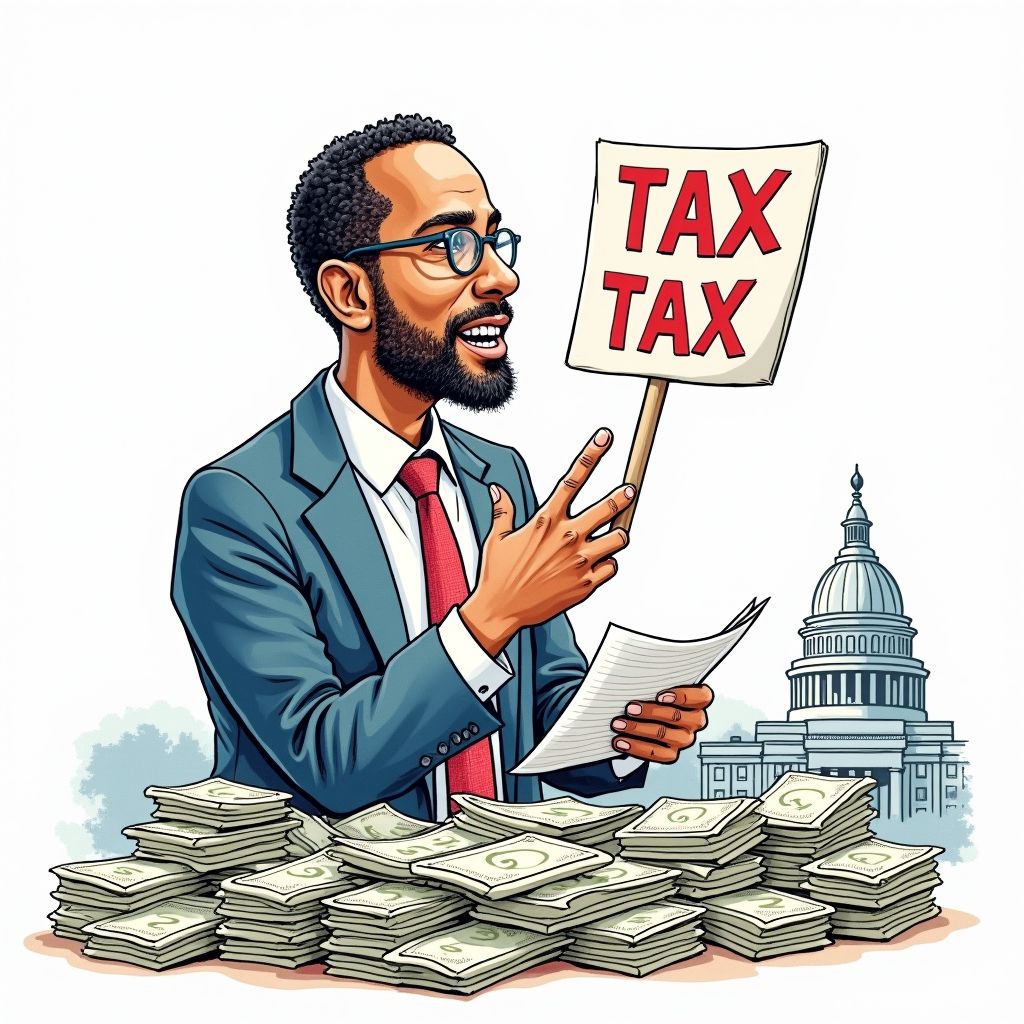
On February 5, 2026, a coalition of activists and elected officials convened in Albany to promote the “Invest in Our New York” legislative package, signaling a deepening rift regarding state fiscal strategy. Despite Governor Kathy Hochul’s firm opposition to new levies, proponents—including New York City Mayor Zohran Mamdani—argue that increasing taxes on high-net-worth individuals and major corporations is essential to offset looming federal budget cuts affecting healthcare and childcare. Intriguingly, while New York City recently revised its projected two-year deficit down from $12 billion to $7 billion due to robust Wall Street bonuses, leadership insists that sustainable revenue requires structural tax reform rather than reliance on volatile economic fluctuations. With polling indicating that 78% of New Yorkers favor increased taxation on the wealthy, this legislative push highlights a critical debate over long-term economic stability versus short-term fiscal conservation.
Legislative Specifics and Revenue Goals
The ‘Invest in Our New York’ campaign, which organized the rally coinciding with Tin Cup Day on February 5, 2026, has outlined a suite of four tax reforms projected to generate over $40 billion annually [1]. Central to this package is legislation sponsored by Democratic Assemblymember Sarahana Shrestha (Bill S953/A1971), which targets corporations earning over $2.5 million per year. Under this proposal, corporate tax rates would escalate to 12% for businesses earning over $10 million and 14% for those exceeding $20 million [1]. Furthermore, the coalition is pushing for a restructuring of state inheritance taxes through Bill S914/A2049, sponsored by State Senator Jabari Brisport. This measure seeks to replace the current estate tax with a tax on heirs for amounts exceeding $250,000, while notably exempting family farms and primary residences valued up to $1.75 million [1]. Additional proposals include progressive income tax brackets reaching 24% for earners above $20 million and a capital gains tax of up to 15% for couples with over $1 million in taxable income [1].
The NYC Budget Paradox
The call for increased state-level taxation comes amidst a rapidly shifting financial landscape for New York City. On February 4, 2026, Mayor Zohran Mamdani announced a significant revision to the city’s two-year budget gap, lowering the projection from $12 billion to $7 billion [3]. This adjustment represents a reduction of 41.667% in the anticipated shortfall, attributed largely to an updated economic forecast that identified $3 billion in additional revenue, alongside stronger-than-expected Wall Street bonuses [3][4]. Despite this fiscal improvement, the Mamdani administration maintains that the city remains structurally underfunded. During testimony in Albany on February 10, 2026, the Mayor argued that New York City receives less than 50% of its total budget from the state despite contributing nearly 60% of the state’s revenues, describing the dynamic as an “extraction” of resources [2]. Consequently, Mamdani continues to advocate for a corporate tax hike and a 2% income tax increase on residents earning over $1 million, asserting that one-time savings and reserve withdrawals—such as the $1.45 billion used recently—are not sustainable long-term solutions [2][3].
Political Tensions and Federal Headwinds
Governor Kathy Hochul remains the primary obstacle to these tax hikes, having released a $260 billion state budget plan in January 2026 that notably excluded broad-based tax changes [2]. Hochul contends that increasing the tax burden could drive wealthy residents to other states, a position she has held steadfastly while running for reelection [1][2]. However, proponents of the tax package point to external pressures as justification for aggressive revenue generation. A coalition of nearly 100 local officials warned on February 5, 2026, that impending federal policies could strip health insurance from 1 million New Yorkers and threaten food assistance for 350,000 others [1]. Moreover, state officials project that counties will face $1.3 billion in new costs due to federal shifts, contrasting this burden with $12 billion in tax cuts for New York millionaires expected from federal H.R. 1 legislation in 2026 [1]. With Mayor Mamdani scheduled to present his preliminary budget by February 17, 2026, and the state budget deadline looming on March 31, 2026, the friction between state fiscal conservatism and progressive revenue demands is set to intensify [3][4].