Public Approval of Trump's Handling of Living Costs Drops to 17 Percent
Washington, Friday, 2 October 2026.
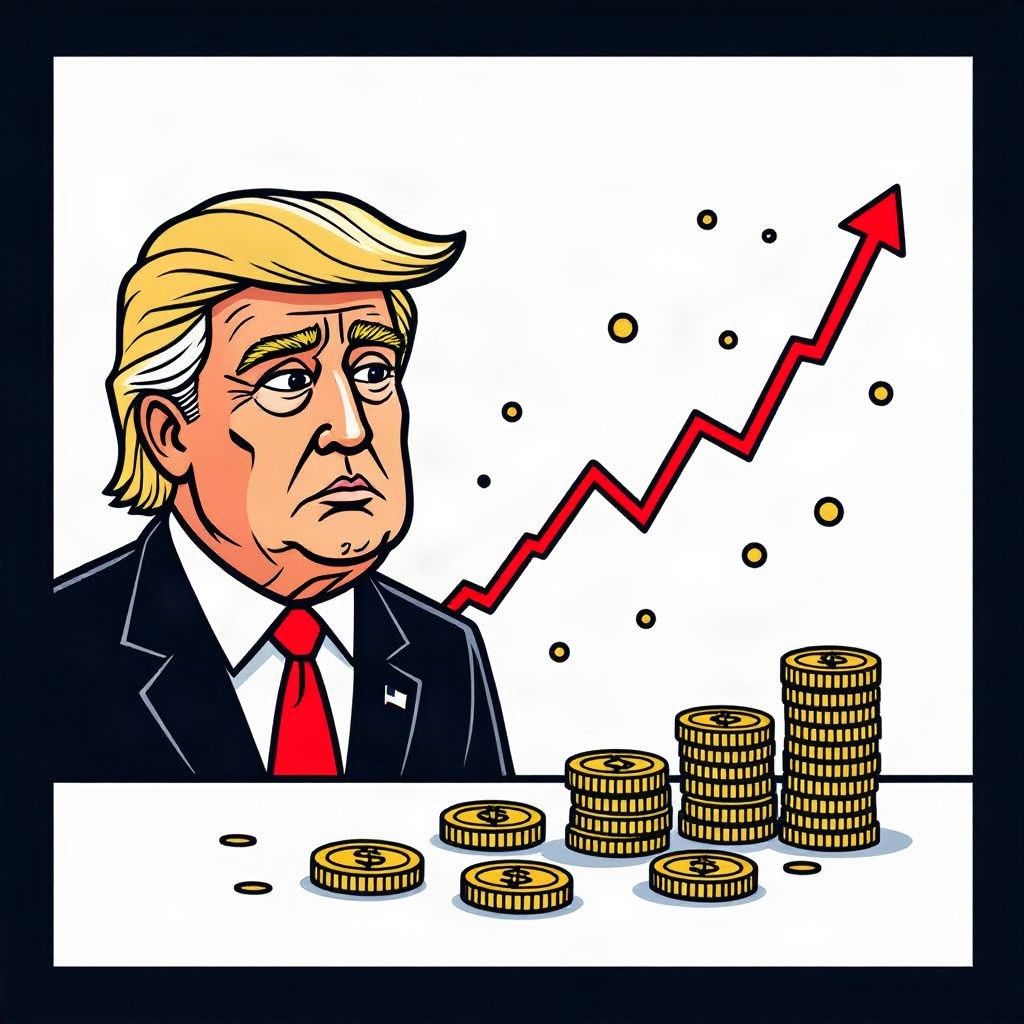
A new poll reveals only 17 percent of Americans approve of President Trump’s handling of living costs, with 65 percent directly blaming his tariff and foreign policies for high prices.
Polling Data and Economic Sentiment
Public approval of President Donald Trump’s management of the cost of living has reached a critical low, with only 17 percent of Americans expressing support as of October 2026 [1]. This figure represents a significant decline in economic confidence, with broader approval for Trump’s handling of the economy sitting at 26 percent, a new low for his second term [1][5]. Historical comparisons indicate this disapproval is severe; approximately 8 in 10 Americans disapprove of Trump’s handling of inflation, surpassing disapproval levels recorded during major historical crises such as the Watergate scandal and the Vietnam War [3]. The depth of dissatisfaction is further highlighted by a 14 percentage point decline in economic approval since March 2025, marking the start of his second term [1]. Multiple polling agencies, including Reuters-Ipsos and Marquette Law School, have corroborated these findings, with approval ratings consistently hovering in the high teens to low thirties across different surveys [3][7].
Policy Drivers and Public Blame
Voter sentiment indicates a direct link between specific administration policies and rising consumer costs. Approximately 65 percent of U.S. adults attribute persistently high costs to Trump’s policies, citing aggressive tariff usage and the ongoing war with Iran as primary factors [1][5]. This level of blame is substantially higher than the 44 percent of Americans who blamed President Joe Biden’s policies for financial vulnerability ahead of the 2022 midterm elections, representing a difference of 21 percentage points [3][8]. Specific concerns regarding basic necessities have surged, with approximately 50 percent of U.S. adults reporting they are extremely or very concerned about affording fuel and food, up from 39 percent in July 2026 [1]. Additionally, 64 percent of Americans believe the President has gone too far with new tariffs, an increase from 58 percent in January 2026 [1]. The unpopularity of foreign policy decisions is evident, with 69 percent stating the war with Iran is not worth fighting and only 28 percent approving of his handling of the conflict [1][7].
Campaign Response and Midterm Stakes
In response to declining numbers, President Trump acknowledged a public relations problem while asserting the economy remains strong fundamentally [4]. The administration has initiated a 32-day campaign blitz aimed at boosting Republican prospects ahead of the November 2026 midterm elections, which will determine control of Congress [1][4]. White House economic advisers suggest that consumer confidence metrics may reflect political satisfaction rather than pure economic data, urging Americans to look at their personal financial situations [4]. However, the Conference Board’s Consumer Confidence Index dropped to 81.9 in September 2026, the lowest level since April 2014, complicating the administration’s message [4]. With 33 days remaining until voters pass judgment in the midterms, the Republican party faces an uphill battle to convince skeptics amidst sluggish household demand and elevated living costs [4][8].
Sources
- fortune.com
- www.pbs.org
- www.cnn.com
- www.wbaltv.com
- thehill.com
- www.facebook.com
- www.forbes.com
- www.axios.com